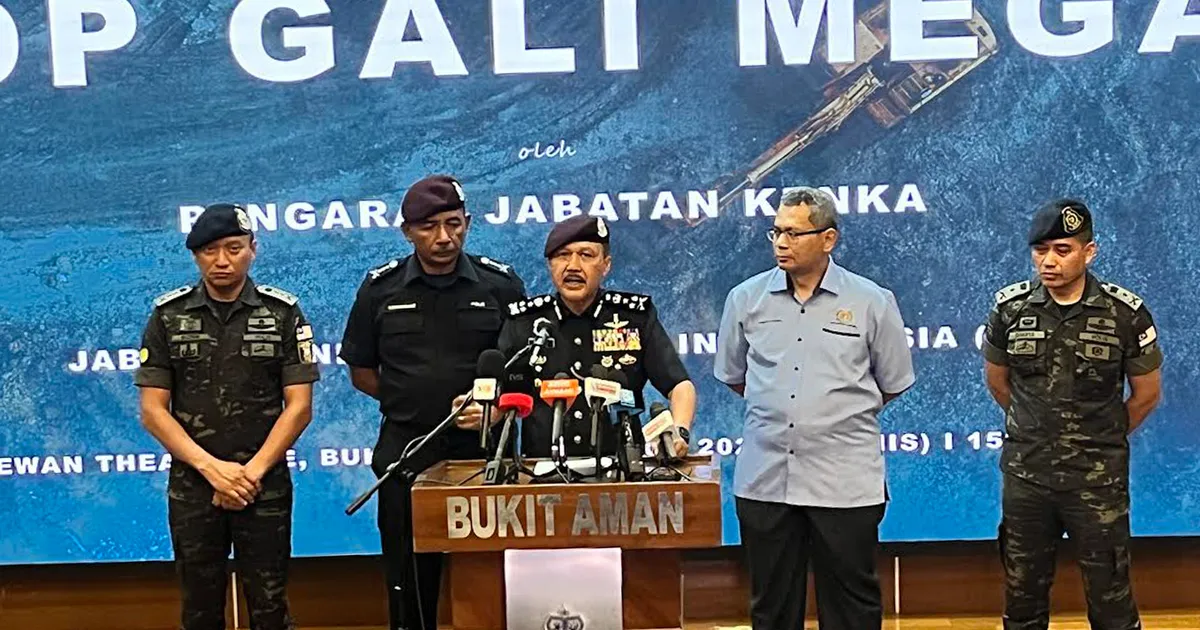
Malaysian authorities have intensified their combat against illegal mining activities, announcing the arrest of 99 suspects and the seizure of RM119 million worth of assets during a five-day enforcement operation conducted from August 19 to August 23. The crackdown represents a significant escalation in efforts to curb unauthorised extraction of natural resources, which has long plagued the country's mining sector and contributed to environmental degradation across affected regions.
The operation successfully recovered approximately 33,000 tonnes of illegally extracted materials from various sites across the country. The confiscated resources comprised coal, quarry stone, earth, and sand materials valued at RM21 million, reflecting the substantial scale of unauthorised mining activities taking place within Malaysia's borders. Beyond the raw materials themselves, enforcement officers seized related equipment, vehicles, and financial assets connected to the illegal operations, bringing the total asset value to RM119 million.
Illegal mining has become an increasingly pressing concern for Malaysian policymakers and environmental advocates. The practice not only represents a direct loss of state revenue through unpermitted extraction of public resources but also generates significant collateral damage to ecosystems, water systems, and surrounding communities. The unregulated removal of topsoil and minerals often leaves extensive tracts of land degraded and unsuitable for alternative productive uses, creating long-term environmental liabilities that require costly remediation efforts.
The coordinated nature of this operation suggests a multi-agency approach involving various federal and state authorities working in tandem. Such joint enforcement actions require substantial coordination across jurisdictions and often depend on improved intelligence sharing and surveillance capabilities. The timing and scale of the August crackdown indicate that authorities had gathered sufficient evidence to conduct simultaneous raids across multiple locations, thereby minimising the opportunity for suspects to dispose of materials or flee ahead of enforcement action.
For Malaysia, the recovery of RM21 million in raw materials alone demonstrates the economic value that flows illegally out of the formal economy when mining operations function without proper licensing and regulatory oversight. This figure understates the total economic impact, as it fails to capture lost royalties, licensing fees, and corporate tax revenue that would ordinarily accrue to federal and state governments through legitimate mining enterprises. The distinction between legal and illegal operations extends beyond simple compliance matters—it reflects a fundamental challenge to government revenue collection and resource stewardship.
The seizure of RM119 million in total assets suggests that illegal mining networks involve not merely casual resource extraction but rather organised commercial enterprises with substantial financial interests. The recovery of such significant asset values indicates that perpetrators had invested heavily in equipment, vehicles, and related infrastructure to facilitate large-scale operations. These findings point toward organised criminal elements rather than opportunistic small-scale miners, elevating the seriousness of the enforcement challenge and suggesting links to broader criminal networks.
Environmental organisations throughout the region have consistently highlighted the transnational dimensions of illegal resource extraction. Enforcement challenges intensify when extraction sites operate near state boundaries or when extracted materials are transported across borders for processing or sale. The Malaysian crackdown must therefore be understood within a regional context where illegal mining operations often possess supply chains and financial networks that extend across Southeast Asia, complicating enforcement and requiring sustained international cooperation.
The arrest of 99 suspects creates prosecutorial responsibilities that will test the capacity of Malaysia's judicial system. Bringing cases to successful conclusion requires not merely arrest but rigorous evidence gathering, investigation, and courtroom advocacy. Authorities must demonstrate that detained individuals knowingly participated in unauthorised extraction activities and did not reasonably believe they possessed proper permits or permissions. The legal burden of proof remains demanding, even in circumstances where physical evidence of illegal extraction appears overwhelming.
This operation also highlights the importance of preventive enforcement mechanisms and regulatory compliance monitoring. Rather than relying exclusively on reactive enforcement after illegal mining has commenced, authorities might develop enhanced surveillance technologies, satellite imagery analysis, and community reporting systems that enable early detection. Such proactive approaches could potentially disrupt operations before substantial environmental damage accumulates or criminal networks establish permanent operational infrastructure in vulnerable areas.
For Malaysia's mining sector and its international reputation regarding resource governance, the crackdown signals official commitment to tackling a persistent compliance problem. Foreign investors and international observers monitor enforcement consistency and resource protection standards when evaluating Malaysia's suitability as a mining investment destination. Sustained enforcement action demonstrates seriousness about maintaining regulatory standards and protecting long-term resource sustainability, considerations that ultimately benefit legitimate mining enterprises operating under proper licensing arrangements.
The financial dimensions of the seized assets warrant examination regarding asset forfeiture procedures and fund deployment. Malaysia's legal framework governing proceeds from confiscated criminal assets continues evolving, and the RM119 million recovery raises questions about how authorities will manage these funds, whether proceeds will support environmental restoration in degraded mining areas, and how success will be measured beyond simple asset seizure statistics.
Moving forward, maintaining momentum against illegal mining will require sustained political commitment, adequate enforcement resources, and cross-sector coordination. The August operation demonstrates capacity for coordinated action, yet consistency and persistence remain essential for generating lasting deterrence effects. Without follow-up enforcement pressure and successful prosecutions, criminal networks may interpret asset seizures as temporary setbacks rather than indicators of genuine enforcement priority, potentially encouraging resumed operations after attention subsides.

