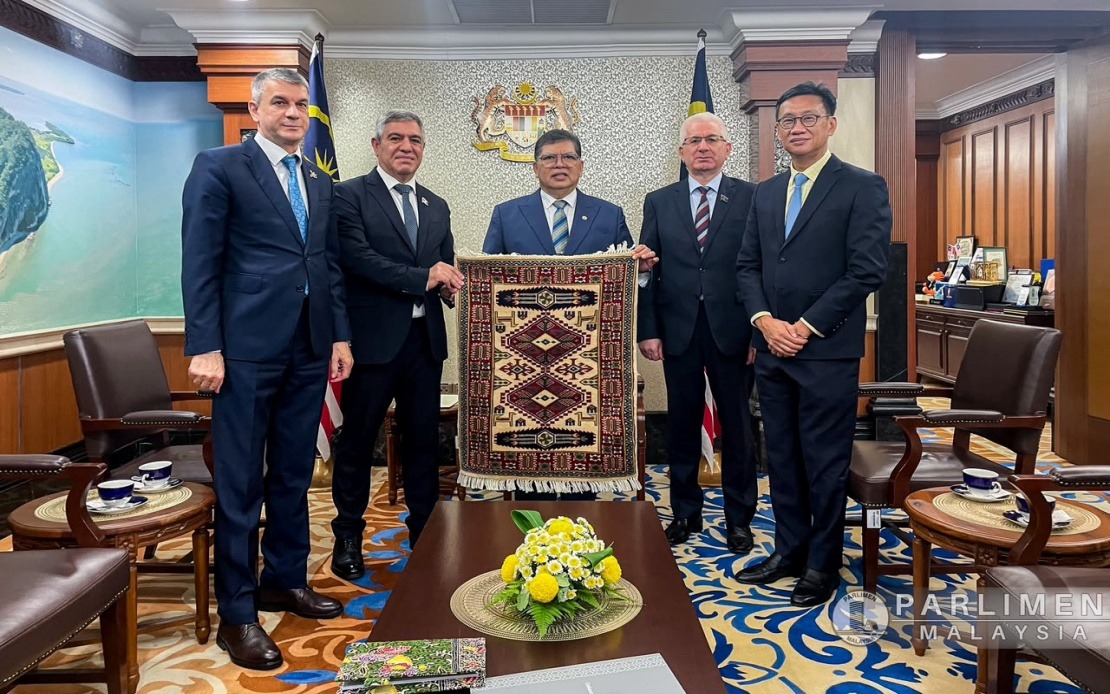
An Azerbaijani parliamentary delegation has undertaken a strategic visit to Malaysia aimed at broadening cooperation across political, economic, and business channels. Led by Vugar Bayramov, head of the Working Group for Azerbaijani-Malaysian Interparliamentary Relations in the Azerbaijani Parliament, the mission underscores the growing intent between Baku and Kuala Lumpur to forge stronger institutional ties at a time when nations across Asia are recalibrating their diplomatic and commercial engagement patterns.
Bayramov travelled alongside fellow parliamentarian Bakhtiyar Aliyev in what the Azerbaijani Embassy described as a working visit designed to expand the scope of bilateral relations beyond ceremonial exchanges. The timing reflects a broader regional trend in which smaller nations are actively cultivating relationships with Southeast Asian economies, recognising Malaysia's position as a gateway to the Association of Southeast Asian Nations and its role as a hub for Islamic finance and commerce in the region.
The visiting delegation held formal meetings with Malaysia's parliamentary leadership, beginning with a courtesy call on Dewan Rakyat Speaker Tan Sri Johari Abdul. This engagement served as the diplomatic foundation for the visit, establishing protocol and signalling serious intent from both sides to elevate relations. The visit subsequently expanded to include sessions with Wong Chen, chairman of the Malaysian Parliament's Special Select Committee on International Relations and International Trade, and Zahir Hassan, who leads the West Asia Friendship Group. These targeted meetings reflect Azerbaijan's strategy to engage with parliamentary figures who directly influence Malaysia's foreign policy and trade priorities.
Further substantive discussions unfolded when the delegation met with Dewan Negara President Datuk Awang Bemee Awang Ali Basah. At this level of engagement, both delegations exchanged perspectives on the trajectory of inter-parliamentary cooperation, moving beyond surface-level courtesy to substantive discussions about mechanisms for sustained collaboration. Such high-level encounters carry symbolic weight in the Malaysian political system, signalling that the bilateral relationship merits attention from the upper house, which plays an advisory role in Malaysia's legislative framework.
Beyond parliamentary channels, the Azerbaijani visitors pivoted toward the economic dimension of the relationship by meeting representatives from over 20 Malaysian business entities. This shift from political to commercial discussions demonstrates a holistic approach to deepening ties, recognising that sustained parliamentary cooperation requires a foundation of economic interdependence and mutual business benefit. The Malaysian National Chamber of Commerce and Industry facilitated these interactions, with secretary-general S.Gnanasambanthan participating in the economic dialogue.
The business-focused portion of the visit concentrated on several concrete areas of potential collaboration. Participants explored mechanisms for strengthening Azerbaijan-Malaysia economic cooperation and identified pathways for expanding business-to-business engagement. Discussions centred on discovering untapped opportunities for trade and investment cooperation, suggesting that existing trade volumes between the two countries have room for expansion. The emphasis on promoting cooperation between the business communities reflects a recognition that private sector engagement often moves faster than government-to-government arrangements and can generate momentum for broader institutional partnerships.
Dawan Rakyat Speaker Johari's public commentary on the visit reframed the diplomatic encounter within a broader philosophical context. In a Facebook post, he emphasised that such parliamentary exchanges transcend the mechanics of formal diplomacy and instead represent people-centred initiatives designed to build human connections across national boundaries. This framing carries particular significance in the Malaysian context, where religious and cultural affinities with Azerbaijan provide additional depth to bilateral relations beyond narrow commercial calculations.
Johari's remarks specifically referenced the contemporary geopolitical environment, noting that at a time of global uncertainty, people-to-people and parliamentary connections serve as stabilising forces. This perspective aligns with Malaysia's diplomatic tradition of emphasising dialogue and engagement as antidotes to international tensions. By positioning the Azerbaijani visit within this philosophical framework, Malaysian political leadership signals that Malaysia views such engagements not merely as transactional but as expressions of a deeper commitment to international stability through sustained human and institutional contact.
The visit arrives amid Azerbaijan's broader engagement strategy within Asia. Baku has invested considerable diplomatic effort in cultivating relationships across the region, particularly with Muslim-majority nations where it can leverage historical and religious commonalities. Malaysia, with its Islamic credentials, economic stability, and regional influence through ASEAN, represents a natural and valuable partner in Azerbaijan's Asian outreach. For Malaysia's part, deepening ties with the Caucasus nation diversifies its diplomatic footprint and creates new avenues for trade and investment in energy and other sectors.
The composition of the Malaysian parliamentary figures who engaged with the Azerbaijani delegation reveals careful positioning. Wong Chen's committee directly influences Malaysia's approach to international commerce and bilateral relations, while the West Asia Friendship Group provides a dedicated channel for nurturing connections within Azerbaijan's regional neighbourhood. By engaging both committees, the Azerbaijani delegation demonstrated sophisticated understanding of Malaysia's parliamentary structure and which individuals and bodies shape policy outcomes.
Looking forward, the visit establishes a platform for sustained engagement rather than a culmination of diplomatic effort. The exchange of views on parliamentary cooperation mechanisms suggests that both sides intend to formalise ongoing contact through structured channels. Such arrangements typically involve regular meetings, cultural exchanges, and coordinated positions on international issues within multilateral bodies. For Malaysian policymakers, the visit presents an opportunity to expand economic relationships and secure potential partnerships in sectors where Azerbaijan possesses competitive advantages, particularly energy and minerals.
The business community's substantial participation in the visit—with over 20 Malaysian entities represented—indicates that economic considerations will likely drive the relationship forward. Trade statistics between Malaysia and Azerbaijan remain modest compared to Malaysia's commerce with larger powers, suggesting considerable untapped potential. The focus on identifying new opportunities rather than expanding existing relationships points toward exploratory phases of partnership development in sectors yet to be fully activated.
The Azerbaijani parliamentary delegation's visit to Malaysia exemplifies the gradual but deliberate expansion of bilateral engagement between nations that recognise complementary interests and strategic value. Through simultaneous cultivation of parliamentary, governmental, and business relationships, both countries are constructing a multifaceted partnership architecture designed to withstand the fluctuations of international relations and create tangible benefits across multiple domains of cooperation.

