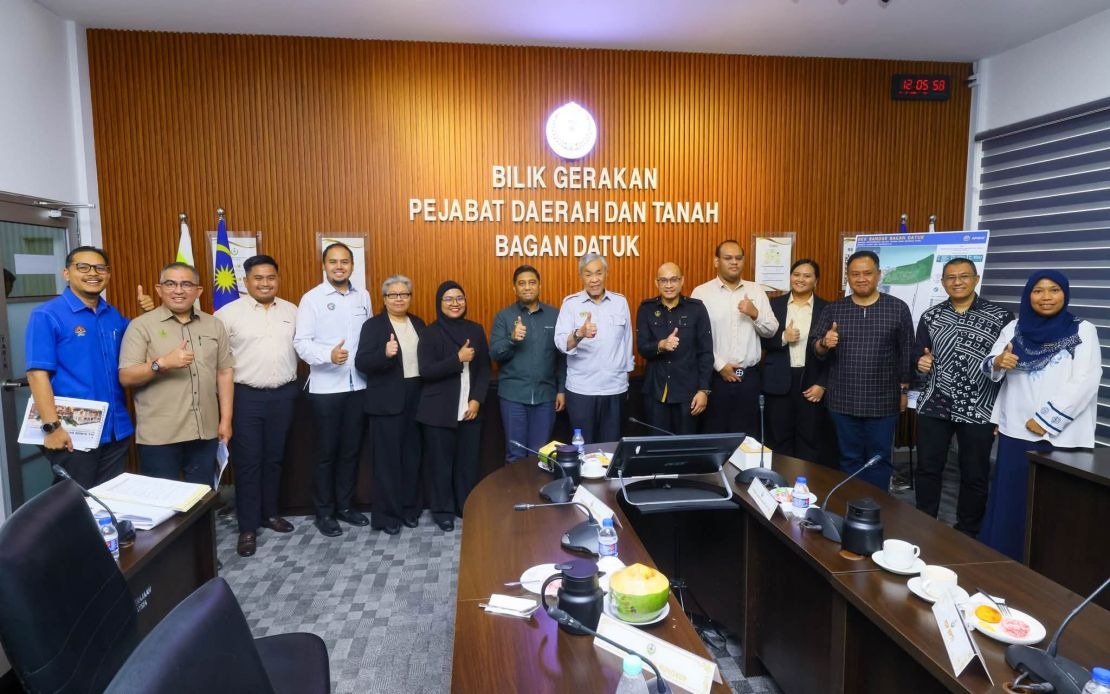
Deputy Prime Minister Datuk Seri Dr Ahmad Zahid Hamidi has unveiled a comprehensive vision for transforming Bagan Datuk into a thriving administrative centre, signalling a significant shift in how the Perak parliamentary constituency is positioned for future growth. Speaking in Ipoh on Wednesday, Zahid, who represents Bagan Datuk in Parliament, stressed that the district possesses untapped potential that, if properly harnessed through strategic planning, could deliver substantial benefits to its residents and establish it as a model administrative town within a park-like setting.
The Deputy Prime Minister's commitment to the constituency's development emerged during a presentation reviewing the special area plan (RKK) for Bagan Datuk, a collaborative effort involving the Teluk Intan Municipal Council, the Bagan Datuk District Office, the Land Office, and planning consultants. This study represents a critical step in translating broad aspirations into concrete, implementable strategies that address the needs of the local community while positioning the district for competitive advantage in an increasingly urbanised Perak landscape.
Zahid's emphasis on creating a "livable, competitive and distinctive administrative town" reflects a modern urban development philosophy that extends beyond conventional infrastructure projects. The vision encompasses not merely roads and buildings, but also quality-of-life amenities, recreational spaces, and an environment conducive to both business investment and residential settlement. This holistic approach suggests recognition that sustainable development requires balancing economic growth with community welfare and environmental considerations.
The special area plan initiative carries particular significance for Perak, a state traditionally reliant on tin mining and palm oil production. By designating Bagan Datuk as an administrative and commercial hub, planners appear intent on diversifying the regional economy and attracting talent and investment that might otherwise gravitate towards larger urban centres like Kuala Lumpur or Penang. This decentralisation strategy aligns with broader national policy efforts to distribute development more equitably across the peninsula.
Zahid's personal connection to Bagan Datuk underscores his political investment in the constituency's fortunes. As a native son now occupying one of Malaysia's highest offices, his involvement signals that central government resources and high-level political attention will likely accompany the development process. This proximity of power to place offers the Bagan Datuk community a potential advantage in securing funding and expediting approvals compared to less politically connected areas.
The proposed development framework indicates a shift from ad-hoc, reactive growth towards comprehensive master planning. By conducting detailed studies before implementation, planners can anticipate infrastructure demands, identify potential bottlenecks, and ensure that development serves local priorities rather than external interests. For constituencies across Southeast Asia grappling with uncontrolled urbanisation, this methodical approach offers a blueprint worth monitoring.
The emphasis on broader economic opportunities reflects awareness that administrative functions alone cannot sustain a modern town. The plan likely envisions attracting businesses in services, light manufacturing, and technology sectors that complement rather than compete with Kuala Lumpur's established position. Creating such complementary economic ecosystems is essential for smaller towns seeking relevance in Malaysia's hierarchical urban system.
Bagan Datuk's transformation would carry implications for the entire Teluk Intan region, potentially creating a more balanced settlement pattern across Perak's western coastline. Currently, development tends to cluster around major urban nodes, leaving intermediate areas underutilised. A successful Bagan Datuk model could inspire similar initiatives elsewhere in the state, gradually rebalancing regional development patterns.
The consultation process involving multiple government agencies and municipal bodies suggests a coordinated approach that, if sustained, could overcome the fragmentation that often hampers development projects in Malaysia. When planning, infrastructure provision, and land administration operate in silos, projects frequently suffer delays and inefficiencies. The inclusive framework here offers hope for more seamless execution.
For Malaysian readers, particularly those in secondary cities and towns, Zahid's commitment to Bagan Datuk signals that political leadership increasingly recognises the imperative of balanced regional development. The constituency's elevation from peripheral area to flagship administrative centre reflects evolving national development priorities that acknowledge the unsustainability of extreme concentration in one or two urban areas.
The realisation of this vision depends critically on sustained political commitment beyond electoral cycles, adequate budget allocation, and genuine responsiveness to community needs during implementation. History suggests that ambitious masterplans often founder when political priorities shift or financial constraints emerge. However, the involvement of the Deputy Prime Minister and the systematic approach undertaken so far suggest that Bagan Datuk's development may enjoy better prospects than many comparable initiatives.
As Malaysia navigates post-pandemic recovery and seeks to enhance its competitiveness regionally, initiatives like Bagan Datuk's transformation gain added weight. By nurturing multiple growth poles rather than concentrating development in established metropolitan areas, the country can better distribute prosperity, reduce urban congestion, and create diverse opportunities for its citizens. The coming months will reveal whether the special area plan translates aspirations into tangible improvements that residents can experience.

