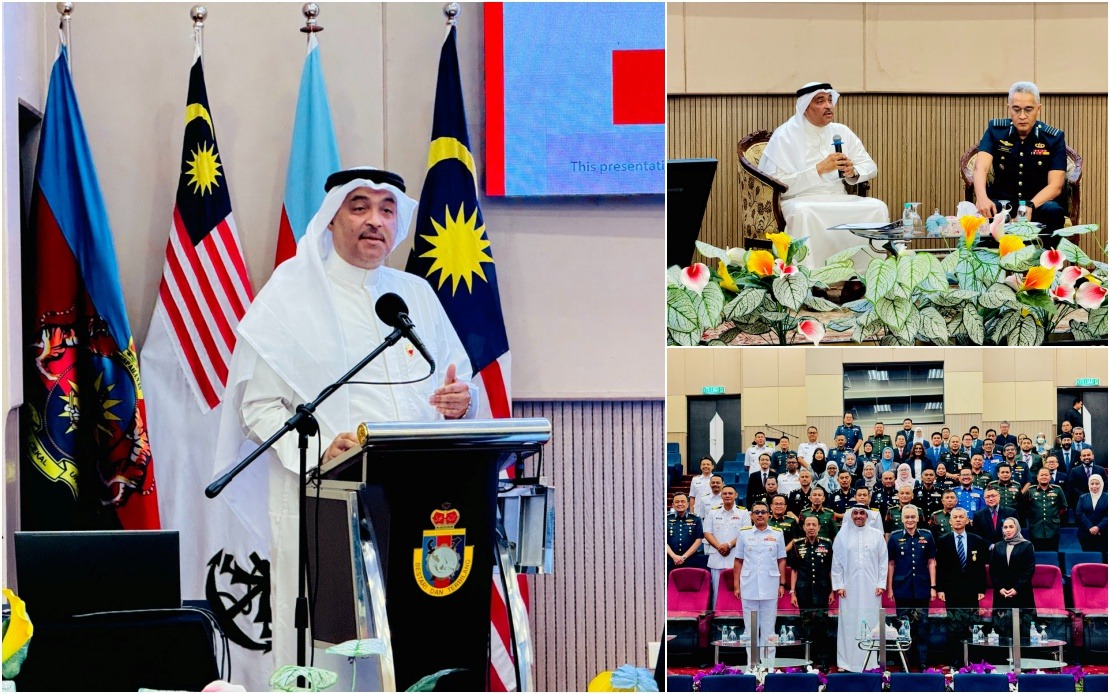
The relationship between Bahrain and Malaysia is entering a new phase of closer strategic engagement, with both countries demonstrating renewed commitment to broadening cooperation across economic, security and diplomatic domains. Bahrain's Ambassador to Malaysia Dr Waleed Khalifa Al Manea articulated this expanding partnership during a high-profile address at the National Resilience College in Putrajaya, signalling that the bilateral relationship has evolved beyond traditional diplomatic courtesy into substantive collaboration addressing shared regional concerns.
At the foundation of this deepening partnership lies personal rapport between the two monarchies. His Majesty King Hamad bin Isa Al Khalifa of Bahrain and His Majesty Sultan Ibrahim, King of Malaysia, have cultivated a relationship that provides political momentum for expanding ties. Simultaneously, leadership at the executive level—comprising Bahrain's Crown Prince and Prime Minister His Royal Highness Prince Salman bin Hamad Al Khalifa and Malaysia's Prime Minister Datuk Seri Anwar Ibrahim—has proven instrumental in translating royal-level goodwill into concrete policy initiatives and institutional frameworks for enhanced bilateral coordination.
One striking indicator of this partnership's maturation is Malaysia's hosting of the 2026 Formula 1 Gulf Air Bahrain Grand Prix, an event with profound symbolic and practical significance. Beyond its status as a sporting spectacle, the race represents an explicit endorsement of Bahrain's international standing and signals Malaysia's willingness to amplify Bahrain's regional visibility. For Malaysia, hosting such a prestigious motorsport event underscores the nation's capacity to facilitate major international gatherings and strengthens bilateral bonds through shared investment in high-profile collaborative ventures.
The ambassador's lecture, delivered at the National Resilience College's Executive Week Programme, provided a window into how both nations are conceptualizing their mutual security interests. Addressing a distinguished audience comprising senior military officers, police leadership, maritime enforcement officials, government ministers, parliamentarians and defence academics, Al Manea outlined Bahrain's comprehensive approach to regional security architecture. This framework integrates sovereign defence, civilian protection, factual documentation and multilateral diplomatic engagement—a doctrine that resonates with Malaysia's own interests in maintaining stable sea lanes, protecting critical infrastructure and advancing regional collective security arrangements.
The Gulf region's security environment has deteriorated markedly, presenting urgent challenges that directly implicate Southeast Asian interests. Bahrain has faced sustained Iranian military pressure, including direct attacks against Gulf Cooperation Council member states, civilian populations and vital shipping infrastructure. These tensions carry ramifications extending far beyond the Arabian Peninsula. For Malaysia and the wider ASEAN bloc, disruptions to maritime trade routes and threats to infrastructure pose existential economic concerns, as these waterways constitute critical conduits for regional commerce. Al Manea's emphasis on documenting Iranian attacks and advancing collective international response reflects Bahrain's recognition that regional stability serves universal interests.
Bahrain's presidency of the United Nations Security Council in April provided an opportunity to translate regional security concerns into international policy instruments. During its tenure, Bahrain championed efforts to safeguard maritime navigation, protect freedom of passage and secure critical infrastructure from attack. This advocacy extended beyond rhetorical commitment, as the kingdom successfully mobilized the Security Council to advance concrete security measures with global implications. Malaysia's co-sponsorship of UN Security Council Resolution 2817 demonstrates how Kuala Lumpur has aligned itself with Bahrain's diplomatic agenda, explicitly reaffirming state sovereignty, emphasizing civilian protection and demanding cessation of aggression.
The convergence of interests between Bahrain and Malaysia reflects broader strategic realities shaping the Indo-Pacific and Middle East security landscape. Both nations occupy geographically sensitive positions commanding vital trade routes and possess populations requiring protection from regional volatility. Malaysia's decision to co-sponsor the resolution signifies recognition that Middle Eastern instability threatens Southeast Asian prosperity and security. Conversely, Bahrain's outreach to Malaysia demonstrates understanding that addressing Gulf security challenges requires building coalitions extending beyond traditional Gulf and Western partnerships.
The lecture's attendance by Malaysia's defence and security establishment—spanning the National Resilience College, Armed Forces, Royal Malaysia Police and Maritime Enforcement Agency—underscores official prioritization of deepening security dialogue. The presence of parliamentarians and academics indicates efforts to build whole-of-government and whole-of-society understanding of shared threats. This comprehensive engagement approach suggests both capitals recognise that sustainable strategic partnerships require embedding bilateral security interests across governmental hierarchies and civil society institutions.
Bahrain's presentation of a security framework combining defence, diplomacy and documentation reflects sophisticated understanding of contemporary security challenges. The kingdom's emphasis on factual record-keeping, particularly regarding Iranian aggression, addresses concerns that competing narratives can undermine collective security responses. For Malaysia and ASEAN, this approach offers valuable lessons in countering misinformation and building consensus around shared threats in an environment where competing powers attempt to exploit informational vacuums.
Looking forward, the Bahrain-Malaysia partnership appears positioned to expand into emerging security domains including maritime coordination, cyber resilience and counter-terrorism cooperation. The breadth of cooperation already encompassed—spanning diplomatic representation, high-level visits, multilateral coordination and now sporting mega-events—suggests both nations view their relationship as foundational to their respective regional strategies. For Malaysia, closer ties with Bahrain provide a gateway to deeper engagement with Gulf states addressing shared security concerns. For Bahrain, Malaysia represents a crucial Southeast Asian partner validating its diplomatic agenda and amplifying its voice in international forums addressing regional stability.

