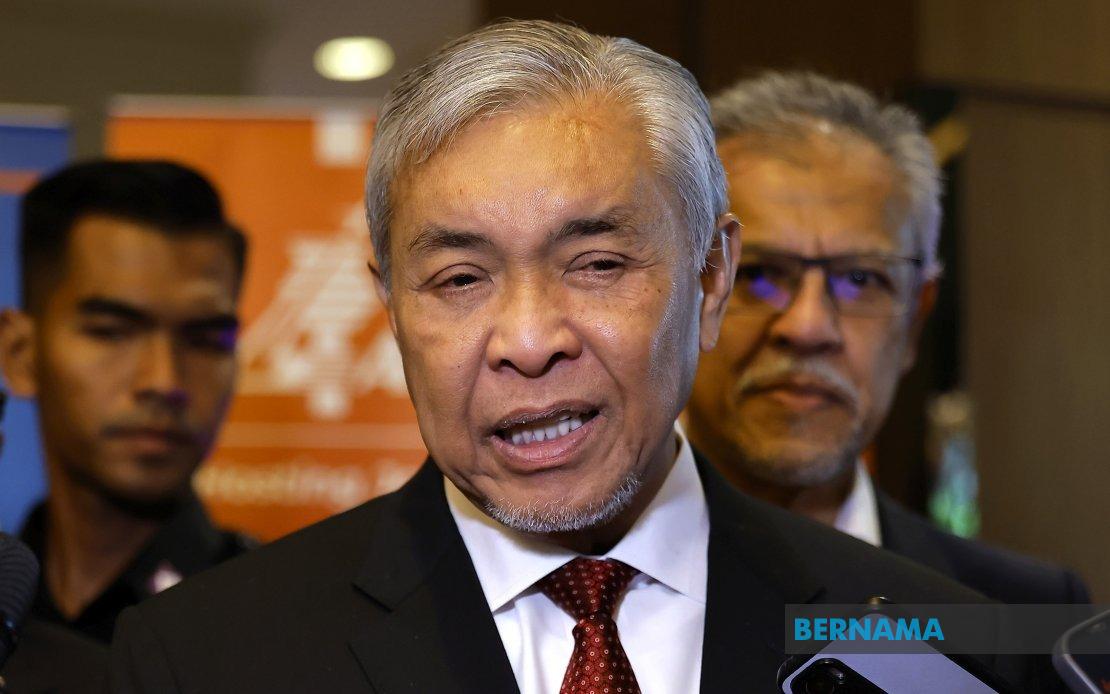
Malaysia is set to welcome the Formula One Bahrain Gulf Air Grand Prix to the Sepang International Circuit this October, an event Deputy Prime Minister Datuk Seri Dr Ahmad Zahid Hamidi says will unlock considerable economic opportunities for the nation. While the emirate of Bahrain will absorb the substantial costs of staging the race, Malaysia stands to gain significantly through increased international tourist flows, enhanced global positioning, and potential investment inflows triggered by the heightened visibility.
Ahmad Zahid outlined the strategic calculus behind the arrangement during remarks at the launch of the National Air Disaster Preparedness 2026 workshop at Sepang. The economics extend far beyond the immediate visitor numbers that typically accompany major motorsport events. Formula One commands a global television audience numbering in the billions, a reach that transforms participating host nations into prime destinations for international business, tourism marketing, and future sporting opportunities. The race transmission will saturate global media channels, positioning Malaysia prominently on the world stage at minimal direct financial burden.
The Sepang International Circuit has operated considerably below its potential in recent years, limited largely to hosting the MotoGP championship annually. The venue boasts infrastructure meeting the most exacting international standards, yet much of its capacity remains dormant throughout the calendar year. Staging the Bahrain F1 Grand Prix represents an opportunity to demonstrate and utilise these underdeployed world-class facilities, showcasing Malaysian hosting capability to the international motorsport community. The successful execution of such a high-profile event signals to future promoters that the country possesses both the physical infrastructure and organisational competence required for elite international competitions.
Ahmad Zahid articulated an ambitious longer-term vision for Malaysia's motorsport future. The successful hosting of the Bahrain race could strengthen the nation's credentials in bidding to reclaim its own Formula One Grand Prix slot in future seasons. This aspiration, however, hinges upon two critical factors: sustained government financial commitment and robust corporate sector engagement. Malaysia previously held its own F1 championship berth, but competing financial pressures and shifting promotional priorities eventually led to its discontinuation. The Deputy PM suggested that reverting to direct government budget allocations alone would prove insufficient for future F1 hosting, pointing instead toward a hybrid model combining public development projects with private sponsorship arrangements.
The approach Ahmad Zahid championed draws from the demonstrable success of Malaysia's MotoGP strategy. Following directives from Prime Minister Datuk Seri Anwar Ibrahim, the Cabinet restructured MotoGP funding mechanisms to reduce reliance on annual Ministry of Youth and Sports appropriations channelled through the Finance Ministry. Instead, the model evolved toward a collaborative arrangement incorporating infrastructure development initiatives, corporate sponsorship commitments, and joint management structures operating under what officials term a "smart partnership" framework. This diversified funding approach distributes financial responsibility across multiple stakeholders while aligning private sector interests with public sporting objectives.
Formula One and the International Automobile Federation officially confirmed Malaysia's hosting status yesterday, with the Sepang event scheduled for October 2 to 4, 2026. The confirmation remains provisional, contingent upon execution of final contractual agreements and formal approvals from the World Motor Sport Council. The race sits strategically positioned on the international calendar between the Azerbaijan Grand Prix and the Singapore Grand Prix, placing it within the Asian motorsport corridor and facilitating regional fan engagement. This timing and geographic positioning maximises potential spillover tourism benefits for Malaysia, as enthusiasts travelling through the region for multiple races concentrate their spending across several Southeast Asian destinations.
The economic implications for Malaysia warrant careful examination beyond surface-level tourist arrival projections. International sporting events of F1's magnitude typically generate multiplier effects throughout hospitality, transport, retail, and entertainment sectors. Airlines typically increase capacity on Malaysia-bound routes; hotels across Kuala Lumpur and surrounding areas experience occupancy surges; restaurants, shopping centres, and leisure facilities benefit from elevated consumer spending. Ground transportation, from ride-sharing services to rental car agencies, experiences heightened demand. Local suppliers serving the event infrastructure, catering operations, and support services gain competitive advantages and exposure to international procurement networks.
The long-term investment implications prove potentially more significant than immediate tourism revenues. Nations successfully hosting prestigious international events often attract subsequent investments from companies seeking to establish regional hubs in proven, capable destinations. The global motorsport industry encompasses design firms, engineering consultants, manufacturing suppliers, and logistics providers constantly evaluating potential expansion locations. A successfully executed F1 Grand Prix demonstrates to such entities that Malaysia possesses not merely static infrastructure but active management competence, regulatory predictability, and supply chain sophistication. This soft-power advantage can translate into facility investments, headquarters relocations, and subsidiary establishments across multiple industries tangentially connected to motorsport but drawn by demonstrated operational excellence.
Challenges remain embedded within this optimistic narrative. Bahrain's assumption of direct hosting costs, while mathematically beneficial to Malaysia, reflects commercial realities of F1 promotion that warrant scrutiny. The race's relocation from Bahrain to Malaysia, though superficially styled as a "Bahrain Grand Prix" held in Malaysia, represents a complex financial and political arrangement serving interests beyond simple sporting competition. F1 promoters consistently pursue cost-containment strategies, often negotiating arrangements where multiple parties contribute to event staging while branding and commercial rights flow through established channels. For Malaysian policymakers, the critical consideration involves ensuring that economic benefits genuinely accrue to local stakeholders rather than flowing primarily to international promoters and race operators.
The Sepang circuit's successful management of this high-profile event will substantially influence Malaysia's competitive position for future major sporting events. Southeast Asia increasingly competes to host premier international competitions as tourism and investment instruments. Thailand, Vietnam, and Indonesia all pursue similar strategies of leveraging expensive infrastructure to generate outsized economic and promotional returns. Malaysia's track record with MotoGP, combined with a successful F1 execution in 2026, would position the nation as the region's premier motorsport destination, a designation carrying implications across tourism planning, hospitality sector development, and international business perceptions of Malaysian institutional capability.
Looking forward, Ahmad Zahid's framing of this opportunity emphasises sustainability and strategic repetition rather than treating the event as a singular occurrence. The Deputy PM's emphasis on building toward future F1 hosting suggests policymakers envision motorsport as an ongoing component of Malaysia's international positioning strategy. This perspective requires consistent investment in venue maintenance, staff capability development, and the cultivation of sponsorship relationships extending beyond any single event. The partnership model he advocated—blending government infrastructure support with corporate funding commitment—represents an evolution in how Southeast Asian nations approach major international events, moving beyond purely public funding models toward structures reflecting modern private-public collaboration in event promotion.

