Bahrain's development minister has confirmed that the kingdom remains financially disciplined enough not to have activated a $5.3 billion currency swap facility agreed with the United Arab Emirates, signalling underlying economic resilience despite mounting external pressures. The disclosure comes as the Gulf state navigates one of the region's most challenging economic environments following escalating tensions that have disrupted trade routes and deterred investment across the Arabian Peninsula.
Noor bint Ali Alkhulaif, who leads Bahrain's Sustainable Development Ministry and chairs the Economic Development Board, acknowledged in an interview that the timing of the regional instability has complicated what the government had intended as a transformational year for the kingdom. The government's carefully calibrated development agenda has been thrown off course by geopolitical events beyond its control, though Alkhulaif characterised the situation as temporary rather than systemic. Her comments reflected a delicate balance between acknowledging genuine economic headwinds and projecting confidence to international investors and rating agencies.
The broader economic picture facing Bahrain is undeniably sobering. Credit rating analysts at S&P Global project that the cumulative impact of regional conflict will translate into a three per cent contraction of gross domestic product throughout 2024, compounded by a fiscal deficit approaching 8.5 per cent of GDP. These metrics place Bahrain among the Gulf Cooperation Council states most vulnerable to supply chain disruptions and capital flight, given its traditional reliance on trade throughlines and financial services. The kingdom's already substantial debt burden—one of the heaviest in the region—leaves limited fiscal space for stimulus measures or emergency support programmes.
Yet Bahrain's refusal to draw upon its emergency liquidity cushion suggests officials believe the economic shock will prove temporary rather than structural. The $5.3 billion swap, secured through the central bank in April, functions as insurance against more severe financial stress but remains untouched as of late July. This restraint indicates confidence that current revenue streams, supplemented by regional tourism and the resumption of logistics operations, will suffice to bridge the near-term financing gap. Alkhulaif noted that major manufacturing and distribution enterprises have successfully rerouted shipments away from the Strait of Hormuz, reducing the exposure that initially triggered downward economic revisions.
Tourism patterns offer further encouragement. Visitors from neighbouring Gulf states, who comprised approximately 90 per cent of Bahrain's 15 million tourist arrivals in the previous year, have largely resumed travel despite security concerns. This represents a meaningful recovery from the immediate post-conflict collapse in visitor numbers and suggests that regional confidence, at least among high-income leisure travellers, has stabilised. International tourist segments remain more cautious, but their absence accounts for only marginal revenue loss given their smaller numerical share.
Foreign exchange reserves have nonetheless tightened considerably. Official holdings have retreated to roughly $3 billion, marking the lowest point since the COVID-19 pandemic disrupted global economies. This deterioration reflects both the immediate revenue shock from conflict and ongoing pressure on currency inflows as investors await clarity on the security environment. The central bank will monitor reserve adequacy closely, particularly if regional tensions persist beyond the third quarter. However, the decision not to activate the UAE swap indicates confidence that reserve depletion will stabilise within acceptable margins.
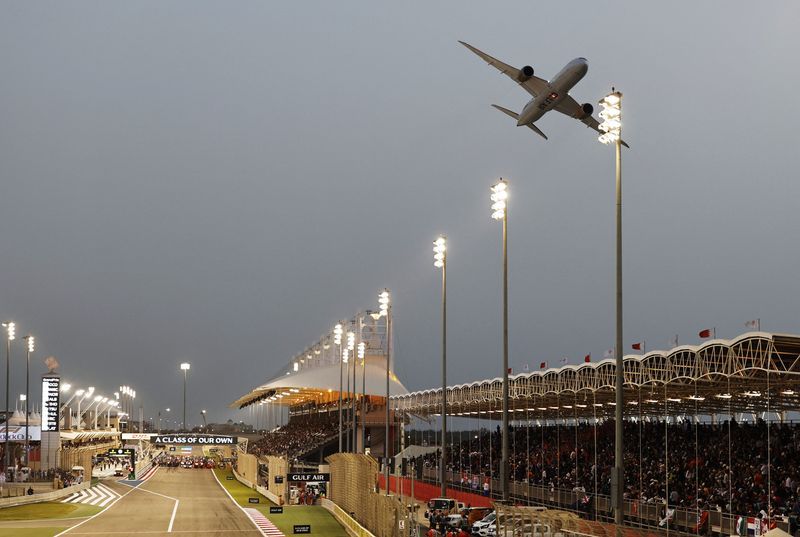
Parallel negotiations aimed at restoring Bahrain's Formula One Grand Prix represent both a symbolic and material priority for government planners. The prestigious motorsport event, originally scheduled for March, was postponed indefinitely when regional hostilities escalated, affecting not only Bahrain but also Saudi Arabia's inaugural Grand Prix. Formula One sources indicate October 3-4 represents the most viable calendar slot, positioned between the Baku Grand Prix on Azerbaijan soil and Singapore's major racing weekend on October 11. This narrow window provides sufficient spacing for team logistics while avoiding conflicts with competing calendar obligations.
The economic significance of the Bahrain Grand Prix extends beyond prestige. The racing weekend typically draws 105,000 spectators to the Sakhir Circuit, with approximately 10 to 15 per cent representing high-spending international visitors who inject substantial foreign currency into the hospitality, retail, and premium services sectors. Beyond immediate race weekend spending, successful hosting strengthens Bahrain's positioning as a global destination and signals normalisation to corporate investors and institutional capital managers. A cancellation would compound current economic perception, whereas restoration would provide tangible evidence of security stabilisation.
Alkhulaif acknowledged that recovery of the F1 calendar depends partly on de-escalation between the United States and Iran, factors beyond Bahrain's direct control. Nevertheless, she indicated that preliminary discussions have commenced regarding reinstatement of the cancelled races, with no formal confirmation yet provided but significant momentum building toward a positive resolution. Formula One's commercial timelines demand clarity within weeks rather than months, forcing decision-making before full regional confidence returns.
Looking further ahead, Bahrain's longer-term motorsport positioning offers additional encouragement. The kingdom appears positioned to reclaim the prestigious opening race of the 2026-27 F1 season, a status that generates substantial economic spillovers and media attention. The scheduling advantage of Ramadan shifting earlier in 2026 aligns fortuitously with Bahrain's ability to host preliminary testing operations and championship rounds without conflict. However, this optimistic projection remains contingent on continued de-escalation and absence of major security incidents through the coming seasons.
Bahrain's current posture reflects calculated pragmatism. By maintaining financial discipline while avoiding premature deployment of emergency liquidity, officials preserve strategic flexibility should conditions deteriorate further. Simultaneously, pursuit of the F1 Grand Prix's return demonstrates confidence in near-term stabilisation and commitment to economic diversification beyond traditional hydrocarbon and financial sectors. The coming weeks will prove critical in determining whether this balancing act succeeds or whether deeper financial stress emerges, necessitating activation of the UAE currency swap and broader policy adjustments.

