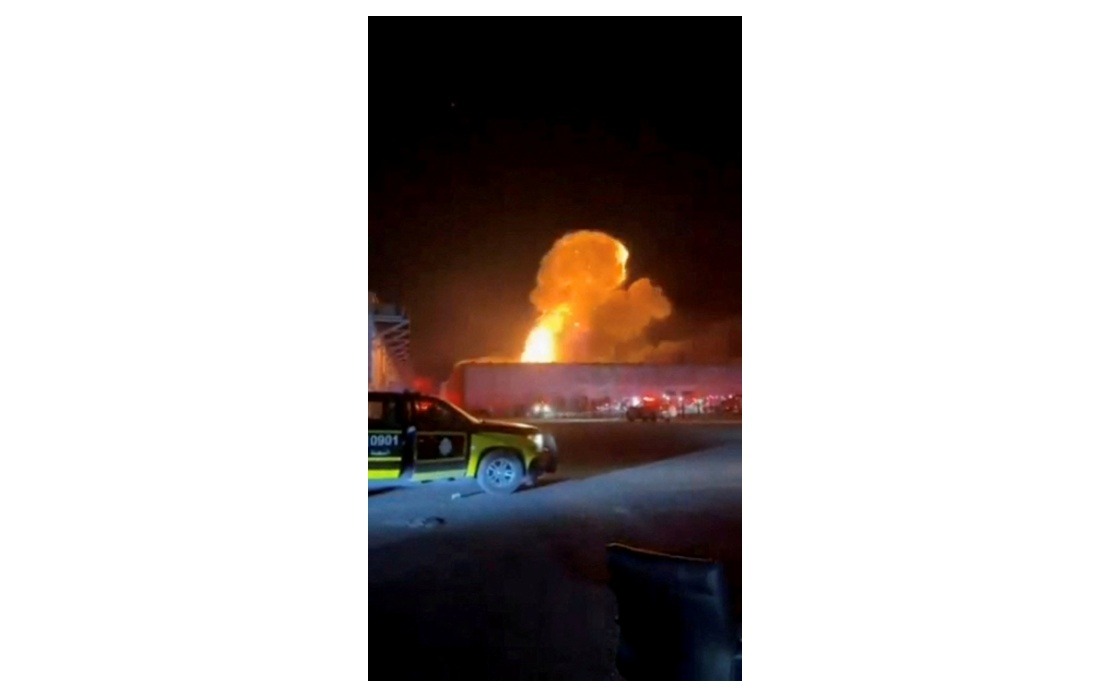
The Persian Gulf entered a new phase of acute instability on Friday when three major regional powers simultaneously activated emergency warning systems, signalling an imminent or ongoing security threat of serious proportions. The coordinated activation of air raid sirens and public safety directives across Bahrain, Qatar and Kuwait reflected the gravity of the situation unfolding in one of the world's most strategically vital regions, home to critical global energy infrastructure and significant American military presence.
Bahrain's Interior Ministry was among the first to respond, activating comprehensive warning systems that alerted residents to seek immediate shelter in designated safe locations. The rapid escalation of protective measures indicated authorities had credible intelligence regarding active threats to civilian populations. Similarly, Qatar's Interior Ministry issued urgent guidance for citizens and residents to remain indoors and maintain positions in secure facilities, explicitly noting that the national security threat level had been elevated to a critical threshold. These parallel actions across two Gulf Cooperation Council members suggested a coordinated regional response to a shared threat environment.
Kuwait's response proved more militarily assertive, with the country's armed forces announcing that air defence systems were actively engaging incoming hostile projectiles. The Kuwaiti army reported fielding attacks from both missiles and unmanned aerial systems, though military officials declined to release detailed information about the nature, origin or extent of the incoming strikes. This operational posture indicated that Kuwait faced imminent kinetic threats requiring real-time defensive action rather than merely precautionary measures.
The immediate trigger for this cascade of emergency alerts traced directly to Iranian military operations launched against American facilities in the region. The Iranian armed forces claimed responsibility for conducting drone strikes specifically targeting a United States military installation located in Bahrain, which serves as headquarters for the US Fifth Fleet and represents a key component of American strategic positioning in the Middle East. This announcement by Tehran represented a deliberate escalation in the ongoing cycle of tit-for-tat military actions that have defined Gulf security dynamics for months.
The current crisis represents an intensification within a much broader pattern of regional conflict that gained momentum earlier this year. On February 28, the United States and Israel executed a coordinated military offensive against Iran, unleashing sustained air campaigns and precision strikes against Iranian military targets. Iran responded in kind with cascading barrages of ballistic missiles and unmanned drones directed at Gulf states hosting American military infrastructure, including Saudi Arabia and the United Arab Emirates. These exchanges established a concerning precedent of direct military strikes bypassing diplomatic channels.
Notably, diplomatic efforts had recently offered a potential pathway toward de-escalation. Last month, Pakistan successfully mediated negotiations between Iranian and American representatives, producing a framework agreement designed to arrest the cycle of retaliation and establish conditions for comprehensive peace negotiations. Both sides publicly committed to the process, and international observers cautiously optimistic that the agreement might create space for confidence-building measures and conflict resolution mechanisms. The recent attacks effectively invalidated those optimistic assessments.
The renewed tensions specifically centred on control and security arrangements affecting the Strait of Hormuz, the narrow waterway through which approximately one-third of globally traded petroleum passes daily. Both Iran and the United States have undertaken provocative military posturing in these contested waters, with each side accusing the other of initiating hostile actions. For Malaysia and other Southeast Asian nations heavily dependent on uninterrupted energy supplies routed through this chokepoint, the escalation carries profound economic implications. Any sustained disruption to shipping or interruption of energy flows could trigger secondary effects throughout Asian supply chains and energy markets.
The progression from a brokered peace framework to active military operations within weeks underscores the fragility of conflict resolution in an environment characterised by deep structural mistrust and competing strategic interests. The Iranian perspective emphasises regional autonomy and opposition to foreign military presence, while American interests centre on maintaining naval freedom of navigation and protecting allied governments. These fundamentally incompatible objectives have repeatedly frustrated diplomatic initiatives throughout the past two decades.
For Malaysia and the broader Southeast Asian region, these developments demand careful attention beyond their immediate dramatic elements. Prolonged instability in the Gulf carries consequences for regional economies, security calculus, and diplomatic positioning. Southeast Asian nations maintain delicate diplomatic balances between Iran, the United States and their allies, making regional escalation problematic for maintaining beneficial relationships across multiple power centres. The potential for miscalculation to spiral into wider conflict, whether through accident or deliberate escalatory decisions, represents an existential threat to global economic stability and maritime security.
The activation of emergency protocols across three Gulf states Friday morning reflected the realistic assessment by regional governments that the diplomatic window has substantially narrowed. With Pakistan's mediation framework apparently ineffective at preventing renewed military action, the burden shifts toward international actors with sufficient leverage to encourage both sides toward genuine restraint. Whether regional and global powers can mobilise such influence before miscalculation triggers irreversible escalation remains the critical question defining Gulf security outlook.

