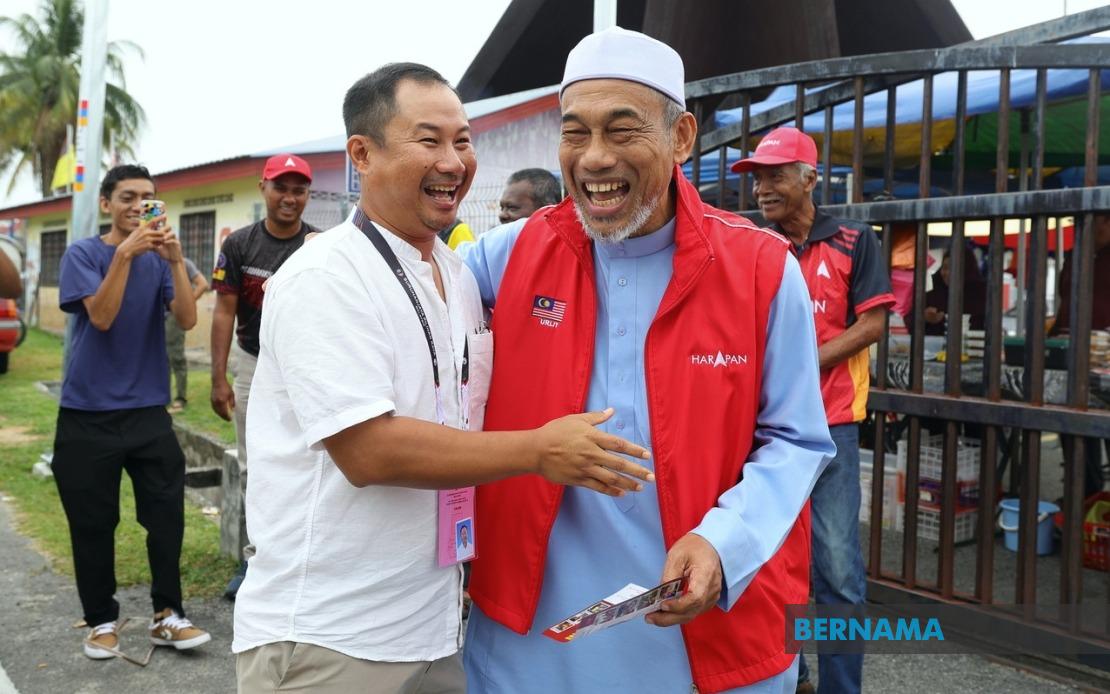
Datuk Bakri Sawir, the Pakatan Harapan candidate for Klawang in the forthcoming Negeri Sembilan state election, is anchoring his campaign on a decade-long commitment to direct constituent engagement and tangible development work. The 67-year-old two-term assemblyman, who has represented the constituency since 2018, believes his hands-on service model and residential presence within Klawang distinguish him from competitors in an increasingly competitive electoral landscape.
The crux of Bakri's campaign narrative rests on what he terms a "people-centric approach" that transcends conventional constituency office operations. Rather than positioning himself as an administrator waiting in an office, Bakri emphasises that he initiates contact by visiting residents at their homes, understanding local challenges directly and delivering assistance without requiring constituents to navigate bureaucratic channels. This methodology reflects a deliberate philosophical position: that effective representation demands physical proximity and accessibility rather than institutional distance. For a constituency with fewer than 14,000 voters, such personalised engagement becomes strategically viable and, Bakri argues, measurably more effective than periodic campaign appearances.
Bakri's decision to reside continuously within Klawang functions as both practical strategy and campaign talking point. By maintaining a permanent presence rather than operating from outside the constituency boundaries, he remains available for constituent emergencies and develops relationships that extend beyond electoral cycles. He frames this commitment as a confidence statement—suggesting that representatives should stake their own living conditions on the quality of their governance record. This contrasts implicitly with politicians who retreat from constituencies between elections, a critique increasingly resonating across Malaysian electoral politics.
Acknowledging that unanimous support remains impossible, Bakri articulates a philosophical accommodation toward political pluralism. He positions politics itself as a moral undertaking rather than purely a competition for power, invoking religious language to describe his intentions as transforming political service into worship and spiritual progress. This framing permits him to respect opponents' right to alternative choices whilst maintaining campaign intensity—a delicate balance particularly important in Negeri Sembilan's religiously conscious electorate.
Among Bakri's unfulfilled ambitions sits the establishment of Universiti Malaysia Negeri Sembilan within the Jelebu district. Originally proposed to strengthen human capital development across the region, this initiative has encountered persistent obstacles related to state fiscal constraints. Rather than abandoning the vision, Bakri indicates continued pursuit despite financial realities, presenting it as evidence of his long-term constituency thinking. The university concept reflects aspirations for transforming Jelebu's economic structure beyond resource extraction toward knowledge-based employment.
More immediately achievable projects form the practical foundation of Bakri's second-term agenda. A Rest and Recreation Area under development in Tembun, Hulu Klawang represents infrastructure designed to capture spending from North-South Expressway travellers. By improving stopover facilities, Bakri theorises that tourist expenditure patterns will shift, generating commercial opportunities for local businesses and justifying the facility's public investment. This represents corridor-based development thinking increasingly common in Malaysian state politics.
Bukit Tajali's proposed transformation into a recreational park signals Bakri's attempt to diversify Klawang's economic base through leisure tourism. The project encompasses multiple activity categories—from casual recreation to structured adventure tourism—suggesting an understanding that rural constituencies require multifaceted development approaches rather than monoculture economies. Similar strategies have gained traction across Malaysian state assemblies as urbanisation depletes rural populations and tax bases.
The agrotourism sector development strategy leverages Jelebu's historical assets, specifically the British Memorial Stone site. This approach recognises how colonial heritage, when properly contextualised, attracts international tourist interest and justifies agricultural preservation. Agrotourism represents a compromise between traditional farming and tourism economics, permitting rural communities to maintain cultural practices whilst capturing urban visitor spending.
Klawang's electoral contest involves three candidates: Bakri representing Pakatan Harapan, Danni Rais (38) contesting for Perikatan Nasional, and Muhammad Adib Musa (25) running under Parti Pribumi Bersatu Malaysia. The three-way split creates unpredictable dynamics, particularly given Bersatu's fractious relationships with both major coalitions. Rais brings generational experience while Musa represents youth-oriented politics, adding demographic dimensions to Bakri's experience-based positioning.
The 16th Negeri Sembilan State Election, scheduled for August 1 with early voting on July 28, involves 889,490 registered voters across the state. The state assembly's June 5 dissolution triggered the current campaign cycle. Early voting provisions for military personnel (16,884) and police (5,455) introduce additional tactical considerations, as these groups' voting patterns sometimes diverge from civilian population trends and potentially shift marginal contests.
Bakri's reelection prospects depend substantially on whether his constituency-building activities have generated sufficient goodwill to overcome broader political currents affecting Negeri Sembilan. State-level performance, coalitional dynamics, and national political sentiment all influence individual constituency races. His emphasis on local achievements and personal accessibility seeks to insulate his campaign against external political forces by emphasising direct constituency service rather than national political narratives.

