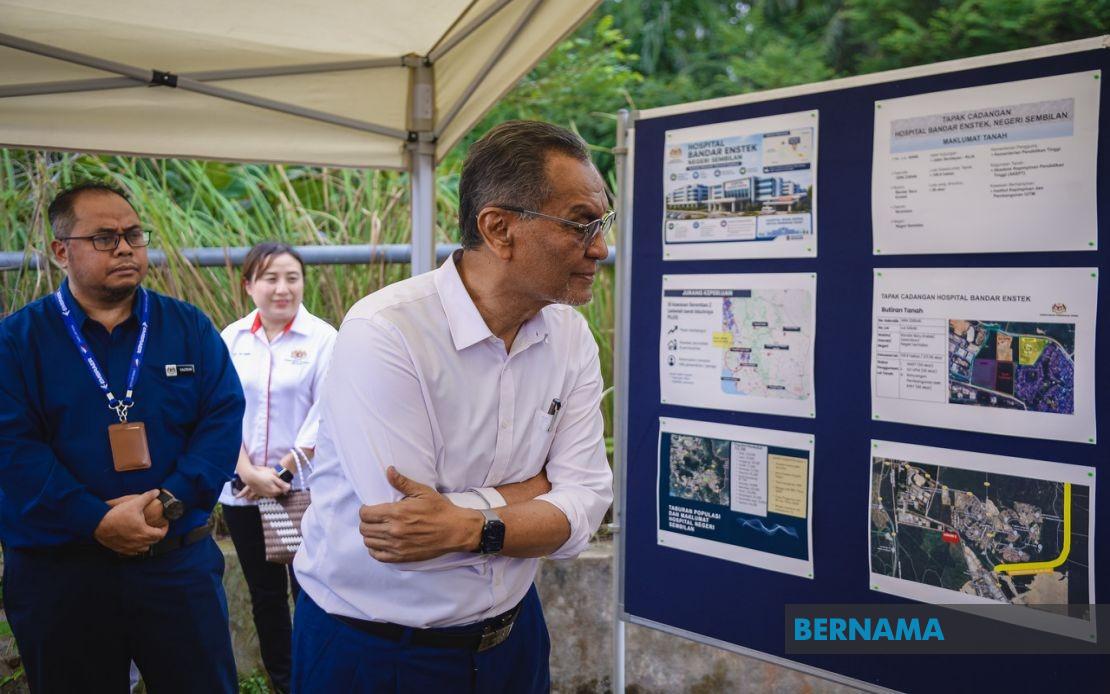
Health Minister Datuk Seri Dr Dzulkefly Ahmad confirmed on Monday that the Bandar Enstek Hospital, to be constructed across a 50-acre plot in Bandar Baru Enstek within Seremban district, will become fully operational by 2032. The initiative represents a significant infrastructure commitment aimed at addressing healthcare demands for an estimated 700,000 people residing across Seremban, Nilai, Labu, Lenggeng, Seremban 2, Sendayan and neighbouring localities. The announcement comes as the Federal Government accelerates its healthcare expansion strategy under the 13th Malaysia Plan.
The development process has entered its critical phase, with the Federal land acquisition process now in its final stages. The property concerned currently falls under the administration of the Ministry of Higher Education, requiring formal transfer procedures before construction can commence. Dzulkefly disclosed that construction activities are anticipated to launch as early as 2028 upon completion of the acquisition formalities. Prime Minister Datuk Seri Anwar Ibrahim has already allocated RM30 million within the 2026 Budget specifically earmarked for land acquisition and preliminary project works, demonstrating the government's commitment to moving the initiative forward within the established timeline.
When fully completed, the specialist hospital will initially provide 350 beds designed to accommodate a diverse range of medical specialities and treatment modalities. This capacity is strategically planned to increase in phases, ultimately reaching a maximum of 500 beds as healthcare demands in the region grow. The phased expansion approach allows for flexible implementation aligned with actual demand patterns and budget cycles, minimising infrastructure waste while ensuring steady service enhancement. This incremental growth model has proven effective in similar regional hospital developments across Southeast Asia.
The selection of Bandar Baru Enstek as the preferred location reflects deliberate strategic planning by government agencies. The site benefits from its positioning within the Malaysia Vision Valley corridor, a designated economic development zone that receives preferential investment support. Additionally, the location offers excellent accessibility via the regional highway network, facilitating patient referrals from surrounding districts and reducing travel burdens for residents requiring specialist treatment. These geographical advantages have historically contributed to improved patient outcomes and operational efficiency in comparable healthcare facilities across the region.
The new hospital will substantially alleviate pressure on Tuanku Ja'afar Hospital, currently the primary referral facility for Negeri Sembilan. That institution has experienced increasing strain as the state's population expands and healthcare needs become more complex. By distributing specialist services across two major centres, the healthcare system achieves better load balancing, reduces patient waiting times, and enables Tuanku Ja'afar Hospital to focus on its core referral functions without overwhelming capacity constraints. This structural improvement mirrors best practices observed in established healthcare systems throughout developed economies.
Dzulkefly emphasised that the hospital project represents a long-term strategic investment designed to strengthen Negeri Sembilan's healthcare infrastructure over the coming two to three decades. Rather than addressing immediate emergency needs, the initiative reflects comprehensive healthcare planning that anticipates demographic shifts, urbanisation trends, and evolving disease patterns. The Ministry of Health intends to maintain active collaboration with the Negeri Sembilan state government, relevant Federal ministries, and implementing agencies to ensure timely project execution and successful service delivery upon completion. This coordinated approach has proven essential for delivering complex infrastructure projects within Malaysia's federal-state governance framework.
Significantly, the Health Minister dismissed suggestions that the hospital announcement constituted election-related campaign promises ahead of the Negeri Sembilan state elections held on Saturday. Dzulkefly asserted that the project originated from sustained advocacy efforts spanning since 2024, with Negeri Sembilan Menteri Besar Datuk Seri Aminuddin Harun raising healthcare capacity concerns in March 2024. This chronology establishes the initiative as a response to genuine infrastructure deficits rather than opportunistic political messaging. The documentation of prior healthcare need assessments lends credibility to the government's healthcare expansion narrative and demonstrates systematic planning processes underlying capital investment decisions.
The Bandar Enstek Hospital project sits within Malaysia's broader healthcare modernisation agenda, which seeks to expand specialist capacity beyond the Klang Valley and traditional centres of medical excellence. As urbanisation accelerates throughout the Klang Valley's southern periphery, satellite facilities become increasingly necessary to maintain healthcare accessibility standards. Seremban and surrounding areas have experienced substantial population growth, yet specialist medical services remain concentrated in the capital region, creating geographical disparities in treatment access. The new hospital directly addresses these regional imbalances through strategic facility placement.
For Malaysian healthcare professionals, the hospital represents significant employment and career development opportunities. Specialist recruitment will occur across numerous disciplines, from consultant physicians and surgeons to nursing staff and diagnostic technicians. The phased opening timeline allows training institutions to prepare suitable candidates, potentially reducing the acute specialist shortages affecting some Malaysian districts. Regional medical students may view the hospital as an attractive placement destination, encouraging talent retention within Negeri Sembilan rather than permanent migration to Kuala Lumpur or overseas employment.
The RM30 million initial allocation signals government willingness to commit substantial resources to regional healthcare infrastructure despite competing budget priorities. However, the project timeline extending to 2032 suggests that full project costs will be distributed across multiple budget cycles and potentially supplemented through additional funding mechanisms. Healthcare administrators and state planners must develop comprehensive financial strategies to sustain implementation momentum across the extended timeline, particularly given the likelihood of construction cost inflation during the 2028-2032 period.
From a Southeast Asian perspective, Malaysia's commitment to distributed healthcare infrastructure offers instructive lessons for neighbouring economies managing similar urbanisation challenges. Thailand, Indonesia, and the Philippines face comparable pressures regarding specialist service concentration in capital cities. The Bandar Enstek initiative demonstrates that Federal systems can deliberately redirect investment toward secondary urban centres, potentially replicating effective approaches throughout the region. ASEAN health cooperation forums may find value in examining how Malaysia balances national resource allocation with regional equity objectives.

