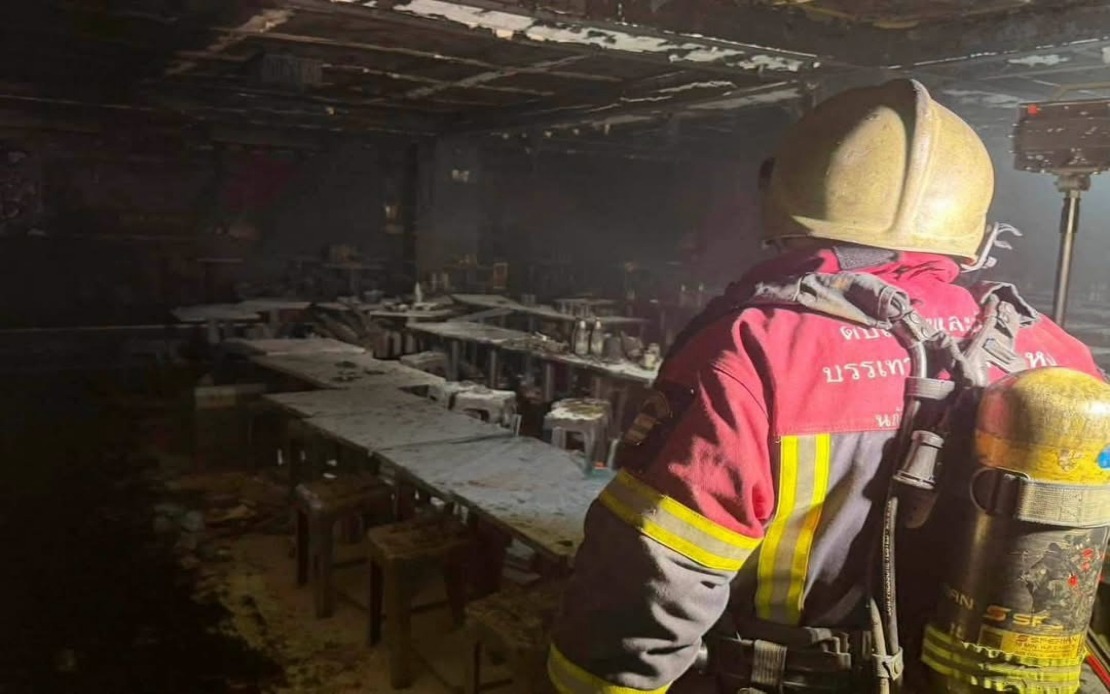
A catastrophic fire swept through a bar in Bangkok's Lat Phrao area within Chatuchak district in the early hours of Monday morning, claiming at least 27 lives and leaving 18 others injured in what ranks among Thailand's deadliest venue disasters in recent years. The blaze erupted shortly after midnight, with emergency responders arriving to find the establishment engulfed in flames and thick smoke billowing from multiple points of the structure. Bangkok Governor Chadchart Sittipunt reached the scene around 2.40 am to assess the scale of the tragedy and coordinate the ongoing response efforts with police, forensic specialists, and medical personnel.
The breakdown of casualties revealed by the Bangkok Metropolitan Administration's Department of Disaster Prevention and Mitigation paints a sobering picture of the incident's lethality. Of the 27 deceased, 18 were women and nine were men, highlighting a troubling disparity in fatalities. The 18 wounded included eight people in critical condition requiring intensive medical intervention, seven sustaining moderate injuries, and three with minor wounds. Medical examiners believe smoke inhalation was the predominant cause of death among the majority of victims, though definitive causes of death remain pending comprehensive forensic examinations and completion of the full investigation.
Preliminary observations from officials at the scene have begun sketching the fire's progression through the venue. Governor Chadchart noted that flames propagated with alarming speed through the ceiling cavity, spreading rapidly across the interior of the establishment. Curiously, investigators observed that much of the plastic furniture inside—tables and chairs that would normally feed a fire's intensity—sustained relatively minimal damage, suggesting the fire's primary pathway lay above rather than among the ground-level contents. This pattern has become a crucial detail in narrowing potential ignition sources and understanding how the disaster unfolded so catastrophically.
Thai Prime Minister Anutin Charnvirakul visited the incident site during the early morning hours and gathered briefings from responding officials and witnesses. In a pivotal disclosure, Anutin recounted a conversation with one of the musicians performing at the bar when the disaster struck. The eyewitness account pointed toward an electrical switchboard as the fire's origin, with the performer describing a rapid cascade of events following the initial ignition—explosions erupted, forcing patrons and staff to flee desperately through mounting smoke and flames. This musician's testimony has emerged as a significant lead for investigators, suggesting an electrical malfunction rather than more mundane causes of venue fires such as careless smoking or cooking equipment failure.
The question of emergency evacuation has assumed critical importance in the investigation, particularly regarding whether trapped patrons contributed to the death toll. Several victims were discovered positioned near an emergency exit situated on the left side of the building, prompting concern that obstructions or barriers may have prevented their escape during the chaos. Authorities have flagged this specific area for detailed scrutiny, though Governor Chadchart cautioned against premature conclusions pending thorough investigation. The discovery suggests that even those who reached emergency infrastructure may have encountered impediments that cost them precious seconds during the evacuation, a factor that could separate survival from tragedy in fire disasters where conditions deteriorate within minutes.
A comprehensive inspection of the establishment's operational and safety compliance now forms a central pillar of the official response. The Bangkok Metropolitan Administration has committed to examining the bar's operating licence and evaluating whether management maintained adequate standards in critical safety domains. Particular focus will rest upon verifying the number of emergency exits available to patrons, the condition and visibility of exit signage, the clarity of evacuation routes, and whether any materials or fixtures obstructed the pathways to safety. These inspections will likely extend to examining whether the premises operated within legal capacity limits and whether staff received proper training in emergency procedures.
For Malaysia and the broader Southeast Asian region, this tragedy underscores persistent vulnerabilities in entertainment venue management and fire safety enforcement. Thailand's case mirrors concerns that exist across the region, where rapid tourism growth and the proliferation of nightlife establishments sometimes outpace regulatory oversight and compliance mechanisms. Entertainment venues—bars, clubs, karaoke lounges, discotheques—operate in a regulatory grey zone in many Southeast Asian jurisdictions, where informal management, crowded conditions, and sometimes obstructed exits become normalised risks that authorities struggle to monitor effectively.
The Chatuchak fire also raises questions about electrical infrastructure safety in older or rapidly constructed entertainment spaces. Many bars and nightlife venues across Southeast Asia occupy converted shophouses, warehouses, or older buildings never originally designed for their current use. Retrofitting electrical systems to accommodate modern entertainment equipment and venue operations without comprehensive safety upgrades creates hidden hazards that facility managers and regulators may overlook. The apparent involvement of an electrical switchboard in this Bangkok incident resonates with similar fire disasters in other regional venues where substandard or poorly maintained electrical installations have proven catastrophic.
Emergency communication and victim identification represent another significant challenge illustrated by this incident. Governor Chadchart urged families to monitor official coordination channels for updates on victim identification, acknowledging that the scale of casualties and the condition of remains necessitate careful, methodical identification processes. For Malaysian readers, the relevance lies in recognising that major incidents affecting entertainment venues can involve regional nationals. Thai venues attract visitors from Malaysia, Singapore, and other nearby countries, meaning Malaysians may have been among those present during this fire. The coordination of victim identification and repatriation across borders presents logistical and bureaucratic complexities that Malaysian authorities and the Thai government must navigate jointly.
The investigation into the bar fire will almost certainly result in policy discussions within Thailand regarding venue safety standards, electrical code enforcement, and emergency evacuation procedures. Authorities at the Bangkok Metropolitan Administration have signalled their intent to scrutinise not merely this particular establishment but broader compliance patterns across similar venues. Such systemic reviews could influence regulatory approaches across Southeast Asia, particularly if findings identify common vulnerabilities that transcend national borders. Malaysia's own entertainment venue sector may benefit from monitoring the outcomes of the Thai investigation and considering whether comparable gaps exist in local fire safety frameworks.
Moving forward, the complete investigation will require cooperation between Thai police, forensic specialists, electrical engineers, and fire safety experts to definitively establish the ignition source and sequence of events. Authorities have already signalled that they will examine all available evidence, including witness testimony, structural remnants, electrical equipment remains, and building specifications. The musician's account of an electrical switchboard malfunction will likely guide forensic teams toward specific equipment and electrical systems for detailed analysis. However, definitive causation may take weeks or months to establish, particularly if the fire's intensity compromised physical evidence.
Beyond the immediate investigation, this disaster will inevitably spark broader discussions about balancing commercial freedom with public safety in the hospitality sector. Bar and nightclub operators across Thailand and Southeast Asia may face intensified regulatory scrutiny, surprise inspections, and potential liability claims from victims' families. Insurance providers serving the entertainment venue sector will likely reassess their underwriting criteria and premium structures. For establishments operating on thin margins, enhanced safety compliance costs could prove burdensome, though the human cost of inadequate safety measures—as starkly illustrated by 27 deaths in Chatuchak—leaves little room for compromise on emergency preparedness and infrastructure integrity.

