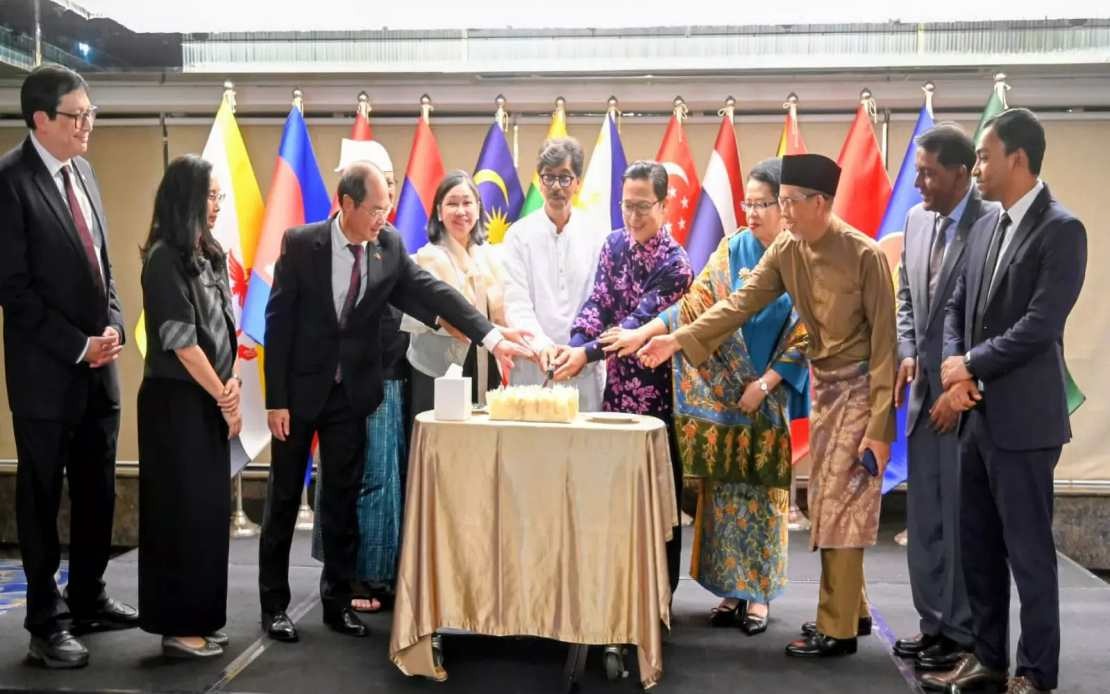
Bangladesh is moving to deepen its strategic relationship with ASEAN through a formal application for Sectoral Dialogue Partner status, underscoring the newly formed government's commitment to regional integration and cooperation. Fisheries, Livestock and Agriculture Minister Mohammed Aminur Rashid articulated this ambition during a reception marking the 59th ASEAN Day at Renaissance Dhaka Gulshan Hotel, attended by heads of ASEAN diplomatic missions and senior officials.
The application for SDP status represents a deliberate institutional framework that would transform Bangladesh's engagement with ASEAN from an informal relationship into a structured partnership with defined mechanisms and regular consultations. Such formalisation enables participating countries to collaborate on specific sectors and establish clearer pathways for joint initiatives. For Bangladesh, this step reflects recognition that deeper ASEAN integration can enhance regional stability, facilitate trade flows, and amplify its voice in Southeast Asian affairs at a time when the region faces complex geopolitical challenges.
Minister Aminur emphasised that Bangladesh shares deep historical, cultural and trust-based connections with ASEAN's member states, underpinned by growing connectivity and expanding commercial relationships. He highlighted how the government led by Prime Minister Tarique Rahman has elevated ASEAN relations as a foreign policy cornerstone, with Malaysia specifically chosen as the destination for the Prime Minister's inaugural official bilateral visit—a symbolic gesture that underscores the administration's regional priorities and commitment to strengthening ties with key ASEAN economies.
The government is pursuing sector-specific cooperation initiatives designed to address shared regional challenges and generate mutual economic benefits. A US$1 million Bangladesh-ASEAN Cooperation Project on Fisheries and Aquaculture, managed through Minister Aminur's ministry, exemplifies this approach. The project targets sustainable resource management and capacity-building in a sector critical to food security and livelihoods across the region, where overfishing and environmental degradation pose common concerns that demand coordinated responses.
Beyond fisheries cooperation, Bangladesh is cultivating broader sectoral partnerships spanning tourism, information and communications technology, and cultural exchange. These initiatives reflect an integrated development strategy that recognises how connectivity across multiple domains—economic, technological, and cultural—reinforces political relationships and builds constituencies for deeper integration. Such multifaceted engagement helps insulate partnerships from fluctuations in bilateral politics and creates resilient networks of stakeholder support.
The application for SDP status carries particular significance for Malaysia and other established ASEAN partners. As a dialogue partner, Bangladesh would gain regularised consultation mechanisms on regional priorities, participate in relevant ASEAN processes, and contribute to discussions on transnational issues including maritime security, counter-terrorism, climate adaptation, and trade facilitation. For Malaysian policymakers and business leaders, closer Bangladesh engagement offers expanded opportunities for cross-border investment, labour mobility, and supply chain integration—sectors where complementarities between the two economies remain substantially underexploited.
ASEAN's architecture of dialogue partnerships has historically served as an entry mechanism for countries seeking deeper regional integration. Minister Aminur framed SDP status as a pathway toward more meaningful and multidimensional engagement, positioning ASEAN as one of the world's most successful regional organisations whose norms and institutional practices offer valuable models for regional cooperation. This framing suggests Bangladesh views the bloc not merely as a forum for negotiation but as an exemplar of how diverse economies and political systems can coordinate effectively on shared interests.
The reception itself carried symbolic weight, featuring traditional Bangladeshi cuisine including biryani prepared with Kalijira rice and dishes highlighting Black Bengal Goat, a product with geographical indication status. Such cultural presentation at diplomatic gatherings reinforces soft power messaging and demonstrates how culinary heritage can serve as a bridge for people-to-people understanding—an often-underestimated dimension of regional diplomacy that complements formal negotiations.
Minister Aminur explicitly sought the active support of ASEAN representatives present at the event for Bangladesh's SDP bid, indicating that the application process involves multilateral consultation and consensus-building rather than automatic approval. This diplomatic approach reflects understanding that ASEAN operates on principles of consultation and non-interference, requiring applicant countries to build individual relationships with member states while advancing a collective narrative about mutual benefits. The presence of Malaysian High Commissioner Mohammad Shuhada Othman, Philippine Ambassador Neena Padilla Cinglet, and other ASEAN heads of mission provided a direct channel for advocacy and feedback.
The timing of this initiative aligns with regional trends toward institutional deepening and formalisation of partnerships. Several ASEAN dialogue partners have similarly sought enhanced status in recent years, reflecting recognition that informal arrangements become insufficient as bilateral relationships mature and economic interdependence grows. For Bangladesh, pursuing SDP status signals confidence in the country's economic trajectory and regional role while offering concrete mechanisms to channel growing commercial and people-to-people flows.
From a Southeast Asian perspective, Bangladesh's deeper ASEAN engagement carries implications for regional architecture. As a large South Asian economy increasingly oriented toward Asia, Bangladesh's integration into ASEAN processes could influence how the bloc balances its traditional Southeast Asian focus with engagement in broader Indo-Pacific dynamics. Enhanced Bangladesh participation in ASEAN consultations might contribute fresh perspectives on issues including climate security, demographic transitions, and religious diversity—challenges that ASEAN member states confront but where Bangladesh's experience could offer comparative insights.
The government's emphasis on institutionalising relationships through formal mechanisms reflects lessons from previous regional cooperation efforts, where informal arrangements proved fragile when political priorities shifted or leadership changed. By establishing structured engagement frameworks, Bangladesh aims to create constituencies within ASEAN governments and private sectors with vested interests in maintaining strong bilateral and multilateral ties. Such institutional embedding typically proves more durable than personality-driven diplomacy alone.

