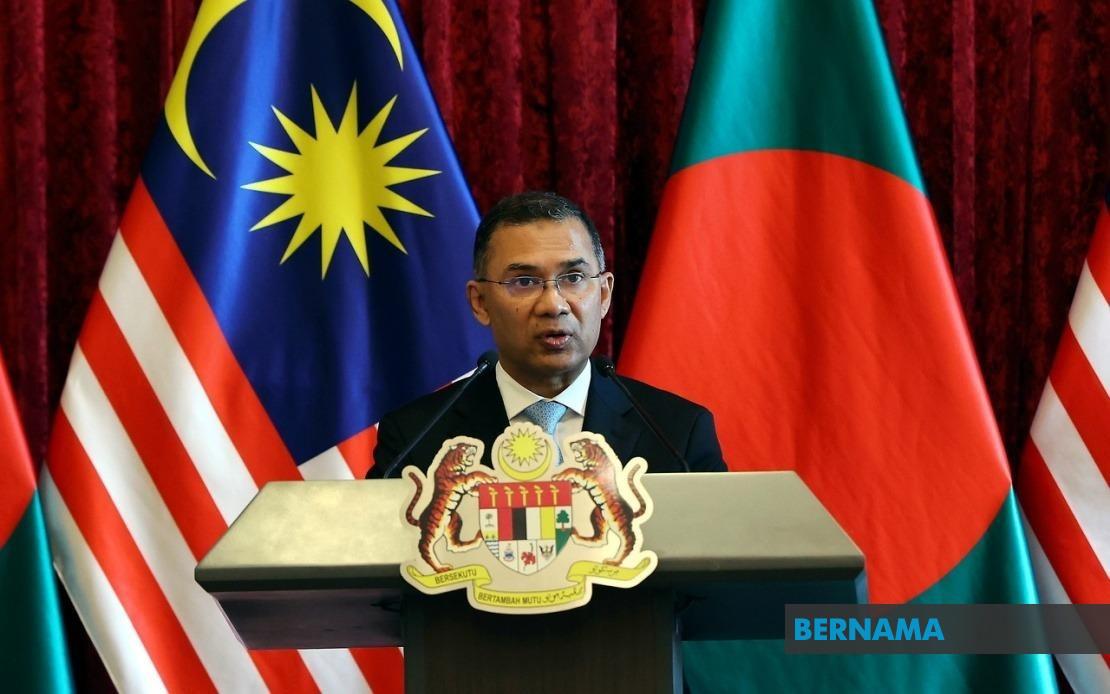
Bangladesh's Health and Family Welfare Minister Sardar Mohammad Sakhawat Hossain has praised the impact of Prime Minister Tarique Rahman's recent visit to Malaysia, stating that the journey has deepened the diplomatic and economic partnership between the two South Asian and Southeast Asian neighbours. Speaking at a chamber of commerce gathering in Dhaka, the minister underscored the significance of the June trip in consolidating what he described as bonds rooted in mutual confidence and shared interests.
The remarks came during an event organised by the Bangladesh-Malaysia Chamber of Commerce and Industry in the capital on Saturday evening, where business leaders and government officials gathered to discuss avenues for closer cooperation. The forum, titled "Towards a Stronger Bangladesh-Malaysia Partnership", reflected both governments' commitment to elevating their relationship beyond traditional diplomatic courtesies into substantive economic engagement that benefits private sector actors in both nations.
Hossain stressed that one of the cornerstones of the bilateral relationship is the vibrant interaction between entrepreneurs and business communities on either side. He argued that sustained dialogue between traders and industrial representatives has historically been instrumental in opening market access and facilitating investment flows. The health minister's emphasis on commerce demonstrates how contemporary state-to-state relations in South and Southeast Asia increasingly hinge on private sector dynamism rather than government procurement alone.
A particularly noteworthy aspect of Hossain's address was his direct appeal for Malaysia to expand its import portfolio from Bangladesh. The call signals Bangladesh's desire to address what officials perceive as an imbalance in the bilateral trade relationship, where Malaysian exports to Bangladesh may outweigh the reciprocal flow. For Malaysian policymakers and traders, this represents both a challenge and an opportunity—Bangladesh, with its population exceeding 170 million and growing manufacturing capacity in textiles, leather goods, and light engineering, represents a substantial market for export-oriented economies in the region.
The timing of these remarks carries regional significance. As Southeast Asian economies grapple with shifting supply chains and trade dynamics in the aftermath of geopolitical tensions, Bangladesh's outreach to established ASEAN economies like Malaysia underscores the country's strategic positioning as a bridge between South Asia and Southeast Asia. For Malaysian observers, the emphasis on deepening ties with Bangladesh reflects the latter's growing economic weight and its potential as both a market and a production hub for regional value chains.
Present at the Dhaka event was Malaysian High Commissioner to Bangladesh Mohd Shuhuda Othman, whose attendance underscored Kuala Lumpur's receptiveness to strengthening the relationship. The high commissioner's presence alongside Federation of Bangladesh Chambers of Commerce and Industry administrator Mohammad Fazlul Haque symbolised a collaborative approach involving both government and private sector stakeholders in advancing bilateral interests. Such multi-stakeholder engagement has become increasingly important in fostering trust and creating practical mechanisms for resolving trade disputes and regulatory barriers.
Prime Minister Tarique Rahman's June sojourn to Malaysia, though not extensively detailed in Hossain's remarks, appears to have yielded tangible political momentum. High-level visits between ASEAN and South Asian countries often result in memoranda of understanding on trade, investment, and cultural exchange, and the subsequent ministerial commentary suggests that this visit produced goodwill and renewed commitment to bilateral objectives. For Malaysian readers, such visits are important barometers of how Malaysia's regional diplomacy is progressing and whether the country is effectively positioning itself as a hub for pan-Asian engagement.
The appeal for increased Malaysian imports from Bangladesh also carries implications for Malaysian consumers and businesses. Cheaper manufactured goods from Bangladesh, particularly in sectors where the country has competitive advantages, could benefit Malaysian retailers and intermediate industries. However, this must be balanced against potential concerns from Malaysian manufacturers who compete in similar segments, making trade policy in this domain inherently complex and requiring careful negotiation to ensure mutual benefit without creating domestic political friction.
Looking forward, the trajectory of Bangladesh-Malaysia relations will likely depend on the implementation of commitments made during high-level visits and the extent to which concrete trade agreements materialise. Regional observers will monitor whether Prime Minister Tarique Rahman's visit catalyses new investment flows, joint ventures in manufacturing, or expanded market access for Bangladeshi goods in Malaysia and throughout ASEAN. The chamber of commerce event in Dhaka suggests that momentum exists, but translating diplomatic goodwill into sustained commercial growth requires persistent effort and institutional mechanisms that both governments and private sectors must actively cultivate and sustain.

