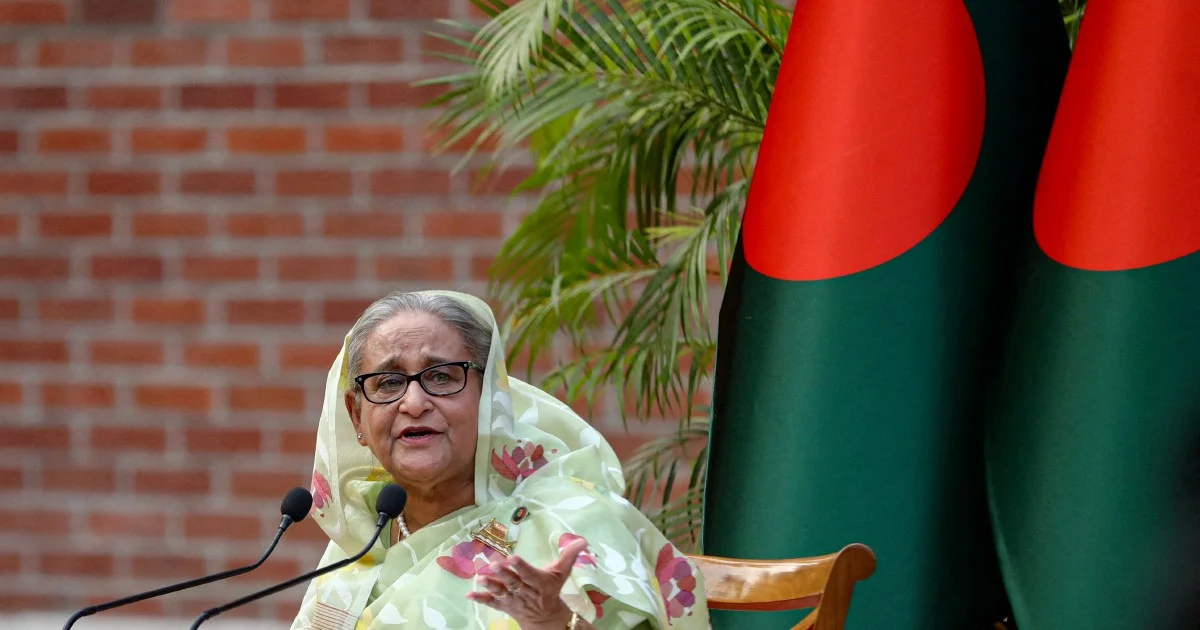
Ousted Bangladeshi Prime Minister Sheikh Hasina faces the prospect of jail time should she attempt to return from her current self-imposed exile in India, according to a warning issued Monday by a high-ranking government official in Dhaka. The statement appears to directly contradict Hasina's recent assertion to international media that she intends to travel back to Bangladesh and submit herself to judicial proceedings in the coming December.
The tension between the government's hardline stance and Hasina's apparent willingness to face the courts reflects the deep political fracture that continues to define Bangladesh following her ouster. Hasina's administration, which had governed for a significant period before being forced from power, remains a deeply contested chapter in the nation's recent history. The conflicting signals about her potential return signal the lack of consensus among current policymakers about how to handle the former leader's political future and any accountability measures the state might pursue.
Sheikh Hasina fled to India after civil unrest and political upheaval forced her from office, establishing herself in the neighbouring country where she has since remained. Her decision to seek asylum across the border reflects the intensity of pressure she faced domestically, though the circumstances of her departure and the nature of allegations against her remain subjects of significant political contention within Bangladesh. The fact that she has maintained contact with international news outlets and expressed intentions about her future suggests she continues to remain engaged with developments in her homeland despite geographical distance.
The minister's warning about imprisonment carries substantial weight given the power dynamics within Bangladesh's current political framework. If enforced, such detention would represent a severe escalation in the state's approach toward the former prime minister and could fundamentally alter the trajectory of Bangladesh's political reconciliation process. For Malaysian observers and the broader Southeast Asian region, this development highlights the precarious position in which ousted leaders can find themselves, particularly when exile countries remain geographically proximate and when domestic political factions remain deeply divided about transitional justice mechanisms.
The contradiction between official threats and Hasina's stated intentions raises important questions about the reliability of commitments on both sides. If Hasina genuinely intends to return and face judicial processes, her confidence may rest on assumptions about fair trial procedures or international pressure that officials now appear unwilling to provide. Conversely, if government statements are designed to deter her return, they may succeed in extending her exile indefinitely, which itself carries implications for Bangladesh's ability to move forward from this political chapter.
Regionally, the situation reflects a broader pattern seen across South and Southeast Asia where transitions of power occur amid significant civil unrest. Bangladesh's current trajectory differs markedly from some neighbouring democracies in that the mechanisms for political accountability remain contested rather than established. The absence of clear procedural frameworks for handling former leaders has meant that each statement about Hasina's potential return generates fresh uncertainty about her fate.
India's role as the host country also merits consideration. New Delhi has not publicly intervened in Bangladesh's domestic political matters, yet Hasina's presence on Indian soil necessarily involves some level of tacit acceptance. Should Bangladesh pursue aggressive prosecution after her return, India might face pressure to either facilitate extradition or provide ongoing protection, both scenarios with diplomatic implications for the region. The current approach of allowing Hasina to remain in exile while making imprisonment threats effectively preserves India's neutrality while testing Bangladesh's commitment to accountability measures.
Hasina's apparent willingness to return and face courts suggests either considerable confidence in legal proceedings or a calculation that continued exile carries greater personal and political costs. Her December timeline, if accurate, indicates she believes conditions may shift or that international attention might provide adequate safeguards. The government's countervailing threat suggests officials view her return not as an opportunity for closure through legal processes but rather as a moment to consolidate power against a former rival.
The implications extend beyond Hasina herself to Bangladesh's democratic institutions and international standing. Nations watching from Southeast Asia and beyond will assess whether Bangladesh can credibly manage political transitions through law rather than through threats or exile. The current standoff between the government's imprisonment warning and Hasina's stated December return plans suggests this assessment remains pending, with the coming weeks likely to prove crucial in determining whether dialogue or confrontation will ultimately define Bangladesh's path forward.
For Bangladesh's citizens and the international community, the question now centres on whether current officials will permit the legal processes that Hasina claims to support or whether the rhetoric of imprisonment represents the genuine direction of state policy. Until this contradiction is resolved, uncertainty will continue to cloud Bangladesh's prospects for political stability and reconciliation.

