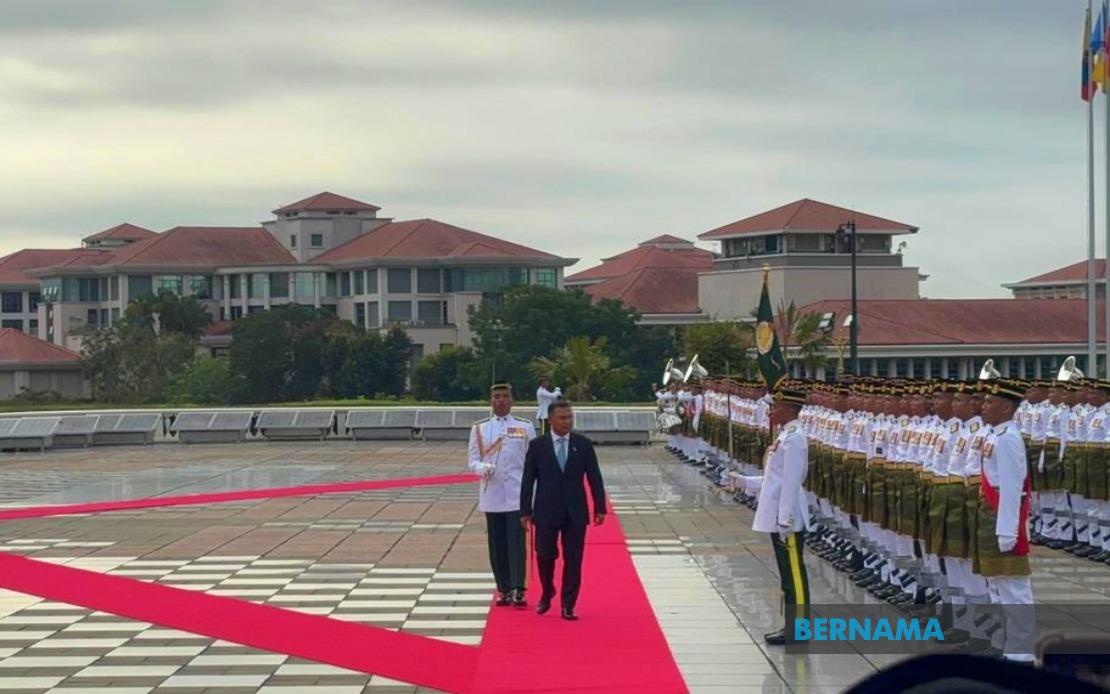
Bangladesh Prime Minister Tarique Rahman touched down in Malaysia on June 22 for a two-day official state visit, marking another milestone in the countries' longstanding diplomatic relationship. The Bangladeshi leader arrived at 9 am at the Perdana Putra Complex in Putrajaya, where he was formally received by Prime Minister Datuk Seri Anwar Ibrahim. Following the ceremonial reception, both nations' national anthems were performed, underscoring the significance of the engagement and setting the diplomatic tone for substantive discussions ahead.
The official welcome included full protocol elements befitting a state visit of this calibre. Tarique inspected a guard of honour comprising three officers and 103 personnel from the First Battalion of the Royal Ranger Regiment, commanded by Major Nur Ahmad Zaim Zahari. The presence of Malaysia's senior ministerial leadership demonstrated the country's commitment to strengthening ties with its South Asian partner. Deputy Prime Minister Datuk Seri Dr Ahmad Zahid Hamidi, Foreign Minister Datuk Seri Mohamad Hasan, Home Minister Datuk Seri Saifuddin Nasution Ismail, and Communications Minister Datuk Fahmi Fadzil attended the ceremony, alongside other Cabinet members, foreign diplomats, and senior government officials.
Following the formal reception, Tarique engaged in a private one-on-one meeting with Anwar before participating in broader bilateral discussions involving senior ministers and officials from both governments. These talks were structured to address Malaysia-Bangladesh relations comprehensively, examining existing cooperation frameworks and identifying fresh opportunities for partnership. The bilateral agenda encompassed several critical economic and strategic sectors, including trade and investment expansion, human resource development, semiconductor manufacturing, energy initiatives, agricultural collaboration, and educational exchanges. Beyond bilateral matters, both delegations were expected to exchange perspectives on regional and international issues of shared concern, reflecting their roles as significant players in South Asian and Southeast Asian affairs.
The diplomatic visit culminated in several formal agreements designed to institutionalise cooperation. Both leaders witnessed the signing of a Memorandum of Understanding focused on cultural cooperation, recognising the importance of people-to-people exchanges and cultural diplomacy in deepening bilateral bonds. Additionally, two Exchanges of Notes were formalised—one addressing counter-terrorism research collaboration and another covering investment promotion and facilitation frameworks. These instruments signal the breadth of bilateral engagement, spanning security cooperation through counter-terrorism initiatives while simultaneously advancing economic collaboration through investment protections and incentive mechanisms.
The Bangladeshi delegation was led by Tarique alongside his spouse, Dr Zubaida Rahman, Foreign Minister Dr Khalilur Rahman, and senior government officials, reflecting Bangladesh's commitment to a substantive engagement. The composition of the visiting party underscored the multifaceted nature of the discussions, with foreign ministry representation signalling diplomatic importance and senior officials indicating technical depth in negotiations.
Malaysia-Bangladesh trade relations demonstrate substantial economic interdependence. In 2025, bilateral trade reached RM12.18 billion, equivalent to approximately USD2.84 billion, positioning Bangladesh as a significant partner for Malaysia. Malaysian exports to Bangladesh totalled RM10.08 billion (USD2.35 billion), with petroleum products forming the cornerstone of this export portfolio—a reflection of Bangladesh's energy needs and Malaysia's competitive advantage in hydrocarbon exports. The energy sector remains particularly important given Bangladesh's growing industrial requirements and demand for reliable energy suppliers.
Imports flowing into Malaysia from Bangladesh amounted to RM2.10 billion (USD0.50 billion), predominantly comprising textiles, apparel, and footwear products. This import profile reflects Bangladesh's manufacturing strengths in labour-intensive sectors and Malaysia's integration into regional textile and garment supply chains. The trade composition reveals complementarity between the two economies, with Malaysia supplying energy and high-value products while Bangladesh provides manufactured goods that serve Malaysian and regional markets.
Within the global trading hierarchy, Bangladesh ranks as Malaysia's 28th largest trading partner worldwide, yet commands significantly greater importance within the South Asian context. The country represents Malaysia's second most important trading relationship in South Asia, surpassed only by India. This positioning underscores the strategic weight Bangladesh carries in Malaysia's regional commerce strategy, particularly as Malaysian companies seek to diversify their South Asian exposure beyond the Indian market and as Malaysian investors explore opportunities in Bangladesh's manufacturing and service sectors.
The significance of this visit extends beyond immediate commercial considerations. Bangladesh, with its large population exceeding 170 million, represents both a substantial consumer market and an emerging manufacturing hub capable of absorbing Malaysian investments and technology. As Malaysian firms increasingly relocate manufacturing operations away from higher-cost centres, Bangladesh offers competitive labour costs and established industrial infrastructure. The bilateral agenda's emphasis on semiconductors and advanced manufacturing reflects this reality, acknowledging Bangladesh's potential role in Malaysia's supply chain resilience strategies.
From a geopolitical perspective, Bangladesh's strategic location bordering India and its role as a major South Asian economy makes it valuable to Malaysia's broader regional diplomatic architecture. Cooperation frameworks addressing counter-terrorism research indicate shared security concerns in managing transnational threats, while investment promotion mechanisms create institutional pathways for sustained economic engagement. These agreements provide scaffolding for deepening ties across multiple domains simultaneously.
Anwar's hosting of an official luncheon following the bilateral meetings provided an opportunity for informal engagement between delegations, often where substantive understandings develop beyond formal negotiating sessions. Such hospitality reflects Malaysia's diplomatic traditions and contributes to building personal relationships between leadership cohorts that facilitate future cooperation.
Looking forward, this visit positions both nations for expanded collaboration during a period when Malaysia seeks to strengthen ASEAN-South Asia ties and when Bangladesh pursues international partnerships to support its development agenda. The bundling of cultural cooperation, counter-terrorism research, and investment promotion within a single visit demonstrates strategic intent to construct multidimensional partnerships rather than relationships confined to transactional trade. As regional dynamics continue evolving, Malaysia-Bangladesh cooperation frameworks established through visits like this provide resilient foundations for addressing future challenges and opportunities.
%22%2F%3E%3C%2Fpattern%3E%3C%2Fdefs%3E%3Crect%20width%3D%22100%25%22%20height%3D%22100%25%22%20fill%3D%22url(%23ph1dyt3g)%22%2F%3E%3Crect%20width%3D%22100%25%22%20height%3D%22100%25%22%20fill%3D%22url(%23ph1dyt3p)%22%2F%3E%3Ctext%20x%3D%2250%25%22%20y%3D%2250%25%22%20text-anchor%3D%22middle%22%20dominant-baseline%3D%22central%22%20fill%3D%22rgba(255%2C255%2C255%2C0.95)%22%20font-family%3D%22Georgia%2C%20'Times%20New%20Roman'%2C%20serif%22%20font-weight%3D%22700%22%20font-size%3D%22170%22%20letter-spacing%3D%22-0.02em%22%3ESelangor%3C%2Ftext%3E%3C%2Fsvg%3E)
%22%2F%3E%3C%2Fpattern%3E%3C%2Fdefs%3E%3Crect%20width%3D%22100%25%22%20height%3D%22100%25%22%20fill%3D%22url(%23ph3uv4ig)%22%2F%3E%3Crect%20width%3D%22100%25%22%20height%3D%22100%25%22%20fill%3D%22url(%23ph3uv4ip)%22%2F%3E%3Ctext%20x%3D%2250%25%22%20y%3D%2250%25%22%20text-anchor%3D%22middle%22%20dominant-baseline%3D%22central%22%20fill%3D%22rgba(255%2C255%2C255%2C0.95)%22%20font-family%3D%22Georgia%2C%20'Times%20New%20Roman'%2C%20serif%22%20font-weight%3D%22700%22%20font-size%3D%22272%22%20letter-spacing%3D%22-0.02em%22%3EQatar%3C%2Ftext%3E%3C%2Fsvg%3E)