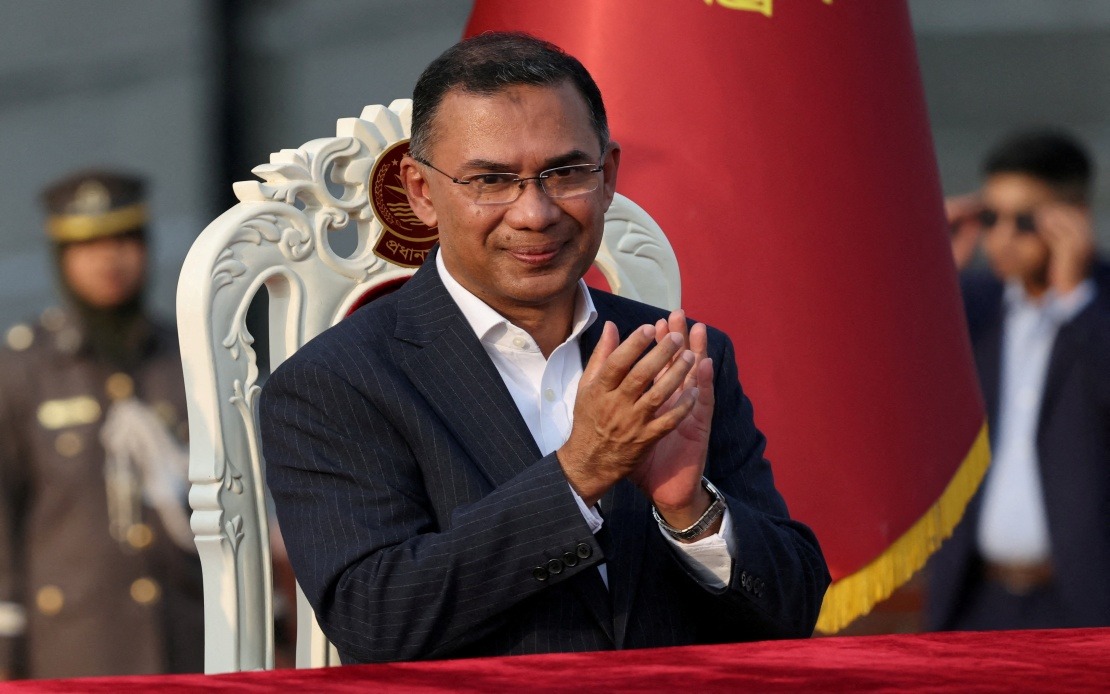
Bangladesh Prime Minister Tarique Rahman is set to arrive in Malaysia on June 22 for an official state visit at the invitation of Prime Minister Datuk Seri Anwar Ibrahim. This journey carries particular significance as the first official bilateral trip Rahman has undertaken since assuming the top office in Dhaka just four months earlier, underscoring the importance both governments place on deepening their partnership in Southeast Asia and South Asia.
The Bangladesh leader will be received with full state protocol at the Perdana Putra Complex in Kuala Lumpur, where a formal official welcoming ceremony will precede substantive bilateral discussions with Anwar. The Malaysian Foreign Ministry has indicated that the two prime ministers will conduct a comprehensive review of existing cooperation frameworks between the nations, assessing what has been achieved in recent years and identifying new avenues for expansion.
Central to the talks will be discussions spanning multiple sectors that reflect both nations' development priorities. Trade and investment feature prominently on the agenda, alongside human resource management initiatives that could facilitate labour mobility and skills transfer between the two countries. The semiconductor industry represents an emerging opportunity, particularly given Malaysia's established position in the global supply chain and Bangladesh's growing manufacturing capabilities. Energy cooperation, agricultural development, and educational exchange are also expected to receive focused attention as areas where complementary interests can be leveraged for mutual benefit.
The diplomatic programme will include the signing of several binding agreements that formalise expanded cooperation. A memorandum of understanding focused on cultural exchange will facilitate greater people-to-people contact and artistic collaboration. Two exchanges of notes will address counter-terrorism research coordination and investment promotion mechanisms—the latter particularly important given ongoing efforts by both countries to attract foreign direct investment and create an enabling environment for business expansion.
Rahman's delegation brings significant representation from Bangladesh's political establishment. His spouse, Dr Zubaida Rahman, will accompany him, as will Foreign Minister Dr Khalilur Rahman and a cadre of senior government officials whose presence reflects Bangladesh's commitment to substantive engagement. This composition suggests the discussions will extend beyond ceremonial exchanges into detailed policy coordination across multiple government departments.
The bilateral relationship between Malaysia and Bangladesh has developed into a substantial economic partnership. In 2025, total two-way trade reached RM12.18 billion, equivalent to approximately US$2.84 billion, positioning Bangladesh as Malaysia's 28th largest trading partner globally. However, within the South Asia region, the relationship assumes greater strategic weight, with Bangladesh ranking as Malaysia's second largest trading partner after India—a position that reflects significant economic interdependence and opportunity for further growth.
The trade composition reveals complementary economic structures. Malaysian exports to Bangladesh totalled RM10.08 billion in 2025, dominated by petroleum products that supply energy requirements for Bangladesh's expanding manufacturing sector and growing population. This energy relationship provides a stable foundation for bilateral commerce, as Bangladesh's expanding economy will require sustained energy imports. Conversely, imports from Bangladesh, valued at RM2.10 billion, consist primarily of textiles, apparel, and footwear—sectors where Bangladesh has developed world-class manufacturing capabilities and represents a significant source of these products for Malaysian consumers and businesses.
For Malaysian readers and policymakers, this visit carries implications for regional stability and economic integration. Bangladesh, as South Asia's second-largest economy and a nation of over 170 million people, represents both a massive consumer market and a significant manufacturing hub. Strengthening Malaysia's ties with Bangladesh offers opportunities to diversify Malaysia's regional partnerships beyond traditional focus areas. Given Bangladesh's geographic position as a bridge between South Asia and Southeast Asia, enhanced cooperation could position Malaysia as a key player in expanding intra-regional trade and investment flows.
The timing of Rahman's visit also reflects broader geopolitical dynamics in Asia. Both nations have navigated significant domestic political transitions in recent years. Rahman's assumption of office in 2026 followed Bangladesh's own political evolution, while Malaysia under Anwar Ibrahim's leadership has pursued an assertive regional diplomacy agenda. By prioritising engagement with Bangladesh early in his tenure, Rahman signals that South Asia remains important to Bangladesh's external relations, challenging any perception that Bangladesh looks exclusively westward or eastward.
The cultural cooperation agreement is particularly noteworthy given the large Malaysian diaspora in Bangladesh and vice versa. Educational exchanges, film festivals, and artistic collaborations can deepen mutual understanding between these two Muslim-majority nations and create people-to-people connections that transcend government relations. Such soft power initiatives often prove more durable than transaction-focused partnerships.
Counter-terrorism research cooperation reflects shared security challenges both nations face. Malaysia's experience combating extremism and maintaining security in a complex multicultural society, combined with Bangladesh's own counter-terrorism imperatives, creates space for meaningful intelligence sharing and collaborative research. This dimension of the visit addresses practical security concerns that both governments prioritise.
Looking forward, this visit potentially catalyses a new phase in Malaysia-Bangladesh relations. Beyond the immediate agreements to be signed, the broader message is of two significant regional powers seeking deeper integration across economic, security, and cultural domains. For Malaysian businesses, renewed diplomatic momentum often precedes expanded commercial opportunities. For policymakers, strengthening ties with Bangladesh aligns with broader regional integration strategies and helps position Malaysia as a connector between South Asia and Southeast Asia—a role increasingly important as regional geopolitics evolve and economic competition intensifies across Asia.
Rahman's choice to make Malaysia his first official bilateral destination abroad carries symbolic weight. It demonstrates Bangladesh's commitment to strengthening ties with ASEAN partners and reflects confidence in the trajectory of Malaysia-Bangladesh relations. As both nations navigate global economic uncertainty and regional competition, deepening practical cooperation offers mutual benefits that justify the priority both governments are evidently placing on this engagement.