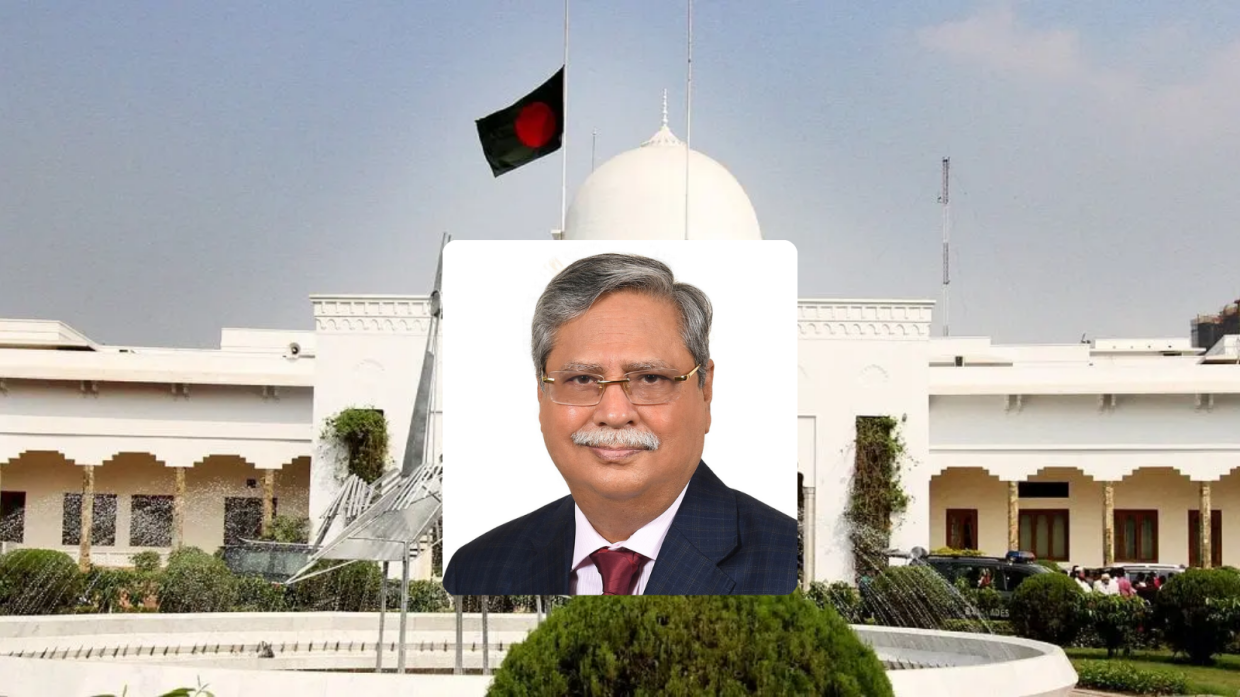
President Mohammed Shahabuddin of Bangladesh faces imminent resignation as the government moves to eliminate all remaining holdovers from the political establishment that preceded the nation's tumultuous July 2024 uprising. Multiple sources close to the administration in Dhaka confirm the likelihood of his departure, potentially within days, as political pressures mount and the interim government under Prime Minister Tarique Rahman seeks to assert full control over state institutions.
Shahabuddin assumed the largely ceremonial but symbolically significant presidency in April 2023, making him the sole occupant of a top constitutional position who predates the mass uprising that reshaped Bangladesh's political landscape. The prospect of his resignation would represent the final removal of figures connected to the previous regime, completing a transition that has already swept away multiple layers of the old establishment. The government appears determined to ensure that no vestigial representatives of the ancien régime remain embedded within the state apparatus.
The immediate catalyst for the resignation pressure appears linked to a telephone conversation between Shahabuddin and former prime minister Sheikh Hasina during a visit to London in May. Hasina, who has resided in exile in India since fleeing Bangladesh in July 2024, faces a death sentence under Bangladesh law and operates in a political environment where her party, the Awami League, has been banned. Intelligence agencies reportedly intercepted information about this contact between the two figures, and a message was subsequently conveyed to Shahabuddin suggesting he should step down. The communication represents a clear signal that the government views any maintenance of ties to the exiled former prime minister as unacceptable.
However, senior officials within the Bangladesh Nationalist Party caution that the phone call alone does not explain the pressure on Shahabuddin. The political situation has grown considerably more volatile following Hasina's recent announcement of plans to return to Bangladesh in December, a development that has galvanised government concerns about potential destabilisation. The prospect of Hasina's return—whether genuine or rhetorical—has created urgency among the current administration to demonstrate absolute control over the state apparatus and eliminate any potential sympathisers or connections to the exiled leader within high office.
Government concerns extend beyond Shahabuddin's external contacts to his activities within Bangladesh itself. Authorities have reportedly grown alarmed by intelligence suggesting that various Awami League factions are attempting to reorganise the party despite its official ban. The BNP-led administration views the continued existence of such networks as a potential threat to the new political order. By removing Shahabuddin, the government intends to send an unequivocal message that it will tolerate no connections—direct or indirect—to the previously dominant political structures.
On July 17, Prime Minister Tarique Rahman explicitly directed all relevant authorities during a Cabinet meeting to intensify their campaign against the Awami League, Bangladesh Chhatra League, Jubo League, and their affiliated organisations. This directive underscores the administration's determination to prevent any reconstitution of the networks that previously held power. Removing Shahabuddin from the presidency would demonstrate that this commitment extends to the highest levels of government, ensuring that former supporters or sympathisers cannot shelter within constitutional offices.
A government source characterised Shahabuddin's departure as an inevitable development that would occur sooner or later. The source expressed particular displeasure that the president had allegedly attempted to re-establish old contacts, a development viewed as incompatible with his role in a government fundamentally opposed to the previous establishment. From the administration's perspective, retaining a pre-uprising figure in Bangladesh's highest constitutional position has become untenable. The symbolic value of completely purging the old guard outweighs any institutional considerations.
Shahabuddin himself has signalled flexibility regarding his tenure. In February this year, he stated through a newspaper interview that he would remain in office only if the government wished him to stay, and would resign voluntarily if the administration preferred his departure. This positioning suggests an understanding on his part that his continued presence in Bangabhaban—the presidential residence—depends entirely on the government's tolerance. By offering to resign, he has effectively handed the initiative to Prime Minister Tarique Rahman's administration, which now controls the timing and circumstances of his exit.
Under Bangladesh's constitutional framework, the Speaker of Parliament would assume acting presidential duties if Shahabuddin resigns, providing continuity until Parliament elects a successor. This arrangement allows the government to manage the transition smoothly without creating any institutional vacuum. The process offers the administration flexibility in selecting a replacement who would be more aligned with the post-uprising political consensus and free of any historical connections to the previous regime.
The constitutional process also provides cover for what amounts to a political purge dressed in institutional language. By removing Shahabuddin through resignation rather than impeachment or forced removal, the government avoids the appearance of constitutional violation while achieving its objective of complete administrative transition. The dignity of the presidency is preserved even as its occupant is effectively forced out, maintaining the facade of institutional stability while fundamentally altering its political composition.
For Malaysia and other Southeast Asian nations watching Bangladesh's political reconstruction, Shahabuddin's likely resignation illustrates the comprehensive nature of the post-uprising transition. The removal of even ceremonial figures suggests that Bangladesh's new authorities view the old order as thoroughly delegitimised. This approach contrasts with transitions in some neighbouring countries where elements of continuity are maintained within constitutional frameworks. The Bangladesh model reflects a determination to effect complete institutional renewal, potentially creating both stability through unified command and risks through the concentration of power in fewer hands.

