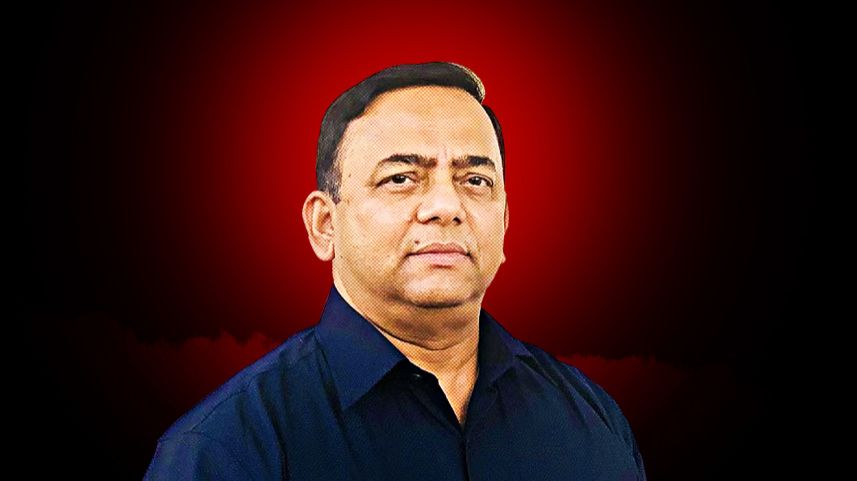
Bangladesh is escalating efforts to recapture former inspector general of police Benazir Ahmed after the United Arab Emirates granted him conditional bail, with Home Minister Salahuddin Ahmed revealing on Tuesday that the government suspects the fugitive of possessing multiple national passports to facilitate his escape from justice. Speaking at the Secretariat in Dhaka, Salahuddin disclosed that Bangladesh has instructed its legal representatives in the UAE to file an urgent petition challenging the bail decision, signalling a hardening diplomatic stance in what has become a high-profile international pursuit of one of the country's most wanted officials.
The discovery that Benazir may hold passports from several countries has transformed the case into a complex transnational manhunt. Possessing multiple passports, particularly when obtained through fraudulent means or retained after nationality changes, typically signals an attempt to circumvent border controls and extradition mechanisms. For a figure of Benazir's seniority—he once held Bangladesh's top policing position—access to diplomatic channels or forged travel documents would have been substantially easier than for ordinary citizens. The government's revelation suggests investigators have uncovered evidence that the former IGP prepared his escape route methodically, possibly years before his legal troubles intensified.
Salahuddin indicated that Bangladesh had already mobilised its diplomatic apparatus to counter the UAE decision. The home secretary engaged directly with the UAE ambassador in Dhaka, while Bangladesh's law firm representing the nation's interests in the Emirates was instructed to contest the bail. This multi-layered approach demonstrates the seriousness with which Dhaka is treating the matter and reflects the political sensitivity surrounding Benazir's case at home. For a government attempting to consolidate rule of law and combat high-level corruption, allowing a former IGP to remain at large abroad would undermine credibility with both domestic audiences and international partners.
The minister acknowledged uncertainty about the precise grounds for the UAE court's bail decision, emphasising that Bangladesh had yet to obtain a certified copy of the bail order. This information gap complicates the government's response strategy. Without knowing the exact conditions imposed or the judicial reasoning behind the decision, Bangladesh's legal team must craft arguments addressing multiple possible scenarios. The petition being prepared will need to address why Benazir poses a flight risk despite his current bail status and what additional evidence about the multiple passports issue might persuade the UAE court to reverse course.
A critical component of Bangladesh's counter-offensive involves submitting extradition documentation to the UAE courts. By formally presenting its extradition-related papers now, Dhaka is building a legal foundation for potential future proceedings while signalling that it views Benazir's case through an extradition lens, not merely as a bail modification dispute. This manoeuvre also places pressure on the UAE to consider whether honouring the extradition request would be simpler than managing an extended legal battle over bail cancellation. Extradition treaties between nations often hinge on whether the requesting country can demonstrate sufficient evidence of wrongdoing, and Bangladesh's preparation of these documents suggests officials believe they possess a reasonably strong case.
The circumstances surrounding Benazir's departure from Bangladesh and subsequent life in the UAE remain partially opaque, though his ability to secure bail despite being a fugitive from justice points to either significant financial resources or influential connections in the Emirates. Former senior officials often cultivate international networks and may retain access to substantial wealth, making them capable of affording high-quality legal representation abroad. The alleged possession of multiple passports suggests Benazir either anticipated legal jeopardy before formally being charged or took precautions once his vulnerabilities became apparent.
Regionally, the case carries implications beyond bilateral Bangladesh-UAE relations. Southeast Asian nations and the broader Indian subcontinent have grappled with similar challenges involving high-ranking fugitives attempting to establish themselves abroad. The outcome of the Benazir case will signal whether Middle Eastern jurisdictions are willing to shield politically sensitive figures from extradition requests, or whether they will increasingly cooperate with South Asian governments' law enforcement priorities. For Malaysia and other regional states similarly confronting corruption and financial crime involving officials who have fled, the precedent carries considerable weight.
Salahuddin's refusal to comment on the UAE court's reasoning reflects diplomatic circumspection. Criticising a foreign court's decision publicly could complicate Bangladesh's relations with the Emirates and potentially prejudice future legal proceedings. Instead, the minister has chosen to work through established channels—lawyers, ambassadors, and formal petition processes—to overturn the decision. This measured approach, while tactically sound, also underscores how limited Bangladesh's leverage may be in a foreign jurisdiction where Benazir can afford sophisticated legal counsel.
The minister separately addressed security concerns after bomb-like devices were discovered in Kamalapur and Ashulia, characterising the incidents as attempts to foment communal discord rather than indications of broader security threats. While reassuring the public, Salahuddin confirmed that law enforcement agencies and the Bomb Disposal Unit had successfully managed both situations. The government framed the incidents as work by unspecified hostile actors seeking to undermine social harmony, a narrative that emphasises state capability while remaining vague about perpetrators' identities. Authorities reportedly continue investigating to identify those responsible, though such investigations in Bangladesh often proceed slowly and opacity is common.
For Bangladesh, the Benazir case represents a test of its capacity to pursue accountability at the highest levels regardless of geography. Success in overturning the UAE bail and ultimately securing extradition would demonstrate that even former police chiefs cannot escape justice through flight. Conversely, if the case stalls in foreign courts, it would suggest that Bangladesh's international legal mechanisms, while improving, remain insufficient to match the resources and sophistication available to wealthy fugitives operating from safe havens abroad.

