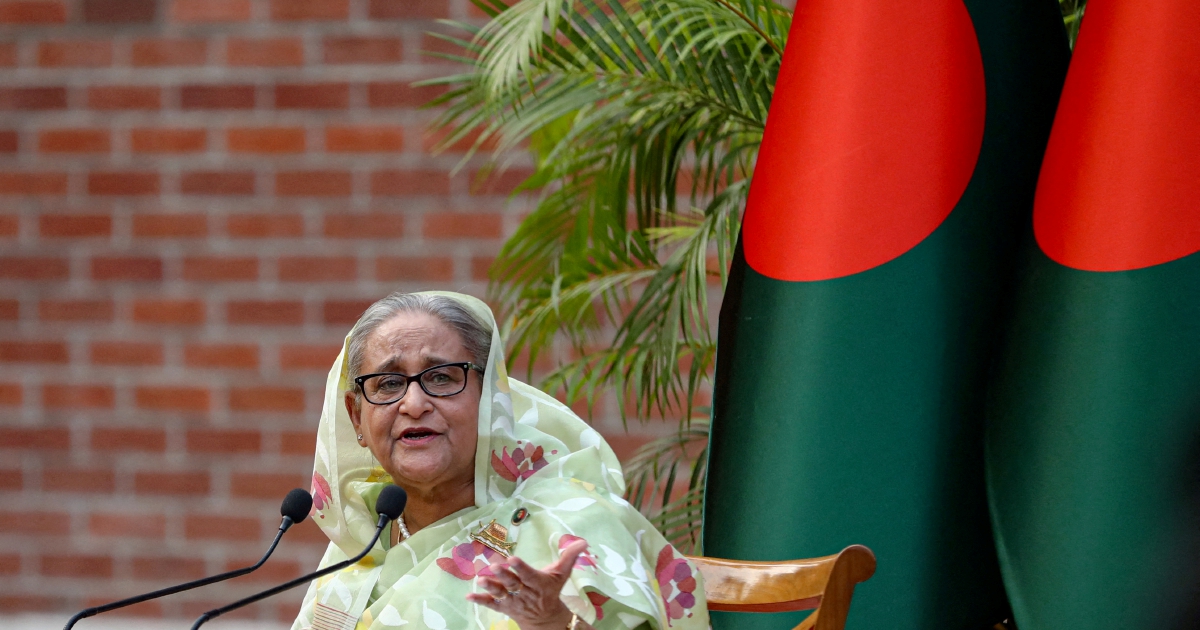
Bangladesh authorities have moved decisively to seize approximately 760 billion taka, equivalent to roughly $6.2 billion in US currency, in assets connected to former Prime Minister Sheikh Hasina, her immediate family, and ten significant business conglomerates operating within the country. The announcement came from state officials on Wednesday, underscoring the new government's commitment to recovering resources allegedly accumulated through questionable means during Hasina's tenure in power.
The asset seizure represents one of the most substantial financial recovery operations undertaken since Hasina's departure from office, signalling a comprehensive approach to addressing allegations of corrupt enrichment at the highest levels of government. The scope of the confiscation extends beyond the former premier herself to encompass her close relatives and a deliberately selected cluster of commercial enterprises, suggesting coordinated efforts to dismantle networks of patronage and economic control that reportedly flourished during her administration. The specificity of targeting ten distinct business groups indicates authorities have conducted detailed investigations into corporate structures perceived as beneficiaries of political favour and preferential treatment.
This action occurs within the broader context of Bangladesh's recent political turbulence and institutional transitions. The removal of Hasina from her position culminated a period of mounting civil unrest, public dissatisfaction, and demands for governmental accountability that characterised late 2024. Her departure created space for transitional arrangements and accountability mechanisms that the interim leadership has been implementing with considerable urgency. The asset seizure forms part of a larger anti-corruption agenda designed to restore public confidence in state institutions and demonstrate that the previous administration's practices would face serious legal consequences.
For Malaysian observers and the broader Southeast Asian region, Bangladesh's recovery efforts carry important implications regarding governance standards and the enforcement of accountability mechanisms across developing democracies. The scale of confiscated assets—among the largest recorded recovery operations in recent South Asian history—exemplifies how sudden political transitions can unlock legal pathways previously constrained by political considerations. Bangladesh's experience offers a cautionary narrative regarding the concentration of economic power around political leadership and the systemic risks this creates when institutions lack adequate independence from executive influence.
The identification of ten specific business groups within the confiscation order reveals patterns of economic entanglement that warrant careful examination. These enterprises, through their connections to Hasina's circle, reportedly accumulated substantial market advantages, secured lucrative government contracts, and benefited from regulatory forbearance unavailable to competitors operating outside the patronage network. Such arrangements distorted market competition, crowded out independent enterprises, and channelled resources toward politically-favoured entities—dynamics familiar to observers of crony capitalism throughout Southeast Asia.
The financial magnitude of recovered assets offers insight into the scale of potential misappropriation and enrichment. The 760 billion taka figure, if successfully converted into productive use, could address significant development needs or strengthen Bangladesh's foreign exchange reserves. However, the practical realisation of these theoretical gains depends upon the durability of legal proceedings, the resilience of courts against political interference, and the international cooperation mechanisms available for recovering assets potentially moved offshore. The structural vulnerabilities that enabled initial accumulation may similarly impede complete recovery.
Family asset entanglement presents particular complexity in Bangladesh's recovery operations. The inclusion of Hasina's relatives within confiscation orders reflects a determination to pursue personal enrichment through family structures rather than restricting investigation to individual political figures. This approach acknowledges how wealth transfers, trust arrangements, and property holdings disguise underlying beneficial ownership and complicate straightforward asset identification. Yet it also raises questions about proportionality and the evidentiary standards applied when linking family members to potentially illicit gains, considerations that regional observers of human rights and due process standards will monitor closely.
The interim government's approach to asset recovery demonstrates both institutional capacity and political will to confront entrenched interests. The speed and scope of confiscation orders suggest preliminary investigations had achieved considerable advancement even before formal announcements, indicating sustained bureaucratic and investigative work during the political transition. However, maintaining momentum in complex asset recovery cases requires sustained commitment across multiple governmental agencies, consistent judicial independence, and protection against efforts to reverse proceedings through subsequent political arrangements.
Regional stability and confidence in Bangladesh's institutional trajectory depend significantly upon whether recovery operations remain grounded in documented evidence and transparent legal processes, or devolve into selective punishment reflecting factional political interests. The international business community, multilateral institutions, and foreign investors assess governance quality through observance of consistent legal standards and respect for due process protections, even when addressing prior governmental misconduct. Bangladesh's handling of current asset seizures will influence foreign perceptions of institutional reliability and investment climate for years ahead.
The broader implications extend to Southeast Asia's ongoing reckoning with corruption, accountability, and the reconstruction of public institutions following periods of strongman leadership. Several regional nations have experienced or will experience similar transitions requiring calibration between justice for past wrongs and forward-looking stability. Bangladesh's approach to asset recovery, judicial proceedings, and due process protections will provide informative precedent regarding effective mechanisms for addressing governmental corruption while maintaining institutional legitimacy.

