Bangladesh's parliament is poised to elect a new head of state on Thursday, with ruling party veteran Mirza Fakhrul Islam Alamgir widely expected to secure the largely ceremonial presidency in what marks a significant moment in the country's political transition since the 2024 revolution. The 78-year-old, who serves as secretary general of the Bangladesh Nationalist Party (BNP) and local government minister, is anticipated to win decisively in the afternoon parliamentary ballot for the five-year term, assuming the role of the nation's 23rd president representing a population of 170 million.
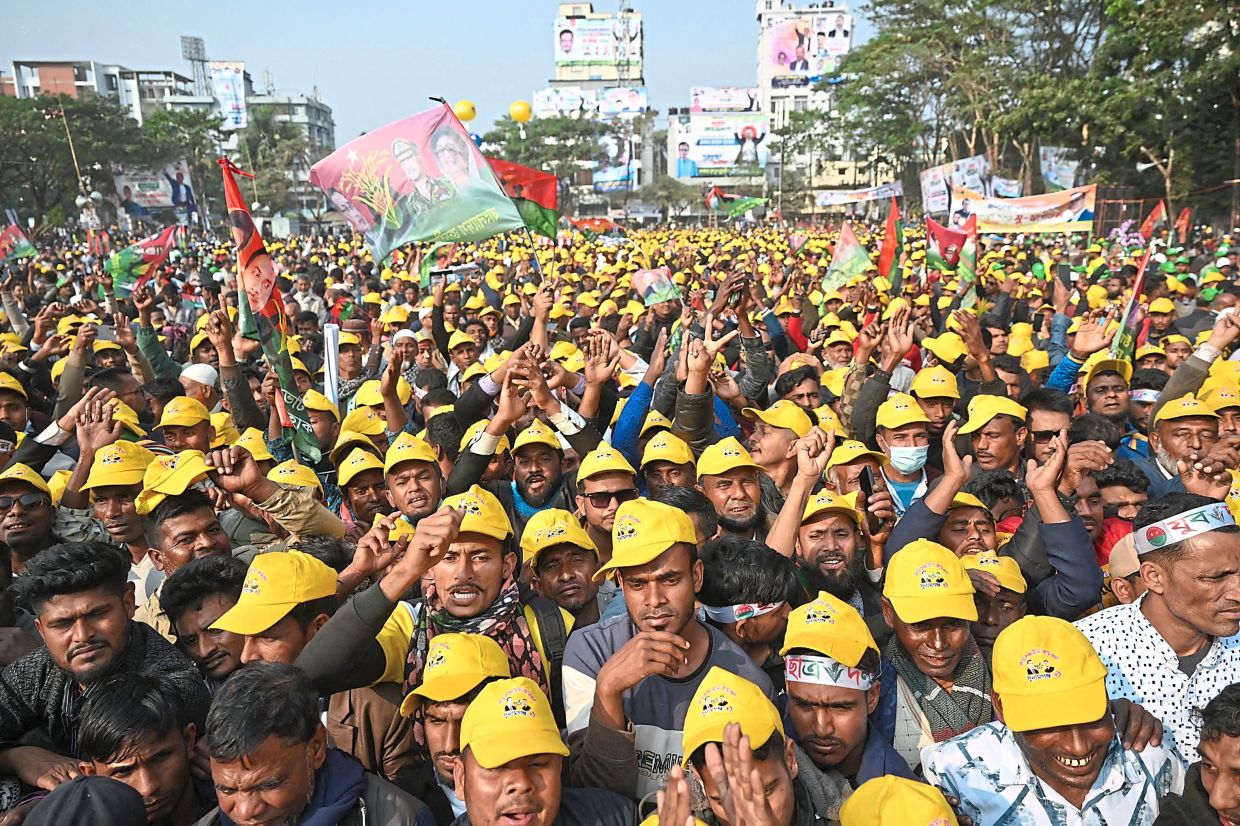
Alamgir's ascension comes in the wake of Prime Minister Tarique Rahman's BNP commanding a sweeping electoral victory in February, the first substantive poll held following the tumultuous upheaval that displaced the previous government. Speaking to reporters earlier this week, Alamgir expressed humility about his impending elevation, describing his selection as evidence of his party's confidence and providence. He sought to position himself as a leader committed to grassroots engagement, pledging to maintain close ties with ordinary citizens even from the highest office.
The vacancy emerged following the resignation in July of incumbent president Mohammed Shahabuddin, a 76-year-old figure with deep connections to the ousted regime of Sheikh Hasina. Shahabuddin, commonly known as "Chuppu", stepped down citing health concerns that would have otherwise extended his tenure until 2028, having initially assumed office in 2023. His departure reflected mounting pressure from the new administration seeking to distance itself from the previous order and consolidate its control over state institutions.
The preceding Hasina government, which has become increasingly distant in the public consciousness following her flight to India, faced mounting international censure over alleged systematic abuses. Human rights organisations documented patterns of extrajudicial killing targeting political opponents, systematic suppression of dissent, manipulation of judicial processes, and electoral irregularities that fundamentally compromised democratic legitimacy. In November, Bangladeshi courts convicted the absent Hasina of crimes against humanity and imposed a death sentence, underscoring the depth of accountability efforts underway.
Alamgir enters the presidency with considerable political capital accumulated through decades of active engagement in Bangladesh's turbulent democratic landscape. Born in January 1948, he became politically active as an economics student at Dhaka University, playing a pivotal role in the 1969 popular uprising against Pakistan's military administration—a watershed moment that ultimately catalysed the nation toward independence two years later. Following an academic career teaching economics, he transitioned into government service before committing fully to electoral politics, holding ministerial portfolios spanning agriculture, aviation, and tourism sectors.
His prominence intensified substantially during the Hasina period, when he emerged as an influential opposition voice at a moment when the BNP's primary leadership faced severe constraints. While party chairperson Khaleda Zia languished in detention and her son Tarique Rahman remained exiled abroad, Alamgir functioned as a stabilising force, maintaining organisational cohesion and political momentum through circumstances many would have found insurmountable. The state news agency credited him with preserving institutional resilience during this extended period of adversity and marginalisation.
This elevated role came at considerable personal cost. Under Hasina's administration, Alamgir experienced repeated arrest and detention on charges he characterised as politically fabricated, enduring dozens of cases that reflected the weaponisation of the legal system against opposition figures. Such experiences positioned him credibly as someone who had maintained principled opposition under sustained institutional pressure, lending authenticity to the BNP's current claims to represent renewal.
The parliamentary vote on Thursday will proceed with one competing candidate, Oli Ahmed, presented by the opposition coalition of eleven parties anchored by Jamaat-e-Islami. The outcome appears largely predetermined given the BNP's commanding parliamentary strength, though the formal contestation preserves procedural legitimacy for the election process. Voting is scheduled to commence in the early afternoon, with results likely determined by mid-afternoon.
Alamgir's personal circumstances reflect stability and longevity in his private life. He maintains a marriage to Rahat Ara Begum, a former financial services official, and they have raised two daughters together. This conventional family arrangement contrasts with the tumultuous public career he has navigated, suggesting compartmentalisation between personal and political spheres.
For Malaysian and Southeast Asian observers, Alamgir's elevation signals the consolidation of power by the BNP following Bangladesh's dramatic political rupture. The transition underscores how regional democracies grapple with leadership succession during periods of institutional instability, and the delicate balance between procedural legitimacy and substantive power concentration. The largely ceremonial nature of the presidency means executive authority remains concentrated with Prime Minister Rahman, though the symbolic importance of selecting a figure with Alamgir's historical credentials suggests the new administration is conscious of legitimacy narratives essential for sustained governance.
The broader context matters for regional understanding. Bangladesh's trajectory since 2024 demonstrates how anti-incumbency movements can effect fundamental regime change, but also raises questions about whether such transitions produce durable democratic consolidation or merely reshuffle elites. The new government's early moves—including Alamgir's elevation—suggest deliberate efforts to position itself as reformist and representative of genuine change, even as underlying power structures may reproduce familiar patterns of personalised authority.

