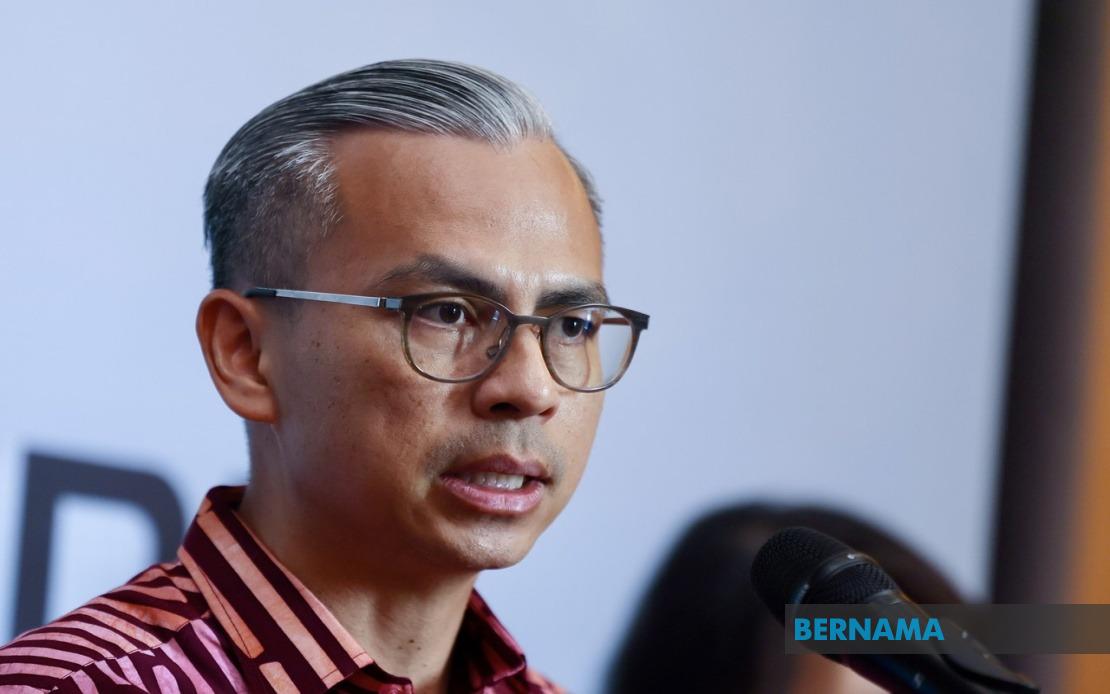
Bank customers who discover they are still being charged the RM1 fee for withdrawing cash at bank-owned automated teller machines should immediately lodge complaints with Bank Negara Malaysia, Communications Minister Datuk Fahmi Fadzil announced today. The fee waiver, which commenced as of July 1, represents a significant step in reducing transaction costs for Malaysian consumers, yet Fahmi's directive suggests some institutions may not have fully implemented the directive or customers remain confused about where the waiver applies.
Fahmi indicated that BNM possesses enforcement powers to take corrective action against any financial institution that continues charging the RM1 fee in breach of the waiver policy. Speaking at the Communications Ministry's weekly briefing in Kuala Lumpur, he emphasised that the regulatory authority will follow up with non-compliant banks. This enforcement mechanism suggests the central bank views the fee waiver not merely as guidance but as a mandatory policy that banks must observe. The warning also reflects growing public frustration with the fee structure that has long plagued Malaysia's banking sector, where interbank transactions have carried charges that many argue should not exist in an interconnected system.
The scope of the fee waiver is notably limited to a specific subset of ATMs, a distinction that appears to be creating customer confusion. Approximately 84 percent of bank-owned ATMs nationwide, representing nearly 16,000 machines, fall under the waiver coverage. These machines participate in the shared ATM network that major Malaysian banks operate collectively, enabling customers to access funds from any participating institution's machine without incurring the RM1 charge. This percentage indicates substantial progress in expanding fee-free access, though it simultaneously highlights that a significant minority of machines remain outside the initiative.
The remaining 16 percent of ATMs that continue charging the RM1 withdrawal fee operate under a different commercial model entirely. These machines are owned and operated by private non-bank entities that maintain separate service arrangements with financial institutions. Fahmi clarified that these private operators, not bound by the bank-led waiver agreement, will continue imposing the fee. Understanding this distinction proves crucial for customers seeking to avoid charges, as the fee structure depends not on which bank issued the customer's card but rather on the ATM's ownership and network affiliation.
To navigate this bifurcated system effectively, Fahmi recommended that customers identify which ATMs participate in the waiver by examining the logos displayed on the machines themselves. Bank-branded logos typically indicate machines owned by financial institutions participating in the shared network and therefore covered by the fee waiver. Conversely, ATMs displaying private company branding or logos unfamiliar to customers likely represent non-bank operations where the RM1 charge persists. This practical guidance addresses the information gap that has apparently led customers to discover unexpected charges after completing transactions.
The Association of Banks in Malaysia and the Malaysian Islamic Banking and Financial Institutions Association are preparing a joint statement to provide comprehensive implementation details regarding the fee waiver. This coordinated communication from the two leading banking sector associations signals an attempt to standardise messaging across the industry and eliminate confusion that may persist despite the policy's official commencement. The joint approach reflects recognition that clear, unified guidance from credible industry sources can facilitate smoother implementation and reduce consumer complaints.
Fahmi's announcement arrives in response to mounting public enquiries and discussions across social media platforms regarding the ATM fee waiver rollout. These online discussions suggest that despite advance announcements, confusion remains widespread among ordinary Malaysians about where and how the waiver applies. The Communications Minister's intervention underscores the government's commitment to clarifying the policy's reach and ensuring compliance. For Malaysian consumers, particularly those from lower and middle-income groups for whom frequent small cash withdrawals represent a significant expense, the fee waiver offers meaningful relief provided they understand where to access participating ATMs.
Beyond the ATM fee matter, Fahmi highlighted an international financial technology company's establishment of a Global Development Centre at Tun Razak Exchange, positioning this investment as evidence of Malaysia's attractiveness to foreign capital. The company's decision to locate its first such global centre in Malaysia, particularly one focused on digital talent development and financial technology including Agentic AI, represents a vote of confidence in the country's economic direction. Foreign investment in technology hubs carries strategic importance for Malaysia's ambitions to position itself as a regional innovation leader.
Fahmi attributed the investment decision directly to the political stability and economic policies pursued under the MADANI Government. He characterised the move as validation that Malaysia's commitment to consistent policy implementation has successfully attracted multinational technology firms. This interpretation connects domestic banking sector reforms, such as the ATM fee waiver, with broader narratives about Malaysia's investment climate. The government framing suggests that consumer-friendly policies and economic reforms contribute to a stable business environment that international companies value when selecting regional headquarters locations.
The convergence of these two announcements illustrates the government's dual focus on immediate consumer welfare and long-term economic positioning. The ATM fee waiver addresses tangible daily frustrations affecting ordinary Malaysians, while the foreign technology investment speaks to aspirations for high-value job creation and innovation-sector development. Together, these initiatives reflect a strategy that balances addressing current consumer grievances with building future economic competitiveness in technology and financial services.
For Malaysian consumers navigating the newly implemented ATM fee waiver, the immediate priority involves identifying which machines fall under the waiver coverage and monitoring transactions to ensure they are not being charged when they should not be. The availability of complaint mechanisms through BNM provides recourse for those encountering violations. Longer-term, the banking sector's movement toward fee elimination for interbank transactions, even if partial and phased, signals recognition that such charges represent inefficiencies in Malaysia's financial infrastructure that comprehensive reforms should eventually eliminate entirely.

