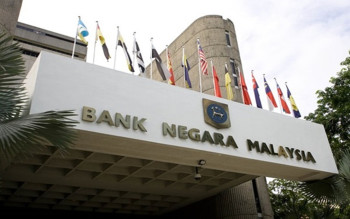
The central bank mounted a sustained campaign to alert Tabung Haji's leadership to mounting financial distress, dispatching five separate warning letters to the institution's chairman and the Minister of Religious Affairs, according to disclosures made in Parliament this week. The warnings focused on the widening chasm between what the Islamic pilgrimage fund possessed in assets and what it owed in liabilities—a fundamental measure of institutional solvency that demanded immediate corrective action.
Dr Zulkifli Hasan, the Minister in the Prime Minister's Department handling Religious Affairs, presented the cautionary history during a ministerial briefing in Parliament on the state of Tabung Haji and its rehabilitation efforts. His account underscored the gravity of the situation confronting regulators: Bank Negara Malaysia had explicitly warned that the fund's deteriorating position threatened to trigger broader instability across Malaysia's financial system. Yet those urgent appeals from the country's banking supervisor fell on deaf ears within Tabung Haji's executive ranks, where the warnings were reportedly disregarded.
The severity of such regulatory warnings cannot be overstated in the Malaysian context. When Bank Negara Malaysia issues formal letters of concern regarding an institution's financial standing, it represents an escalation beyond routine supervisory engagement. The fact that five separate missives were required suggests a pattern of non-compliance or indifference from Tabung Haji's management, compelling regulators to escalate their intervention repeatedly. The fund's leadership faced mounting pressure to stabilise an institution managing the savings of hundreds of thousands of Malaysian Muslims preparing for or reflecting on their pilgrimage obligations.
Following the central bank's warnings came censure from another pillar of financial oversight. The Auditor-General's office, in its examination of Tabung Haji's 2017 Financial Statements, issued a formal Emphasis of Matter—a significant audit notation used when auditors wish to draw attention to critical issues without qualifying their opinion. This reprimand targeted policy changes that Tabung Haji had implemented twice within the same year, adjustments that appeared designed to artificially inflate reported profits for 2017. Such accounting manoeuvres suggested systematic distortion of the fund's true financial picture, deepening concerns among regulators and the public.
The cumulative effect of these regulatory interventions prompted Tabung Haji's newly constituted board to take decisive action. In 2018, the fund engaged PricewaterhouseCoopers, one of the world's leading audit and accounting firms, to conduct an independent reassessment of its financial condition and historical performance. This engagement represented an implicit acknowledgment that previous valuations and accounting treatments required external validation against international standards. PwC's appointment signalled to stakeholders that the fund intended to subject itself to rigorous, internationally-benchmarked scrutiny.
When PwC completed its investigation and published its findings, the results vindicated concerns about the magnitude of Tabung Haji's financial distress. The international auditor's analysis revealed that of the RM4.6 billion in total assets that Tabung Haji claimed to possess, only RM556 million—barely one-eighth—had been formally valued by qualified professional valuers. The remainder appeared to rest on questionable appraisals, inflated estimates, or unsupported valuations. This discovery confirmed that financial manipulation had occurred within the institution, painting a picture of an organisation whose published financial position bore limited resemblance to economic reality.
These findings fed directly into the work of the Royal Commission of Inquiry, which the government established in 2021 to investigate Tabung Haji's management and performance during the particularly troubled 2014-2020 period. The RCI's formal membership was appointed on January 20, 2022, and the commission proceeded to examine the institutional failures, governance weaknesses, and decision-making processes that had permitted such deterioration. Its 211-page report, released publicly on July 29, laid bare the systemic problems embedded within the fund's operations and oversight structures.
The RCI's investigation identified extensive deficiencies across Tabung Haji's management and operational frameworks throughout the six-year examination period. Beyond documenting what had gone wrong, the commission formulated 25 specific recommendations designed to prevent recurrence of such crises and to rebuild public confidence in the institution. These ranged across governance improvements, financial controls, investment oversight, and transparency measures. The comprehensiveness of the recommendations reflected the depth of institutional failure that the RCI had uncovered.
Progressively, Tabung Haji has begun implementing the RCI's prescriptions. As of July 30—just one day after the report's public release—the fund had already operationalised approximately 75 per cent of the 25 recommendations, demonstrating urgency in remediation efforts. This rapid implementation rate suggests that the fund's leadership has recognised the imperative to restore institutional credibility and to prevent future regulatory intervention. For Malaysian Muslim savers and prospective pilgrims, the scale and speed of these reforms offer some reassurance that governance failures of the 2014-2020 era may not recur, though sustained monitoring will remain essential as rehabilitation continues.

