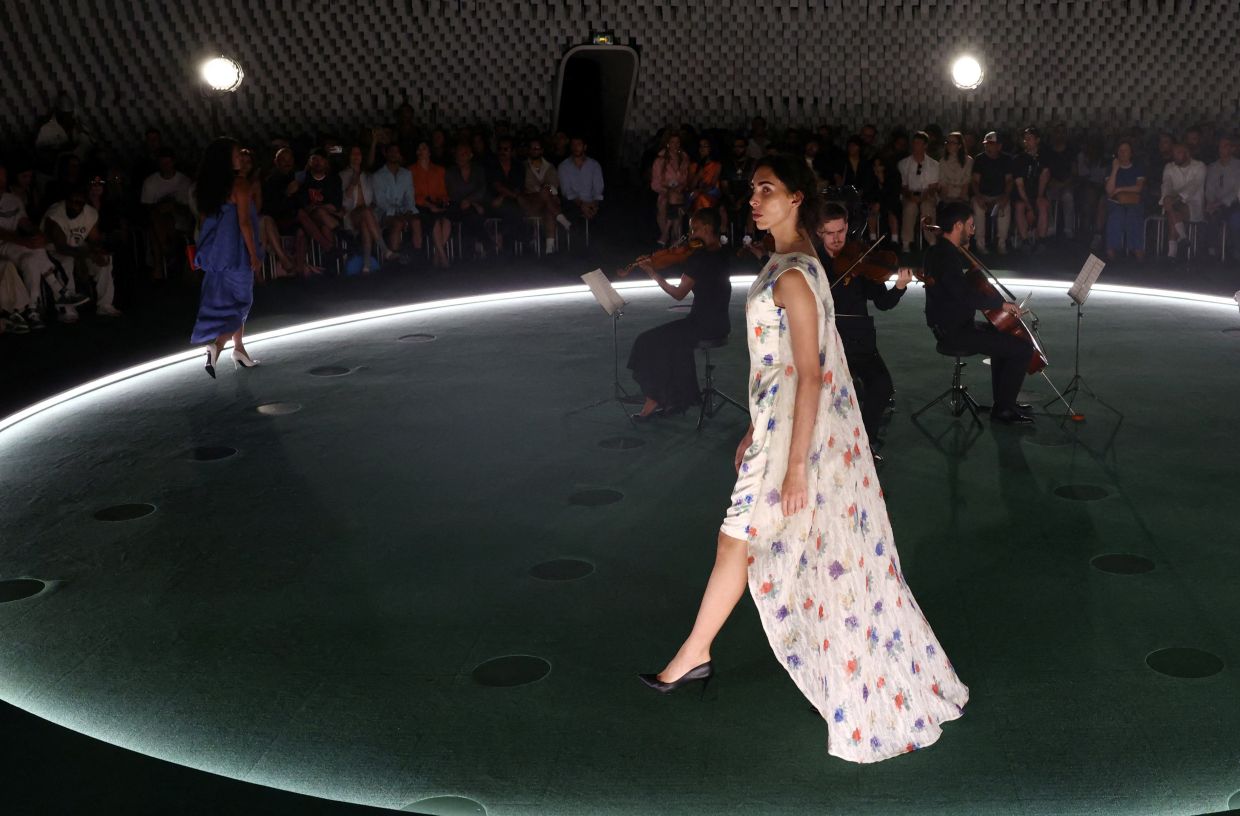
The fashion industry is experiencing a dramatic shift toward sleeveless clothing, driven by climate pressures, fitness culture, and evolving attitudes toward the body. What was once considered daring or inappropriate for professional settings is rapidly becoming mainstream, visible in everything from television news broadcasts to haute couture runways. Yet this seemingly simple stylistic choice raises complex questions about body image, ageing, and the gendered politics of exposure that particularly affect women navigating modern wardrobes.
The numbers paint a striking picture of this transformation. According to Cognitive Market Research, the global sleeveless market is expected to nearly double in value, expanding from US$24.36 billion (approximately RM99.38 billion) in 2021 to over US$51.39 billion (RM209.65 billion) by 2033. This projection reflects far more than passing fashion whimsy—it signals fundamental shifts in how consumers, designers, and manufacturers are approaching clothing design. For context, a market of this scale demonstrates that sleeveless clothing has transcended niche fashion statements to become a significant commercial force reshaping the entire apparel industry.
The accelerating adoption is evident on the runway. Alexandra Van Houtte, founder of the fashion search engine Tagwalk, reported a 133 percent increase in sleeveless looks featured in Spring 2026 collections compared to Spring 2025—a dramatic surge that suggests designers now view sleevelessness as essential rather than optional. Designer Willy Chavarria, who recently presented numerous sleeveless designs during Paris Fashion Week, confirmed this trend from a creator's perspective: over the past two seasons, sleeveless garments have substantially outsold their sleeved counterparts in his collections. This shift is not confined to haute couture; mainstream media reflects the change, with female television anchors increasingly appearing in sleeveless dresses, normalising the look for broader audiences.
Multiple factors are driving this transformation. Environmental concerns play a primary role, as rising global temperatures create practical demand for lighter, more breathable clothing. Climate change means that traditional layered or covered-arm ensembles feel increasingly impractical during longer, hotter seasons. Simultaneously, the fitness and wellness culture sweeping across the world has reframed muscular arms, particularly in women, as markers of health and dedication rather than unfemininity. Additionally, evolving gender norms have slowly undermined the notion that women's professional credibility depends on covering their bodies, a concept that would have seemed outlandish mere decades ago.
Yet beneath this optimistic narrative lies a persistent discomfort, particularly among women of a certain age. The question of baring arms is complicated by decades of social conditioning that has trained women to view their bodies—especially upper arms—as potential liabilities. While contemporary discussions of body positivity celebrate self-acceptance, arms remain conspicuously absent from this conversation. Unlike the face, which modern cosmetic procedures can substantially transform, or the neck and hands, which can be partially concealed, the upper arm presents a particular visibility challenge. The triceps area, prone to the loosening of skin, the accumulation of fat near the armpit, and the subtle reorganisation of muscles that comes with ageing, cannot easily be disguised without covering them entirely.
This vulnerability has historical roots in how women's bodies have been policed and judged. The infamous backlash to Michelle Obama's preference for sleeveless dresses during her time as First Lady crystallised this tension. Her choice to wear sleeveless sheaths, including in her official White House portrait, sparked widespread debate across racial and gendered lines about appropriateness and professionalism. It took until 2017 for the US House of Representatives to formally change its rules permitting sleeveless dress after a "sleeveless protest" by congresswomen, and the Senate required another two years to follow suit. These institutional regulations reflected broader anxieties about women's bodies in professional spaces—anxieties that persist even as fashion trends move decisively sleeveless.
Arms carry symbolic weight beyond their physical appearance. They represent strength and capability—biceps are colloquially referred to as "guns," emblematic of power. For women, this association has historically been fraught; female arms that appeared too muscular were dismissed as unfeminine or excessively masculine. Conversely, soft or loosening arms triggered different anxieties about age and decline. Women were routinely counselled to keep their arms covered in professional and formal settings, creating a binding constraint on their sartorial choices. The liberation from this requirement, though slowly advancing, remains incomplete for many.
Designer Antonin Tron of Balmain articulates a more affirming perspective. "I think the ageing body can be beautiful," he observed. "There is this idea that women's sexuality stops when they get older, and I don't agree with that." This stance challenges the implicit assumption that revealing one's body, particularly as it ages, is inherently problematic or inappropriate. It repositions visible ageing not as a failure to maintain youth but as evidence of a life fully lived. For women hesitant about embracing sleevelessness, Tron and others in the industry suggest practical strategies for gradual experimentation.
The most accessible approach involves strategic distraction: pairing a simple sleeveless top with an eye-catching necklace or statement bangles redirects attention upward and sideways, away from the arms themselves while still maintaining the sleeveless silhouette. This intermediate step allows women to test the aesthetic without full commitment. For those seeking further cover, intermediate options abound: cold-shoulder designs that leave the upper arm exposed while covering the shoulder, open-armed styles, or modest cap sleeves all preserve the contemporary sleeveless aesthetic while providing additional coverage. Designer Chavarria proposes layering a sheer or transparent garment over a sleeveless piece, creating visual interest while maintaining structural coverage.
Armhole construction proves surprisingly significant in determining whether a sleeveless piece flatters. A well-designed armhole sits high under the arm without creating tightness, avoiding the unflattering gaping at the sides that poorly constructed garments produce. This detail-oriented approach recognises that sleevelessness need not mean skin exposure that feels uncomfortable or unsupported. The seaming, fit, and overall construction of a garment can dramatically alter its visual impact and psychological effect on the wearer.
Ultimately, the debate over sleevelessness mirrors broader conversations about women's autonomy over their bodies and appearance. Arms, often overlooked in discussions of body acceptance, have wielded enormous symbolic power in regulating how women present themselves professionally and socially. The shift toward sleeveless fashion represents not merely a stylistic preference but a slow reclamation of choice. For Southeast Asian women, where climate and professional conventions have historically been more conservative than Western counterparts, this global trend presents both opportunity and negotiation—the chance to participate in contemporary fashion while maintaining cultural comfort.
Women who have spent decades believing their arms must remain concealed need not suddenly embrace complete exposure. Instead, the growing variety of sleeveless and semi-sleeveless options allows for gradual, individualised progression. The arms that have spent years performing labour—conducting presentations, holding children and boxes, typing documents, maintaining households, embracing loved ones—deserve recognition. Perhaps that recognition begins not with judging their appearance but with acknowledging their strength and the lives they have supported.

