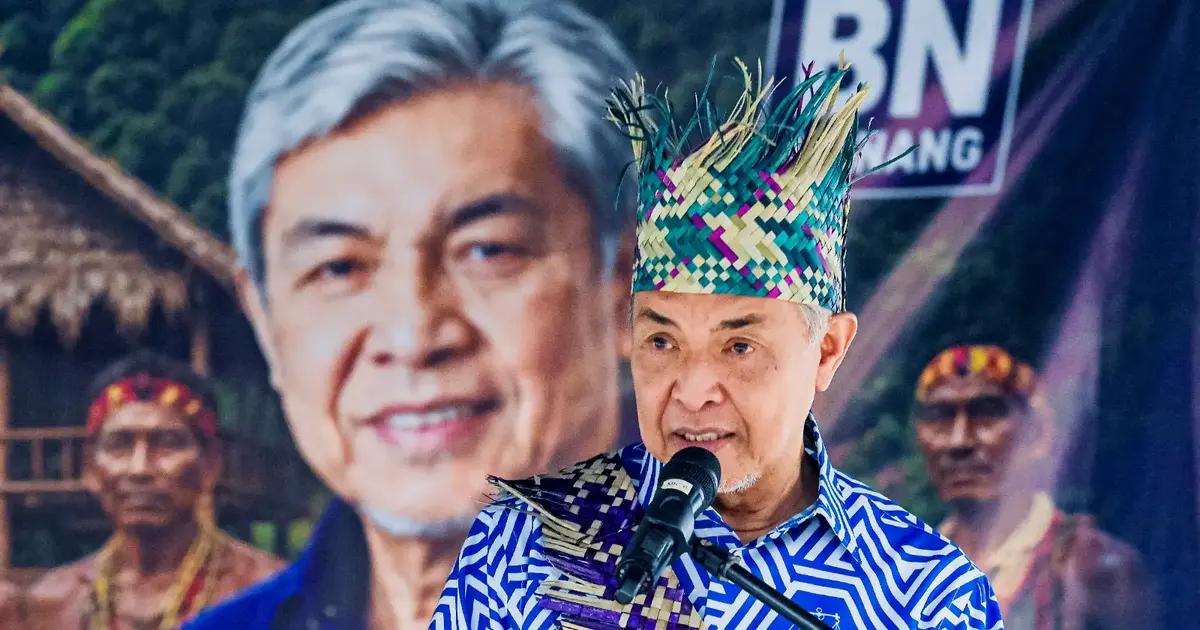
Barisan Nasional has committed to establishing a specialised officer position dedicated to Orang Asli affairs in Negeri Sembilan, should the coalition win the state election. The announcement comes as BN seeks to strengthen its engagement with indigenous communities ahead of polling day, recognising the political significance of this demographic group in several constituencies across the state.
Ahmad Zahid Hamidi, serving as the chairman of Barisan Nasional, revealed that the proposed post would sit within the office of the menteri besar and could be operationalised through existing administrative mechanisms without requiring substantial structural overhauls. This approach suggests BN is attempting to balance its commitment to indigenous affairs with fiscal prudence, leveraging current government infrastructure rather than creating entirely new bureaucratic apparatus.
The timing of this announcement reflects growing competition among Malaysian political parties for the support of Orang Asli voters, whose concerns about land rights, resource access, and representation have become increasingly prominent in recent electoral cycles. Negeri Sembilan has significant Orang Asli populations concentrated in certain areas, making their electoral behaviour potentially decisive in specific contests.
The establishment of a dedicated officer position represents an acknowledgment that indigenous communities have historically faced difficulties in accessing government services and having their concerns adequately represented within state-level decision-making structures. By creating a focal point for Orang Asli affairs within the menteri besar's office, BN suggests it seeks to improve responsiveness and create a direct channel for communication between indigenous groups and senior state leadership.
This commitment also signals BN's strategic understanding that indigenous communities are not monolithic and require tailored governance approaches. Rather than treating Orang Asli issues as peripheral to broader state policy, the proposed officer role would ostensibly prioritise their specific needs, whether related to educational access, healthcare delivery, economic development, or land disputes with external parties seeking resource extraction.
Administrative implementation through existing channels carries practical advantages. Rather than seeking new budget allocations that might encounter parliamentary scrutiny or require restructuring approval processes, the position could be established by the incoming menteri besar through administrative directives. This mechanism allows for faster deployment while potentially facing reduced opposition from within government bureaucracy accustomed to current organisational structures.
However, the pledge's effectiveness will ultimately depend on the officer's actual authority, resource allocation, and direct access to decision-making forums. A symbolic position lacking budgetary control or meaningful influence over land and resource policies would represent little more than gesture politics, potentially frustrating Orang Asli communities seeking substantive change rather than ceremonial representation.
For Malaysian voters monitoring indigenous affairs across the peninsula, this announcement from BN invites comparison with other parties' commitments on the same issue. Both Pakatan Harapan-aligned parties and Perikatan Nasional have made various pledges regarding indigenous development, making the electoral process an opportunity for communities to evaluate which coalition offers the most credible pathway to addressing longstanding grievances.
The proposal also reflects international attention to indigenous rights within Southeast Asia. Malaysia has been subject to periodic scrutiny from human rights bodies regarding Orang Asli land disputes and access to resources, particularly in contexts involving petroleum development, plantation expansion, and conservation initiatives that have sometimes displaced or restricted traditional communities. A state-level officer position could theoretically improve Malaysia's domestic governance record while potentially buffering the government against external criticism.
Negeri Sembilan's political trajectory in coming years will partly depend on whether BN follows through on such commitments and how effectively the officer role operates once established. The state election thus becomes a testing ground for competing visions of indigenous governance within Malaysia's broader political landscape, with implications extending beyond state boundaries to federal policymaking on development, conservation, and land management issues affecting Orang Asli communities nationwide.
For regional observers, the announcement underscores how Southeast Asian democracies increasingly recognise indigenous communities as significant electoral actors whose support must be actively solicited through concrete policy commitments rather than assumed on grounds of historical patronage or paternalism. Whether implemented with genuine resources and authority or reduced to bureaucratic window-dressing will determine whether this BN pledge genuinely advances indigenous welfare in Negeri Sembilan.

