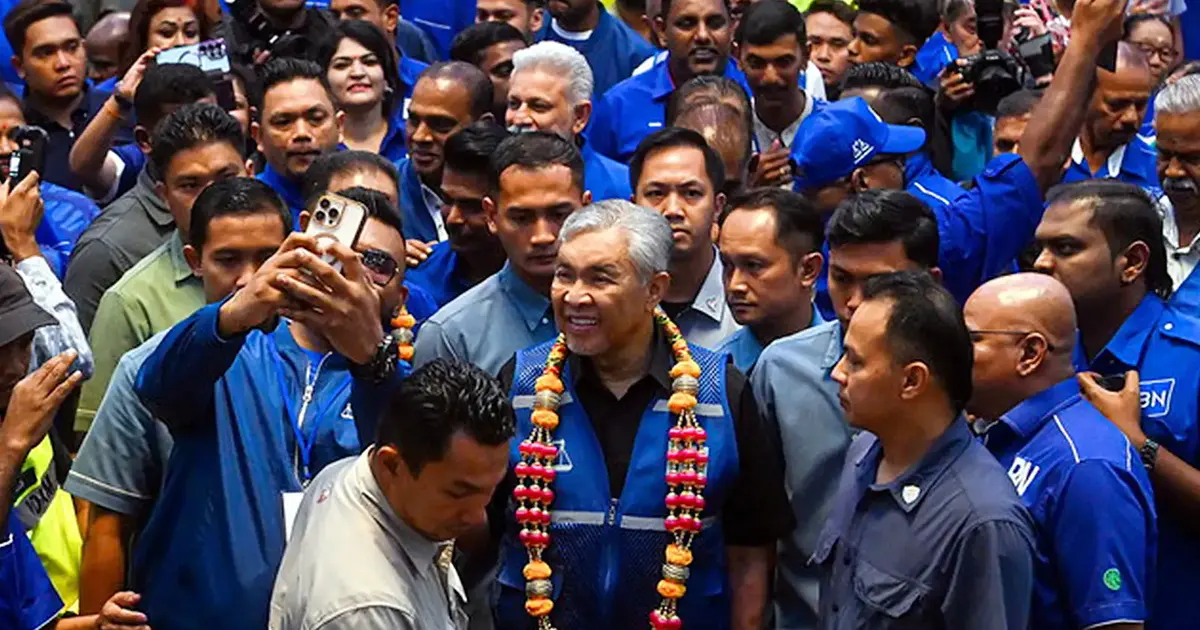
Barisan Nasional chairman Ahmad Zahid Hamidi has made a significant pledge to the Indian community ahead of state elections in Negeri Sembilan, committing the coalition to allocate two executive council positions should voters return the alliance to power. The undertaking represents a strategic attempt to consolidate support among Malaysia's Indian electorate, a demographic that has shown shifting political allegiances over the past decade and remains crucial in determining outcomes across multiple constituencies in the state.
Zahid expressed particular confidence in the Malaysian Indian Congress's capacity to replicate the electoral success it achieved during the recent Johor state polls, where the party secured a perfect 100% victory rate across all contested seats. That performance marked a significant turnaround for MIC, which had struggled in previous electoral cycles and faced intense competition from both established and emerging political challengers within Indian-majority communities. The Johor achievement demonstrated that with effective campaigning and community engagement, the party could still command substantial support despite longstanding concerns about its relevance among younger and more urban Indian voters.
The promise of exco representation carries substantial symbolic and practical importance for Malaysia's Indian community. Executive council positions grant elected representatives direct influence over state policy formulation, budget allocation, and administrative decisions affecting their constituents. For a community that has historically expressed grievances about underrepresentation in higher levels of government despite contributing significantly to Malaysia's economic and social fabric, securing formal positions within the state executive structure represents tangible recognition of their political weight.
MIC's participation within the broader Barisan Nasional framework has long been controversial within Indian-focused political discourse. Critics argue the party often functions as a subordinate partner within the coalition, wielding limited independent influence and forced to accept decisions made by larger, dominant partners. However, the direct commitment from the coalition's national chairman to guarantee exco positions suggests BN leadership views the Indian electorate's support as essential and is willing to offer concrete concessions to secure it, rather than merely relying on traditional communal voting patterns.
The Negeri Sembilan context adds particular significance to this pledge. The state encompasses diverse constituencies with varying demographic compositions, and while Indian voters do not constitute a numerical majority across the state, they represent pivotal swing communities in specific parliamentary and state assembly districts. Recent election results across Malaysia have demonstrated that Indian-majority areas increasingly respond to targeted, issue-focused campaigns addressing community-specific concerns including education, employment, and social services provision. A party or coalition that can effectively mobilise this demographic gains a meaningful advantage in marginal constituencies.
Zahid's confidence in MIC's replication of the Johor outcome reflects the coalition's broader strategy of emphasizing communal representation and inclusive governance frameworks. By highlighting specific positions allocated to particular ethnic groups, Barisan Nasional attempts to counter narratives suggesting it favours certain communities over others or maintains entrenched structures resistant to power-sharing with minority groups. This messaging holds particular resonance in states where political competition has intensified and voters increasingly demand explicit accountability regarding resource distribution and leadership access.
The timing of such commitments before state elections underscores how Malaysian electoral politics continues to operate substantially along communal lines, with parties and coalitions negotiating support through offers of representation, positions, and policy commitments targeted at specific ethnic or religious constituencies. While this reflects Malaysia's constitutional framework recognizing communal interests and the reality of diverse voting blocs, it also raises questions about whether such approaches prioritise group-level negotiations over individual-focused governance addressing broader issues affecting all residents regardless of ethnicity.
For the Indian community specifically, evaluating these offers requires examining both their concrete value and their historical track record. Past commitments by political coalitions to Indian community aspirations have sometimes failed to translate into meaningful policy outcomes once elections concluded and attention shifted to other priorities. The credibility of Zahid's pledge may therefore depend on how transparently Barisan Nasional has previously implemented similar undertakings and whether mechanisms exist to ensure accountability should the coalition win in Negeri Sembilan.
The broader implication extends beyond Negeri Sembilan alone. As Malaysian politics continues fragmenting into multiple competing coalitions and voting patterns become less predictable, smaller communities increasingly discover their votes hold strategic value. MIC and the Indian electorate more broadly occupy precisely this position—neither electorally dominant nor insignificant, but capable of determining outcomes in multiple constituencies. This reality grants them enhanced bargaining power, provided they exercise it strategically and demand demonstrable commitments rather than accepting vague assurances.
Zahid's statement also reflects Barisan Nasional's need to revitalise the coalition's support base after years of electoral setbacks and internal political turbulence. By reaching out explicitly to specific communities and offering concrete governance positions, the coalition seeks to rebuild trust and demonstrate that returning to power would benefit diverse Malaysian groups. Whether Indian voters respond positively to such appeals depends on multiple factors including local issues, the strength of alternative political options, and broader assessments of which coalition can most effectively govern in their interests.

