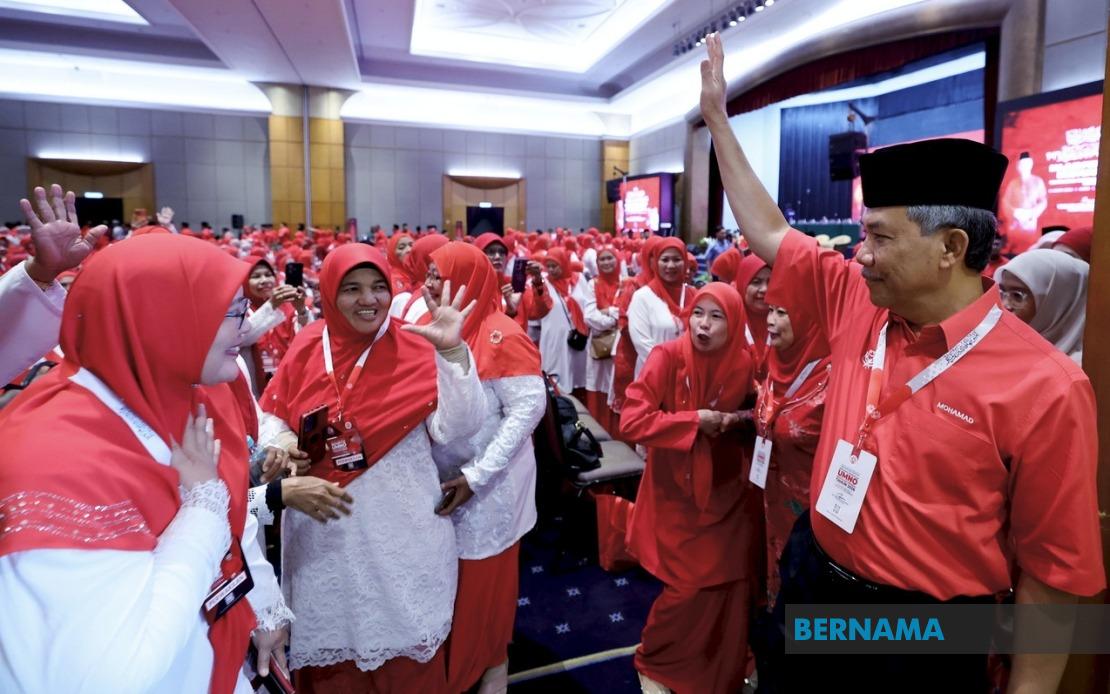
Barisan Nasional is poised to overhaul its long-standing strategy for contesting Negeri Sembilan's 16 state seats, abandoning the rigid allocation system that has governed the coalition's approach for decades. In comments made during a visit to Seremban on July 5, BN deputy chairman Datuk Seri Mohamad Hasan indicated that the political landscape has shifted so substantially that maintaining preset seat assignments among component parties no longer makes strategic sense. The shift reflects growing recognition within BN's upper echelons that demographic realities and voter preferences now demand a more flexible, merit-based approach to candidate placement.
The traditional model Hasan referenced—whereby specific constituencies are permanently designated to particular parties within the coalition—has provided a measure of predictability and intra-coalition stability for years. Yet this same framework has increasingly become a liability rather than an asset. Voter demographics across Negeri Sembilan have undergone significant transformation, with population movements, urbanisation patterns, and generational shifts altering the electoral calculus in ways that render fixed seat allocations obsolete. Hasan's candid acknowledgement that the old system failed to provide voters with genuine choice signals a tactical recalibration aimed at maximising BN's overall seat count rather than protecting the traditional fiefdoms of component parties.
The rationale behind this strategic pivot centres on unlocking electoral potential that rigid seat assignments had previously constrained. Rather than automatically assigning seats 1, 2, 3, and 4 to a single party regardless of changing circumstances, BN intends to field candidates from whichever coalition member demonstrates the strongest capacity to win in each specific constituency. This flexibility theoretically allows UMNO, MCA, MIC, and other BN components to contest in areas where their respective strengths align with electoral opportunities, potentially reducing wastage of votes and improving the coalition's competitive position. Hasan framed this as a democratic imperative, emphasising that voters deserve the opportunity to choose between genuinely competitive candidates rather than accepting predetermined outcomes.
Implementing this revised approach requires substantial groundwork within an abbreviated timeframe. Component parties have been instructed to submit candidate lists through established channels, with each party obligated to propose at least three names per contested seat. This mechanism ensures that the BN Supreme Council possesses sufficient options when finalising the official candidate slate. The timeline is remarkably compressed: nominations close on July 18, yet BN aims to announce its complete candidate roster by July 15 during the formal launch of its election machinery. This aggressive schedule reflects the Election Commission's decision to hold polling day on August 1, allowing only weeks for campaign preparation.
The seat-swapping initiative, while appearing straightforward in principle, carries significant political complexity. Past electoral results and demographic data will serve as analytical foundations for reassigning constituencies, yet these technical considerations mask deeper factional dynamics within BN. Component parties have historical claims to certain seats rooted in decades of political investment and grassroots infrastructure. Dismantling these arrangements, even when strategically justified, risks alienating mid-tier party leaders who have built their political careers around specific constituencies. Hasan's insistence that such decisions remain subject to the BN Supreme Council's approval underscores the sensitivity of the matter and the necessity of maintaining coalition cohesion.
Internal party unity emerges as perhaps the most critical variable in determining whether BN's strategic repositioning succeeds or backfires. Hasan explicitly cautioned against internal disputes, citing previous elections where BN lost multiple seats due to sabotage orchestrated by its own members. This historical pattern—where intra-coalition rivalry translates into electoral losses that benefit opposition parties—remains relevant to current circumstances. If the seat-reallocation process generates resentment among component party leaders or grassroots activists, the resulting fractures could undermine BN's electoral prospects more severely than any opposition strategy. The challenge, therefore, involves persuading component parties that the new arrangement benefits the coalition collectively, even if certain parties or individual politicians lose preferred positions.
Hasan's own electoral status illustrates both the flexibility and the stakes embedded in BN's reformulated approach. As the longtime UMNO representative for Rantau, a seat he has held continuously since 2004, Hasan acknowledged that his future candidacy remains uncertain pending leadership decisions. For a senior figure with his seniority and demonstrated political success to submit his fate to the party machinery's collective judgment signals both confidence in the decision-making process and an implicit commitment to collective interest over individual privilege. Nevertheless, his situation also demonstrates that no component party member, regardless of rank or tenure, possesses guaranteed security under the revised system.
The demographic analysis underlying the strategic pivot extends beyond simple statistical recalibration. Negeri Sembilan, like much of Peninsular Malaysia, has experienced substantial urban migration, with younger voters increasingly concentrated in metropolitan areas whilst rural constituencies face demographic atrophy. These patterns invariably reshape which constituencies represent genuine competitive opportunities versus safe seats where electoral contests are largely predetermined. Previous BN allocations often reflected historical accident—which party happened to be strongest when seats were formally divided—rather than contemporary realities. The current exercise attempts to realign candidate placement with actual electoral geography, though whether this recalibration translates into tangible seat gains remains speculative until voting concludes.
For Malaysian political observers and the wider Southeast Asian region, BN's tactical evolution carries broader significance. Coalition politics across Malaysia and the region typically rely on powersharing arrangements that prioritise factional equilibrium over electoral efficiency. BN's willingness to prioritise performance metrics and voter preferences over rigid allocative formulas, even tentatively, suggests that institutional pressures increasingly favour adaptive approaches over ossified structures. This shift may establish precedents that other regional coalitions consider adopting, particularly if Negeri Sembilan's August election delivers results that validate the new strategy.
The forthcoming election will test whether BN's intellectual recognition of demographic change translates into effective political adjustment. Candidates selected through the revised process will require sufficient campaign time and resources to establish themselves in constituencies where they may lack deep historical roots. Component parties must subordinate parochial interests to coalition-wide objectives, a discipline that has historically proven elusive in Malaysian coalition politics. Meanwhile, opposition parties, particularly in Peninsular Malaysia where PAS and PKR have gained ground in recent cycles, will attempt to exploit any transitional vulnerabilities created by BN's internal reorganisation.
Mohamad Hasan's statements reflect senior BN leadership's sober assessment that the old model no longer functions adequately in contemporary electoral conditions. Whether this recognition translates into sustained structural reform or represents merely tactical adjustment for a single election cycle will become apparent after August 1. The real test involves whether BN's component parties can maintain sufficient unity whilst embracing the competitive, merit-based selection process that Hasan advocated. Failure to achieve this balance risks replicating the self-inflicted damage Hasan warned against—internal sabotage that hemorrhages seats to opposition challengers.

