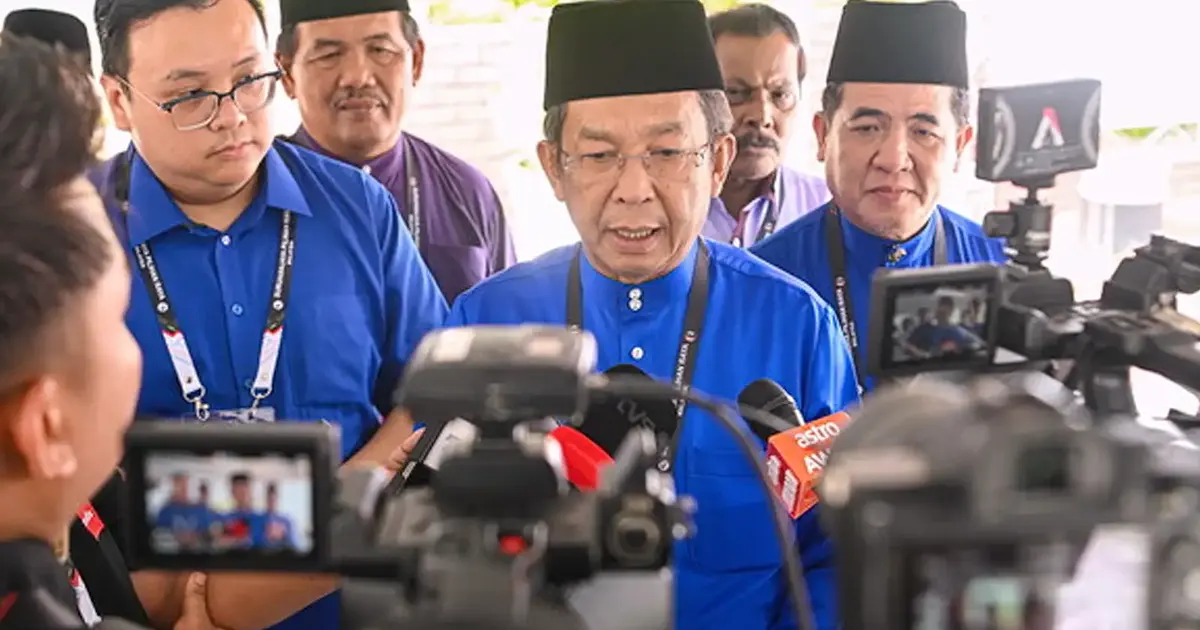
Barisan Nasional has signalled it will withhold naming its menteri besar candidate for Negeri Sembilan until after the state elections produce a victor, a strategic approach that reflects ongoing discussions within the coalition about leadership succession. The announcement comes from Jalaluddin Alias, the state Umno chief, who indicated that the coalition does not consider it prudent to declare its chief ministerial pick before voters have rendered their judgment at the polls.
The decision to delay the announcement reflects conventional wisdom in Malaysian politics, where coalitions typically resist committing to specific leadership roles before securing an electoral mandate. Such restraint serves multiple purposes: it allows flexibility should unexpected results alter the political landscape, prevents internal rivalries from undermining campaign unity, and avoids giving opposition parties ammunition to exploit factional tensions. For Barisan Nasional, which has long dominated Negeri Sembilan politics but faces renewed competition, the approach may also signal confidence in securing victory without needing to leverage leadership promises as a campaign tool.
Jalaluddin's statement emphasising the availability of several capable leaders within the coalition's ranks carries particular significance for Negeri Sembilan's political future. The state, one of Malaysia's smallest by population but strategically located within the Klang Valley's economic sphere of influence, has historically benefited from leadership stability. By indicating that multiple qualified candidates exist within party structures, Umno leadership appears to be signalling that succession planning has been undertaken seriously, even if the specific choice remains undecided.
This approach also reflects the complex dynamics within Barisan Nasional's coalition structure in Negeri Sembilan, where Umno remains the dominant party but operates alongside other component parties. The decision not to anoint a singular candidate prematurely may represent a pragmatic acknowledgement of these coalition sensitivities. Different component parties may harbour aspirations for the menteri besar position, and announcing a choice before elections could spark internal grievances that weaken cohesion during the crucial campaign period.
From a voter perspective, the withholding of this information places the menteri besar decision squarely in the hands of the electorate, even if indirectly. Malaysian voters will cast ballots for state assemblymen rather than directly electing the chief minister, yet the overall composition of the state assembly will determine which coalition can form government and thus which candidate will ultimately assume the role. In this sense, Jalaluddin's statement reflects democratic principle, albeit within Malaysia's Westminster-derived parliamentary system.
The political timing also matters considerably for Negeri Sembilan's development trajectory. The state has been pursuing ambitious infrastructure initiatives and economic diversification strategies, with the menteri besar playing a crucial coordinating role. Whichever leader eventually emerges will inherit these ongoing projects and bear responsibility for their completion and success. The coalition's decision to evaluate leadership options after gauging electoral results may also allow consideration of which candidate possesses the specific skill sets and political capital needed to navigate post-election governance challenges.
Barisan Nasional's position in Negeri Sembilan, while historically strong, cannot be taken entirely for granted in contemporary Malaysian politics. The 2018 general election delivered unexpected results across multiple states, reminding political parties that voter sentiment can shift rapidly. By maintaining flexibility on the menteri besar question until results are tabulated, Barisan Nasional preserves tactical options should the political landscape prove less favourable than anticipated, or conversely, should the magnitude of victory warrant reconsidering which leader can best capitalise on a mandate.
The roster of potential candidates within Umno Negeri Sembilan likely includes individuals with varying expertise, regional connections, and community support bases. Some may excel at grassroots engagement, others at administrative management or business relationship cultivation. The coalition's apparent desire to keep multiple options viable until after elections suggests deliberate consideration of which specific strengths will be most valuable given the state's particular circumstances and challenges following the electoral period.
Negeri Sembilan's role within the broader Malaysian political ecosystem also influences this decision-making process. As a state that borders Selangor and sits within commuting distance of Kuala Lumpur, it experiences spillover effects from national political dynamics while maintaining its distinctive local concerns around rubber cultivation, manufacturing clusters, and growing residential development. The eventual menteri besar will need to balance these varied interests, and the coalition's approach of deciding only after electoral results suggests an intention to choose someone particularly suited to managing these multifaceted pressures.
For political observers and analysts tracking Malaysian state politics, Barisan Nasional's approach in Negeri Sembilan represents a calculated strategy that prioritises campaign discipline and flexibility over the spectacle of early candidate announcements. This restraint contrasts with some opposition parties' practices of naming candidates well before elections. Whether this approach will prove electorally advantageous or disadvantageous in Negeri Sembilan remains to be determined, but it certainly demonstrates leadership's confidence in the party's ability to secure victory regardless of which specific figure ultimately leads the state government.

