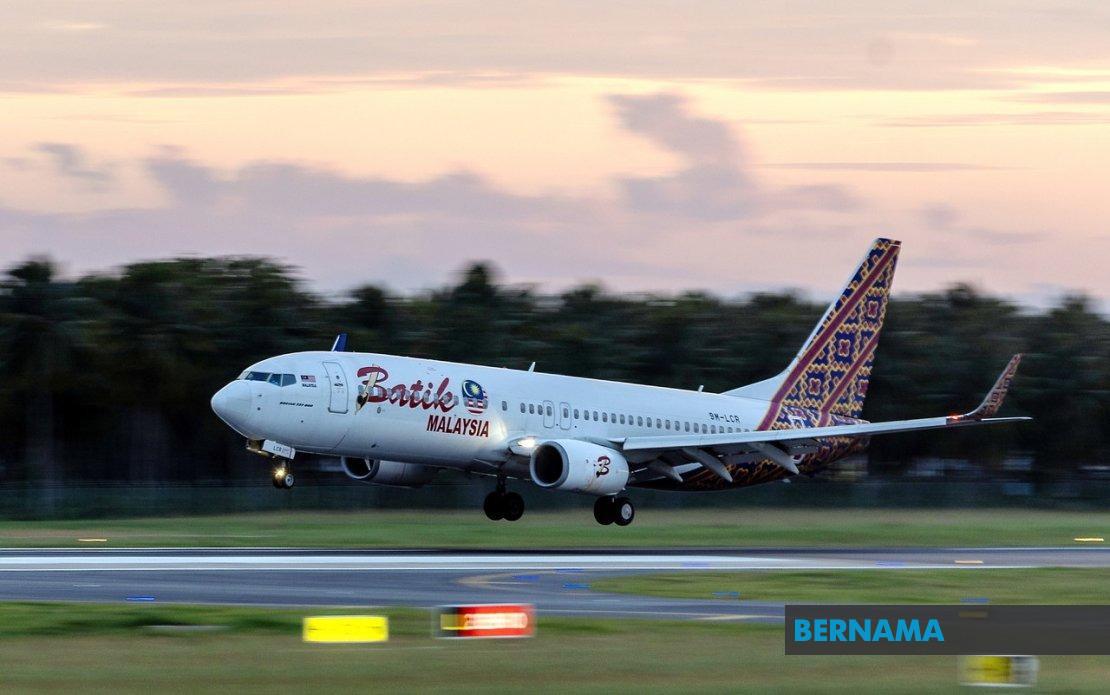
Batik Air will commence twice-daily service on the Bintulu-Kuala Lumpur route beginning July 20, a significant move aimed at improving connectivity to the Sarawak interior and easing pressure on one of Malaysia's busier regional air corridors. Tourism, Arts and Culture Minister Datuk Seri Tiong King Sing announced the expanded schedule after sustained engagement with the airline to tackle mounting complaints about limited flight availability and elevated ticket prices, issues that have increasingly concerned both business travellers and residents of the state's division.
The expanded schedule represents a partial realisation of initial government proposals. Tiong revealed that negotiations centred on adding capacity to a route that had experienced recent disruptions, including sudden flight reductions and sharp fare increases. While the minister initially advocated for three daily departures, the airline opted to implement a more measured expansion, committing to one additional daily flight with carefully planned departure times and aircraft allocation. This pragmatic compromise leaves room for further augmentation should passenger volumes continue their upward trajectory, potentially opening the door to a third daily service if demand justifies the investment.
Under the new timetable, westbound flights departing Kuala Lumpur are scheduled for 10 am and 2:30 pm, while eastbound services from Bintulu will leave at 1:10 pm and 5:40 pm. The staggered timing is designed to accommodate both leisure and business travellers, with morning and early afternoon options serving different travel patterns and reducing scheduling conflicts. This flexibility addresses a longstanding complaint from passengers who previously faced restrictive departure windows that forced them to arrange travel around limited airline availability rather than personal or professional schedules.
The expansion reflects Bintulu's accelerating economic trajectory and its growing importance as a regional hub. The division has experienced sustained development driven by multiple economic sectors, generating increased travel demand across business, education, healthcare, and tourism categories. Residents and workers now travelling more frequently between Bintulu and Peninsular Malaysia require reliable air connections that don't constrain their professional activities or personal obligations. Government officials have increasingly recognised that inadequate aviation infrastructure becomes a competitive disadvantage, potentially deterring investment and limiting growth prospects.
Tiong emphasised that affordability remains central to sustainable aviation development on this route. He urged Batik Air to maintain competitive pricing even as frequency increases, arguing that reasonable fares would expand passenger volumes and create mutual benefits for both the airline and travelling public. The minister's intervention reflects a broader recognition that excessive ticket prices can suppress demand, ultimately harming airline revenue and limiting regional connectivity. By encouraging pricing discipline, the government is pursuing a strategy where increased frequency and lower unit costs create a virtuous cycle attracting more passengers and improving operational efficiency.
The push for expanded service also acknowledges recurring operational problems that have frustrated passengers. Recent flight cancellations and last-minute schedule changes have disrupted travel plans and undermined confidence in Bintulu-Kuala Lumpur connectivity. Tiong specifically requested that enhanced frequency not come at the cost of reliability, emphasising that passengers value dependable service as much as additional flights. This focus on operational consistency represents a shift beyond mere capacity additions toward holistic service quality, recognising that unreliable flights create greater passenger frustration than limited options.
For Malaysian aviation observers, the expansion demonstrates how government advocacy can influence airline scheduling decisions without resorting to regulatory compulsion. The negotiation process between Tiong's ministry and Batik Air showcases informal coordination mechanisms that can address infrastructure gaps in Malaysia's regional connectivity network. Rather than mandating service levels through legislation, the approach relies on persuasion and the demonstration that expanded service aligns with airline commercial interests. This model may prove instructive for other underserved Malaysian routes where connectivity lags behind economic development.
The expanded service carries broader implications for Sarawak's integration with the national economy. Bintulu's position as a growing economic centre—supporting oil and gas facilities, manufacturing, and tourism development—requires aviation connectivity comparable to other major Malaysian cities. Inadequate air links have historically constrained regional development by increasing business travel costs and limiting executive accessibility. Twice-daily service positions Bintulu more competitively within Malaysia's air network, supporting economic diversification and reducing relative disadvantage compared to better-connected centres.
Batik Air's decision also reflects competitive pressures within Malaysia's aviation sector. As the country's low-cost carrier landscape intensifies, airlines face pressure to expand capacity on profitable routes and maintain market share. The Bintulu-Kuala Lumpur corridor, serving a growing population base and multiple economic sectors, represents exactly the type of regional route where strategic capacity additions can drive revenue growth. By committing to twice-daily service, Batik Air signals confidence in the route's long-term viability while potentially preempting competitor expansion.
Looking forward, Tiong's suggestion that a third daily flight could be evaluated based on passenger growth establishes a performance-based framework for further expansion. This approach incentivises the airline to actively market the expanded service while giving government officials measurable criteria for assessing whether additional frequency is warranted. If the two daily flights achieve strong load factors and passenger growth, a business case for a third service would emerge naturally, requiring no further government intervention.
The expansion also reflects evolving priorities within Malaysian transportation policy, where regional connectivity receives increasing emphasis. As the country develops its secondary cities and diversifies economic activity beyond Kuala Lumpur and Selangor, reliable inter-regional air links become essential infrastructure. The government's willingness to engage substantively with airlines on scheduling and pricing demonstrates recognition that aviation policy cannot rely solely on market forces but requires coordinated discussion between public and private sectors.
For Bintulu residents and businesses, the July 20 launch date represents tangible improvement in their region's accessibility. Whether travelling for medical appointments in Kuala Lumpur, attending business meetings, or visiting family, passengers will enjoy greater flexibility and potentially lower fares. The expanded schedule acknowledges Bintulu's significance within Malaysia's economic and demographic landscape, signalling that the government and airlines recognise the division's importance and are prepared to invest in connecting it more effectively to the broader Malaysian economy.

