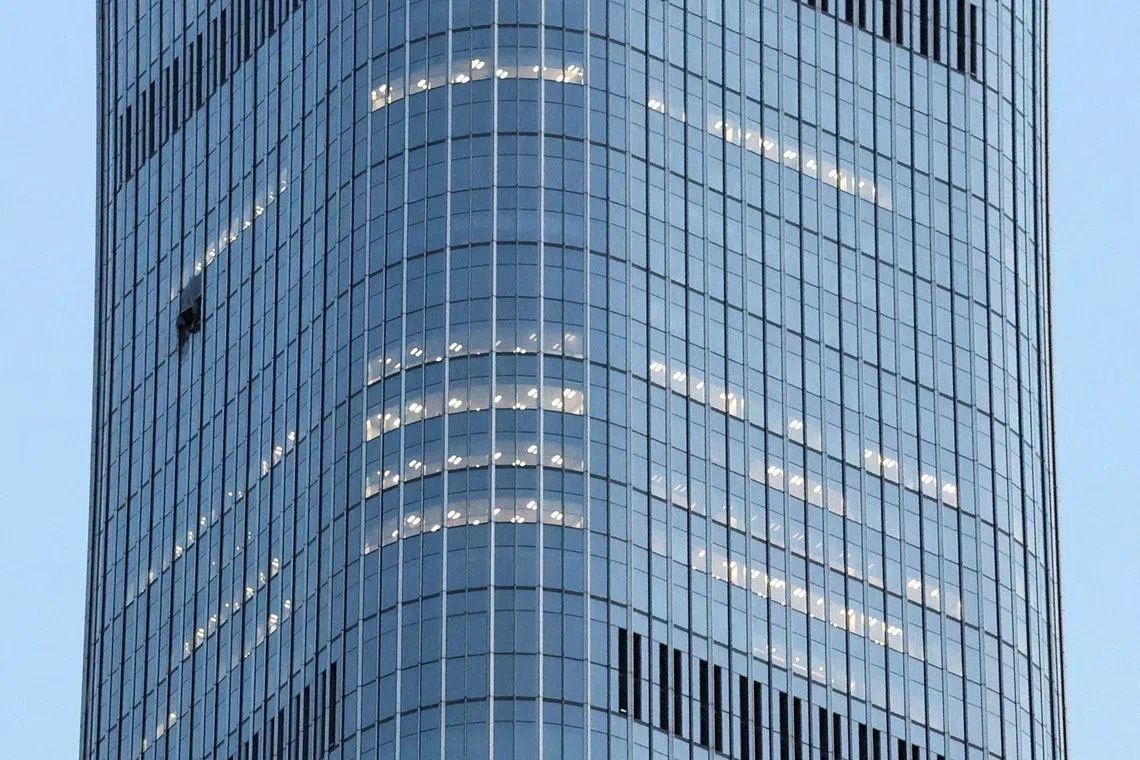
A small aircraft piloted by a 66-year-old man collided with Beijing's CITIC Tower, the capital's tallest building, on June 26, leaving 13 people injured and prompting authorities to disclose troubling details about the pilot's psychological state. The two-seat propeller-driven plane struck the 528-metre structure in the city's Central Business District at 5.55pm local time, creating a visible hole in the building's upper floors and igniting a small fire at its base. The incident and subsequent official statements have opened a window into both the personal circumstances that may have motivated the crash and the broader vulnerabilities in China's supposedly impenetrable airspace security.
According to the Chaoyang district government, the pilot — identified by the surname Liu — had been wrestling with chronic mental health problems for an extended period. Authorities revealed that Liu suffered from long-standing insomnia and anxiety, and had repeatedly documented thoughts of ending his life in written diaries. The 66-year-old lived alone in Beijing following a divorce, a personal isolation that officials cited as contributing to his psychological deterioration. The government classified the incident as "an incident endangering public safety caused by personal reasons," framing it primarily as a consequence of individual tragedy rather than systemic failure.
Liu's aviation credentials appeared in order on paper. He had obtained a sport pilot license in 2021 and upgraded to a private pilot license in 2024, having presumably cleared the medical examinations and certifications required under Chinese aviation regulations. Yet the fact that someone documented to be suffering from severe mental health challenges, including documented suicidal ideation, successfully obtained and maintained active pilot licenses raises uncomfortable questions about the adequacy of psychological screening in China's general aviation sector. A qualified pilot interviewed by Reuters, speaking anonymously due to the sensitivity surrounding the incident, acknowledged that private pilot certification in China requires physical medical examination and appropriate certifications, but the conversation suggested such checks may not comprehensively evaluate psychological fitness.
The mechanics of the flight itself reveal a more troubling narrative. On the afternoon of the crash, Liu departed from a general aviation airport in suburban Pinggu district and completed a supervised flight before embarking on a solo flight. During this final solo mission, he deliberately deviated from his approved flight corridor and lost contact with airport controllers — actions that suggest a deliberate choice rather than navigational error. The plane, registered as B-12PP, ventured into restricted airspace and ultimately penetrated a zone adjacent to a permanent no-fly area, all while approaching one of the world's most security-conscious capitals.
The security implications of the crash have proven deeply embarrassing for Chinese authorities. Beijing maintains some of the world's strictest airspace controls, a posture justified partly by the need to protect China's top leadership. The CITIC Tower stands approximately seven kilometres from Zhongnanhai, the heavily fortified government compound housing President Xi Jinping and other senior Communist Party officials. The incident occurred just days before the Communist Party's 105th anniversary celebrations, scheduled to take place at the Great Hall of the People near Tiananmen Square. That a small aircraft could navigate its way to one of Beijing's most prominent buildings, so close to the seat of power, triggered significant public concern that transcended official explanations.
The response from Chinese authorities suggested discomfort with scrutiny. Social media platforms swiftly scrubbed photographs and videos documenting the crash and its aftermath. Police physically prevented journalists and members of the public from photographing the damaged building. This heavy-handed censorship attempt backfired in some respects, as Chinese internet users continued posting questions about apparent security gaps beneath the Chaoyang district government's official statement — posts that were subsequently deleted. The aggressive information control paradoxically highlighted rather than concealed official anxiety about the security breach.
Understanding how the aircraft traversed such sensitive airspace requires grasping the regulatory framework governing general aviation in China. Chinese civil aviation law mandates that all flights, including those by non-airline operators, must receive advance approval from flight-control authorities. General aviation operators are required to submit detailed flight plans at least 24 hours in advance, with submissions due before 3pm the day before departure. Moreover, flying over urban areas is generally prohibited under Chinese civil aviation regulations. The fact that Liu's solo flight deviated from approved corridors and ventured toward a major urban centre suggests either a lapse in monitoring or an inability to intercept the aircraft once deviation became apparent.
The incident exposes potential vulnerabilities in Beijing's layered air defence system, particularly regarding smaller general aviation craft. Commercial traffic at Beijing Capital Airport, one of the city's two major airports, transits through highly restricted airspace that requires careful coordination with military and civilian authorities. Yet Liu's light aircraft apparently crossed these corridors without intervention. Analysts have speculated whether radar systems tracking small general aviation aircraft operate with sufficient sensitivity and whether response protocols exist to rapidly intercept non-commercial aircraft that deviate from approved flight paths. These operational questions remain largely unanswered in official statements.
For Malaysian and Southeast Asian readers, the Beijing incident offers instructive lessons about the limitations of even sophisticated security architectures when human variables introduce unpredictability. Malaysia has experienced its own tragic aviation incidents, including the disappearance of Malaysia Airlines Flight 370, which highlighted vulnerabilities in regional airspace monitoring. The Beijing crash demonstrates that tight airspace controls, while substantially reducing certain risks, cannot entirely eliminate the determined individual capable of exploiting regulatory gaps or operating areas where coverage proves incomplete. The incident also illustrates how political sensitivities can shape official narratives around aviation safety; authorities prioritize protecting sensitive national security information over comprehensive public disclosure of security failures.
The psychological dimension of Liu's actions raises broader questions about mental health support systems in China and mechanisms for identifying individuals at acute risk. The revelation that someone with documented suicidal ideation successfully obtained pilot licensing underscores the challenges inherent in comprehensive safety screening when bureaucratic systems operate in isolation. Had Liu's aviation authorities possessed access to mental health records or psychological assessments, or had more rigorous psychological evaluations been mandatory components of pilot certification, the tragedy might have been preventable. This gap between available information and its practical utilization in decision-making reflects a common institutional problem across many jurisdictions.
Official explanations attributing the crash to personal tragedy ring partially true but incomplete. Yes, Liu struggled with mental health crises and had documented suicidal thoughts. Yet the ability to translate those thoughts into action on such a scale reveals systemic vulnerabilities in airspace monitoring, aircraft tracking, and rapid response capabilities. The juxtaposition of China's carefully cultivated image of fortress-like security around its leadership with the apparent ease with which an unauthorized aircraft reached the heart of Beijing's commercial district created a narrative tension that censorship could not fully resolve. The incident consequently represents both a personal tragedy and a institutional failure, with security implications that extend well beyond one troubled individual.
As Beijing moved past the incident with minimal public discussion, international aviation communities quietly absorbed lessons about the persistent challenges of safeguarding airspace. For nations across Southeast Asia investing substantially in air defence and airspace management systems, the Beijing case study suggests that technological solutions alone prove insufficient without comprehensive screening procedures, robust inter-agency information sharing, and response protocols capable of addressing smaller aircraft operating in complex urban environments. The crash of aircraft B-12PP ultimately demonstrated that even in one of the world's most controlled airspaces, determined individuals operating at the margins of aviation regulations can find pathways to catastrophic consequences.

