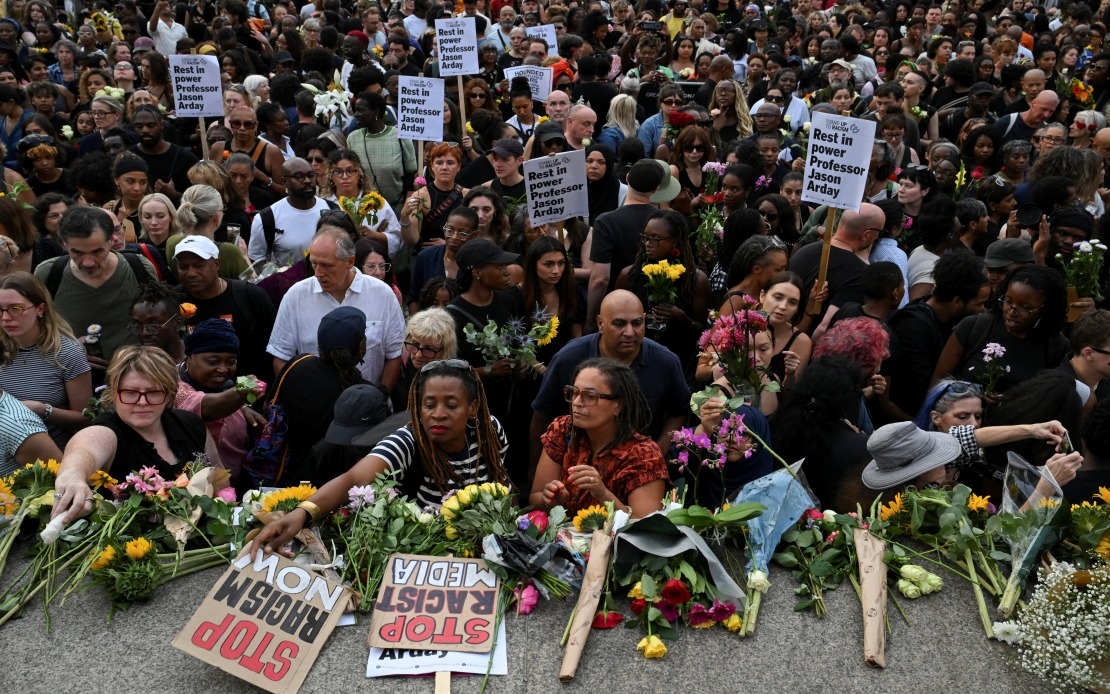
The suspension of Nathan Cofnas by Ghent University represents a significant escalation in an academic dispute that has triggered soul-searching across higher education institutions regarding the management of plagiarism allegations and their broader implications for vulnerable scholars. Cofnas, a postdoctoral researcher at the Belgian university's philosophy and moral sciences department, had levelled plagiarism accusations against Jason Arday, the University of Cambridge's youngest Black professor at the time of his 2023 appointment. The controversy intensified in July when multiple allegations emerged, ultimately contributing to Arday's resignation from Cambridge on August 5. Just nine days later, Arday was found dead at his home in south London; police confirmed the death was unexpected but not suspicious.
The timeline of events underscores the rapid deterioration of circumstances surrounding Arday's academic position. After initial scrutiny in July, Arday stepped down from his professorship at Cambridge's Faculty of Education, stating that his resignation should not be interpreted as an acknowledgement of the criticisms that had surfaced. His statement suggested he contested the validity of the allegations, yet the decision to resign created an immediate vacuum in the university's investigation process. Cambridge subsequently announced plans to examine the circumstances of his appointment, but this inquiry never reached completion following his death. The speed with which events unfolded raises difficult questions about the pace and intensity of academic investigations and their potential psychological impact on those involved.
Cofnas, who characterises himself as an advocate for "race realism," has faced his own institutional difficulties in recent years. Prior to his current position in Belgium, he held a research fellowship at Emmanuel College, Cambridge, but lost that role in 2024 after publishing a blog post advancing controversial claims about racial differences in intelligence and their implications for academic representation. Specifically, Cofnas argued that Black people have lower average intelligence than white people and contended that in a genuine meritocracy, Harvard University would have close to zero Black professors. These statements sparked significant backlash and contributed to his separation from Cambridge, establishing a pattern of engagement with racially sensitive topics that would later intersect with the Arday case.
Ghent University's decision to suspend Cofnas appears rooted not simply in the plagiarism allegations themselves, but in the broader context of his public statements and their potential implications for institutional values. In their joint statement, rector Petra De Sutter and vice-rector Herwig Reynaert emphasised that while the university remains committed to academic freedom and open debate, including controversial perspectives, such freedom operates within limits defined by responsibility and the protection of others' rights. The university indicated it was treating Cofnas's public statements "very seriously," suggesting that the manner and content of his communications surrounding the Arday case extended beyond technical academic dispute into territory the institution deemed problematic. However, Ghent University did not elaborate on the specific nature of further actions being contemplated, citing a preference not to prejudge potential future decisions.
The death of Arday has introduced an extraordinary dimension to what might otherwise have remained a contained academic controversy. At 41 years old, Arday had become a prominent figure in British higher education following his appointment as professor of sociology of education at Cambridge. His journey itself was remarkable: born in south London to Ghanaian immigrant parents in a working-class household, Arday had publicly disclosed his autism diagnosis and learning difficulties. He explained that he remained nonverbal until age 11 and did not acquire literacy skills until reaching 18, yet ultimately achieved one of academia's most prestigious positions. This personal narrative had resonated with many observers and made him a symbolic figure in discussions about diversity, inclusion, and meritocracy within elite institutions.
The plagiarism allegations that emerged in July carried particular weight given Arday's prominence as a Black academic in a sector where such figures remain relatively scarce at senior levels. Concerns about the allegations' veracity, their investigation process, and the broader context in which they circulated became matters of genuine public interest. Some observers questioned whether the intensity of scrutiny applied to Arday reflected patterns of disproportionate investigation targeting minority academics, though others maintained that plagiarism allegations must be treated seriously regardless of the accused's demographic characteristics. This tension between protecting academic integrity and guarding against discriminatory treatment remains unresolved in the current case.
Cofnas's suspension raises complex questions about the relationship between substantive academic disputes and the personal conduct of those involved. While his plagiarism allegations against Arday may have possessed technical merit, his track record of making publicly controversial statements about race and intelligence created a context that institutional actors at Ghent University evidently found troubling. The university's statement suggests that even if plagiarism concerns were legitimate, the manner of their pursuit and the statements accompanying them crossed institutional boundaries. This positions plagiarism investigations not as purely technical exercises but as exercises embedded within broader professional and ethical frameworks.
For Malaysian and Southeast Asian readers, this controversy offers instructive lessons about the complexities of managing academic integrity investigations at prestigious institutions. Many regional universities aspire to international research standards and increasingly encounter similar challenges around plagiarism detection and management. The Arday case demonstrates that such investigations rarely remain purely academic matters; they intersect with questions of diversity, representation, and institutional values in ways that demand careful handling. Regional institutions developing plagiarism policies and investigation procedures would benefit from considering how such processes interact with broader institutional commitments to equality and inclusion.
The absence of a completed investigation into Arday's academic record—whether regarding plagiarism or other concerns about his appointment—means these questions may never receive definitive answers. Ghent University's handling of Cofnas's suspension suggests an institutional effort to separate legitimate academic scrutiny from what the university perceived as problematic conduct or statements. Yet this separation may itself be contested, with different stakeholders holding divergent views on what constitutes appropriate conduct in academic disputes. The tragedy of Arday's death has essentially frozen the case in an unresolved state, preventing the kind of institutional learning that typically emerges from completed investigations.
Moving forward, the case will likely influence how universities manage plagiarism allegations and investigations, particularly those involving minority academics or politically charged contexts. Institutions may become more cautious about investigation procedures to ensure they cannot be characterised as discriminatory, while simultaneously recognising that actual plagiarism concerns cannot be dismissed simply because they involve sensitive social dimensions. The challenge lies in developing investigation frameworks that maintain rigorous standards while actively guarding against the possibility that such investigations become vehicles for discrimination or harassment. This balance remains difficult to achieve, as the Ghent University and Cambridge situations illustrate.

