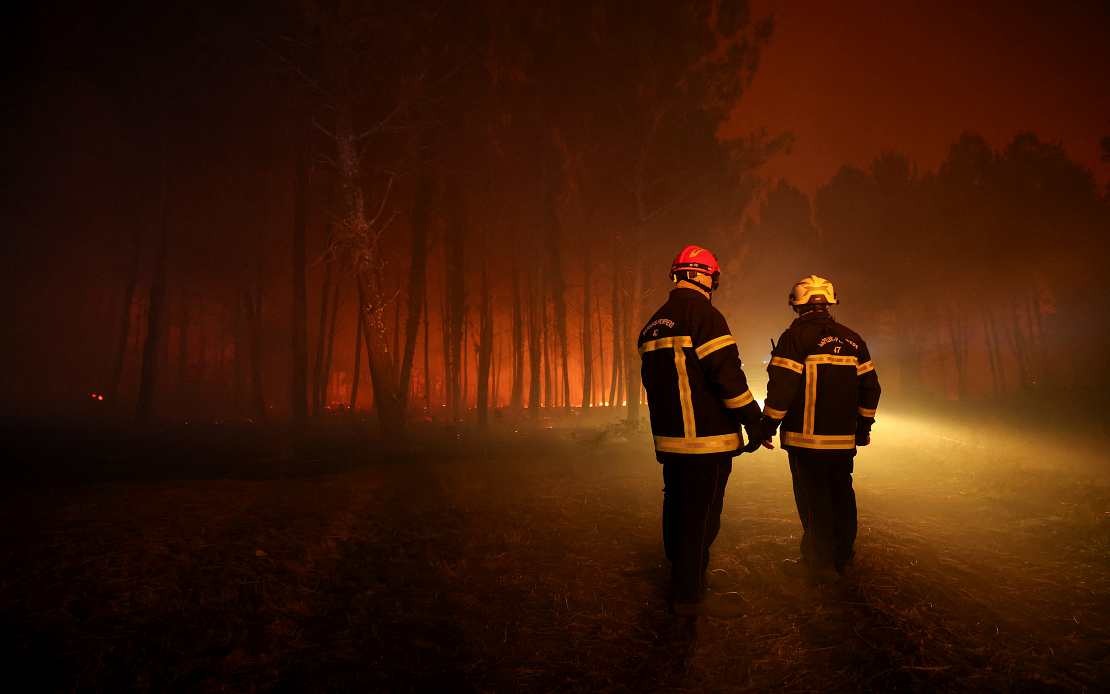
A wildfire of unprecedented scale is ravaging eastern Belgium, marking the country's most severe fire disaster on record. By Saturday evening, the blaze had consumed approximately 2,700 hectares of the High Fens nature reserve, more than twice the area initially affected when the fire erupted on Friday afternoon. The catastrophic expansion demonstrates the fire's ferocity and the challenges facing emergency responders as they battle both the flames and adverse weather conditions that continue to drive the disaster.
The evacuation has affected around 600 residents from communities adjacent to the burning landscape, with local authorities establishing safe zones and processing displaced populations. Beyond residential evacuations, children attending summer camps in the vicinity were removed to safety, and tourists lodging in local facilities received urgent instructions to depart the region. The speed of the evacuation reflects genuine concerns about the fire's unpredictable trajectory, as winds shift and funnel thick smoke across populated areas.
Historical records demonstrate just how exceptional this event is within Belgium's environmental experience. The European Forest Fire Information System archives show that the previous record-holder, a major wildfire occurring in 2011, consumed nearly 1,400 hectares—less than half the current conflagration's scope. This comparison underscores that Belgium, not traditionally associated with catastrophic wildfire events, is confronting an environmental emergency that exceeds anything in its modern history.
The High Fens terrain itself presents formidable obstacles to conventional firefighting tactics. The rugged topography of this nature reserve, combined with its proximity to the German border region, restricts the mobility of ground crews and limits their ability to establish defensive perimeters close to active flames. Emergency personnel cannot safely deploy traditional methods across the challenging landscape, forcing commanders to rely on alternative strategies including aerial support and strategic withdrawals to protect populated zones rather than attempting to contain every flame front.
Weather conditions have transformed the High Fens into a tinder box primed for rapid expansion. Belgium experienced an intense heat wave during the week leading up to Friday's ignition, with temperatures soaring to 37 degrees Celsius across numerous locations. These sustained high temperatures, combined with what authorities describe as exceptionally dry conditions, have depleted soil moisture and transformed vegetation into highly flammable material. The shifting winds that have hindered response operations threaten continuously to redirect flames toward areas previously considered safer, forcing real-time adjustments to evacuation zones and defensive strategies.
Recognizing the scale of the crisis, Belgian authorities activated the European Union Civil Protection Mechanism, a formal protocol enabling member states to request coordinated international assistance during disasters exceeding national response capacity. This activation proved immediately productive, with firefighting aircraft arriving from three neighbouring nations by Saturday. The Czech Republic, Sweden, and the Netherlands each dispatched aerial resources, with their crews prepared to conduct water drops and reconnaissance missions across the burning territory. These international contributions represent a crucial force multiplier at a moment when ground operations face severe constraints.
The multinational response extends beyond aircraft and into ground operations. Firefighting brigades mobilized not only from across Belgium's various regions but also from adjacent nations directly impacted by the emergency. German and Luxembourg firefighting units crossed borders to join Belgian crews, reflecting the collective security approach embedded in European disaster management protocols. Domestically, Belgium's military forces have been activated to support civilian firefighting operations, while local farmers contribute equipment and logistical support essential for sustaining multi-day emergency operations across rural terrain.
The wildfire's origin point within the High Fens nature reserve carries particular significance for environmental conservation efforts. This protected landscape, valued for its ecological characteristics and biodiversity, now faces potentially severe ecological damage from the flames consuming its vegetation. The long-term implications for habitat restoration and species recovery in this reserve remain uncertain as firefighting efforts prioritize human safety and property protection over ecosystem preservation considerations.
For Malaysia and Southeast Asian observers, Belgium's experience offers sobering lessons about climate vulnerability even in temperate European nations traditionally spared extreme fire conditions. Rising temperatures and shifting precipitation patterns are fundamentally altering fire risk across regions previously considered safe from such disasters. Southeast Asian nations, already facing increasingly severe dry seasons and heat waves linked to climate dynamics, must examine how Belgium's emergency response systems functioned and which elements might inform regional preparedness strategies.
The incident also highlights the effectiveness of EU mutual aid mechanisms in crisis response. Belgium's rapid activation of international assistance through established protocols enabled quick mobilization of specialized resources from multiple nations. This institutional framework contrasts with more fragmented response systems in some regions, suggesting that formalized mutual aid agreements and pre-positioned emergency resources can significantly improve outcomes during large-scale disasters.
As firefighting operations continue into the coming days, the focus shifts toward preventing further expansion while facilitating safe returns for evacuated populations. The true test of emergency management extends beyond the acute crisis phase to encompass community recovery, psychological support for displaced residents, and reconstruction of damaged ecosystems and infrastructure. Belgium's response to this unprecedented wildfire will likely shape future European wildfire preparedness planning and influence how climate adaptation strategies are prioritized across vulnerable regions.

