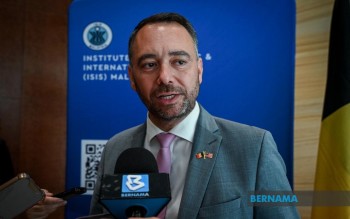
Belgium is positioning itself as a strategic partner for Malaysia's renewable energy ambitions, with Deputy Prime Minister Maxime Prévot outlining a compelling case for collaboration in offshore wind power during his inaugural working visit to the country. Speaking at the 39th Asia-Pacific Roundtable in Kuala Lumpur on July 2, Prévot framed offshore energy as a sector ripe for bilateral cooperation as both nations accelerate their transitions away from fossil fuels. The overture comes as Southeast Asia grapples with growing electricity demand and mounting pressure to decarbonise its economy, presenting Malaysia with an opportunity to tap European technological expertise and capital for its renewable energy goals.
Belgium's credentials in offshore energy are substantial despite its modest geographic footprint. The European nation, constrained by just 60 kilometres of coastline, has nonetheless constructed offshore wind farms with a combined capacity of two gigawatts—sufficient to power millions of homes. More ambitiously, Belgium intends to expand this capacity to between six and seven gigawatts within the coming years, a scale equivalent to replacing five to seven traditional nuclear power plants. This expansion exemplifies how even spatially limited countries can become renewable energy leaders through technological innovation and strategic investment. For Malaysia, which possesses extensive maritime zones and significant offshore wind potential, Belgium's experience in maximising limited coastal resources offers valuable lessons in engineering, grid integration, and regulatory frameworks for marine energy development.
PreVot's emphasis on offshore wind reflects Belgium's broader commitment to energy security and decarbonisation—concerns increasingly shared across the European Union and gaining traction in Southeast Asia. By diversifying energy sources and reducing dependence on fossil fuel imports, countries can insulate themselves from volatile global energy markets and supply chain disruptions. This resonates particularly with Malaysia, which historically relied heavily on natural gas and petroleum revenues. The strategic rationale extends beyond environmental considerations; renewable energy independence strengthens national resilience and reduces vulnerability to geopolitical pressures, a lesson reinforced by Europe's experiences during recent energy crises.
Beyond offshore wind, Prévot identified multiple complementary sectors for Malaysia-Belgium cooperation, including semiconductors, logistics, clinical trials, biotechnology research and development, and pharmaceuticals. This diversified approach reflects a sophisticated understanding of Malaysia's economic structure and growth potential. The semiconductor sector, in particular, aligns with Malaysia's existing manufacturing capabilities and global market position, while the life sciences and pharmaceutical industries represent high-value growth opportunities. Belgium's advanced industrial base and proximity to major European markets position it as both a technology provider and a gateway to European supply chains—advantages that could significantly enhance Malaysia's competitiveness in these sectors.
The European Union's broader regional engagement strategy provides critical context for bilateral initiatives. Under the Global Gateway Strategy, the EU and its member states plan to mobilise €10 billion (equivalent to approximately RM46.5 billion) specifically to support the ASEAN Power Grid and accelerate energy transition across the region. This substantial financial commitment signals genuine European investment in Southeast Asian development rather than transactional engagement. The ASEAN Power Grid initiative aims to create a more integrated and resilient regional electricity infrastructure, enabling greater renewable energy penetration and more efficient resource allocation across borders. For Malaysia, participation in these frameworks could unlock funding for major infrastructure projects while strengthening energy cooperation with neighbouring countries.
PreVot characterised this investment strategy as reflecting the EU's commitment to long-term, sustainable development that delivers tangible local benefits. By framing the €10 billion commitment as development assistance rather than mere commercial interest, the Belgian minister positions European engagement as aligned with ASEAN's own development priorities. This approach contrasts with more extractive models of foreign investment and acknowledges Southeast Asia's legitimate aspiration for self-determined growth. The emphasis on sustainability and local benefit also responds to growing scrutiny of foreign investment practices, particularly regarding environmental and social impacts in the region.
The bilateral economic relationship between Malaysia and Belgium, while not among the largest in Malaysia's trade portfolio, demonstrates meaningful commercial engagement. In 2025, total bilateral trade reached RM9.74 billion, with Malaysian exports comprising RM6.85 billion and imports RM2.89 billion. This trade balance reflects Malaysia's strength in manufacturing and resource-based products, while imports suggest Belgian presence in value-added sectors such as chemicals, machinery, and refined goods. More significantly, Belgian companies and investors had secured approval for 67 projects totalling RM5.1 billion in investment commitments and creating an estimated 4,605 jobs. These figures, though modest compared to Malaysia's engagement with larger economies, indicate a stable and mutually beneficial commercial relationship with potential for expansion.
PreVot's visit in February 2025, his first since assuming office, underscores Belgium's diplomatic prioritisation of Southeast Asia amid broader EU strategic repositioning. The European Union increasingly views the Indo-Pacific region as central to future economic growth and geopolitical stability. Belgium's active engagement in regional forums and bilateral visits reflects this broader European recalibration, positioning smaller EU member states as effective diplomatic actors within a unified regional strategy. For Malaysia, this attention from European leadership offers opportunities to shape bilateral relationships and influence EU policy toward Southeast Asia.
The convergence of renewable energy imperatives, strategic investment, and deepening bilateral ties suggests fertile ground for Malaysia-Belgium cooperation in coming years. Offshore wind development requires not only technological expertise but also regulatory frameworks, financing mechanisms, and supply chain development—areas where European partners can provide substantial support. Beyond energy, the identified sectors for cooperation represent high-growth opportunities aligned with Malaysia's aspirations to transition toward a high-income, technology-driven economy. For Belgian companies and investors, Malaysia offers access to ASEAN markets, manufacturing capabilities, and a relatively stable business environment within Southeast Asia's dynamic region.
The timing of Prévot's proposals coincides with intensifying competition among major powers for influence in Southeast Asia, where energy infrastructure investment represents both economic opportunity and strategic leverage. The EU's emphasis on transparent, rule-based engagement and sustainable development offers an alternative to more coercive or extractive approaches. Malaysia, as a middle-power bridging multiple regional and global alignments, benefits from cultivating diverse partnerships. Belgian and broader European engagement in offshore energy and other advanced sectors can complement rather than compete with Malaysia's existing partnerships, provided clear frameworks govern technology transfer, intellectual property, and local capacity building.
Moving forward, operationalising the offshore energy partnership requires translating diplomatic statements into concrete project pipelines. This entails identifying specific Malaysian coastal zones suitable for development, establishing joint ventures or technology partnerships, mobilising financing from EU sources including the Global Gateway funds, and developing local expertise and manufacturing capabilities. Success will depend on Malaysia's regulatory readiness, environmental safeguarding, and commitment to integrating renewable capacity into its broader energy strategy. Belgium's experience expanding from two to potentially seven gigawatts of offshore capacity offers applicable lessons, though Malaysia's larger geography, different marine environments, and distinct governance context necessitate locally adapted approaches.
The Belgian initiative also reflects evolving European perspectives on energy security and decarbonisation as inseparable from broader development partnerships. Rather than treating climate action and economic cooperation as separate domains, Prévot's framing integrates them into a coherent vision of mutual prosperity built on sustainable foundations. For Malaysian policymakers, this holistic approach offers a template for evaluating foreign partnerships—prioritising not merely capital flows or technology access but alignment with long-term national development objectives and environmental stewardship. As Malaysia navigates competing pressures from various global partners, such strategic clarity becomes increasingly valuable in maximising benefits from international engagement.

