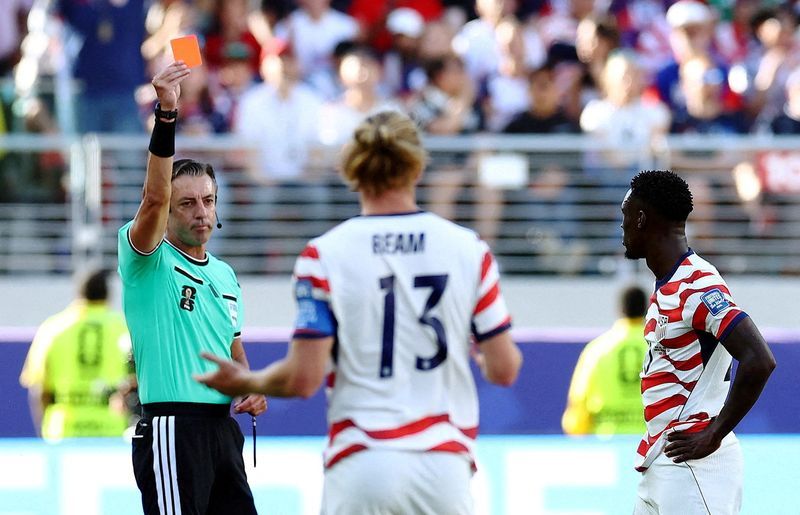
The integrity of international football's disciplinary system has come under intense scrutiny following an extraordinary reversal by FIFA that has enraged Belgian stakeholders and raised uncomfortable questions about political interference in sport. The controversy centres on FIFA's decision to overturn a red-card suspension for a prominent United States player ahead of Monday's knockout encounter between Belgium and the United States in Seattle, a decision that came directly after President Donald Trump personally lobbied FIFA President Gianni Infantino to review the case. The unprecedented nature of such high-level political intervention in a sporting governing body's disciplinary proceedings has sparked accusations of impropriety that threaten to overshadow the sporting contest itself.
Belgian public sentiment has crystallised firmly around the view that the reversal constitutes a fundamental breach of sporting principles. Speaking in the heart of Brussels, citizens expressed bewilderment at how a formal disciplinary decision—the issuance of a red card representing a serious breach of playing regulations—could simply be erased from the record through political channels. One resident questioned the entire rationale behind the original sanction, asking rhetorically how a referee's judgment and the disciplinary process could be rendered meaningless by subsequent intervention. The frustration reflects a broader concern that FIFA's decision-making structures, already viewed with scepticism in many quarters, have now become vulnerable to direct political pressure from powerful nations.
The decision carries particular weight given the timing and context. Belgium, competing as the "Red Devils" in a must-win knockout fixture, faces the psychological disadvantage of confronting an opponent whose roster has been supplemented through what many view as procedural manipulation rather than sporting achievement. The Belgians had legitimately anticipated facing a depleted American squad, only to have those calculations upended at the eleventh hour. This represents more than a simple administrative adjustment; it fundamentally alters match conditions in a way that Belgian officials argue was secured through improper channels rather than through any legitimate sporting grounds.
Belgium's Deputy Prime Minister Maxime Prevot articulated official government displeasure with the situation, suggesting that if Trump's telephone call directly precipitated FIFA's reversal, the decision would represent a flagrant violation of fundamental sporting governance principles. Prevot's intervention elevates the controversy beyond the realm of football fandom into the domain of diplomatic and institutional concern, signalling that Belgian leadership views the matter as one affecting the credibility of international sporting bodies. The statement implicitly challenges FIFA's independence and suggests that the global football governing body may have compromised its authority by yielding to presidential pressure.
The United States Embassy in Belgium has moved quickly to contain the diplomatic fallout, with Ambassador Bill White issuing a statement denying any improper interference by Trump. White's formulation—that Trump "thanked FIFA after the fact"—appears designed to reframe the intervention as a post-decision expression of gratitude rather than a causal factor in the reversal. However, this distinction has done little to quell Belgian skepticism, particularly given the closely temporal relationship between the presidential call and FIFA's announcement. The Embassy's defensive posture suggests awareness of how damaging the optics of political pressure on sports governance have become, even among traditionally close allies.
Among ordinary Belgians, responses have ranged from outrage to pragmatic acceptance tinged with determination. Some residents have called for the matter to be used as motivational fuel, reframing the FIFA decision as an external pressure that should harden Belgian resolve rather than undermine it. This resilience reflects a characteristic sporting attitude—that victory gained on the pitch represents the only legitimate response to administrative manoeuvring off it. The sentiment suggests that while Belgians deeply resent what they perceive as procedural corruption, they remain confident in their team's ability to overcome such obstacles through superior performance.
The incident illuminates a critical vulnerability in FIFA's governance structure. Despite ongoing reforms following corruption scandals that had engulfed the organisation, the framework apparently remains susceptible to direct appeals from powerful political actors. The ability of a sitting president to successfully lobby for reversal of a disciplinary decision raises profound questions about the independence of FIFA's decision-making bodies and the consistency of their application of rules. If a telephone call from the United States President can trigger reconsideration of a formal sanction, the implications extend far beyond this single match, potentially affecting confidence in all FIFA disciplinary determinations.
From a Southeast Asian perspective, this controversy carries particular relevance as a cautionary tale about the vulnerability of international sporting bodies to political pressure from powerful nations. Regional footballing nations competing in FIFA competitions must now contemplate whether they possess equivalent channels of influence or whether such recourse remains the exclusive privilege of major powers. The incident underscores asymmetries in global sports governance that may disadvantage smaller footballing nations lacking comparable diplomatic leverage with FIFA leadership. Malaysian readers, accustomed to navigating power differentials in international forums, will recognise the troubling precedent of allowing political considerations to penetrate supposedly neutral administrative processes.
The broader implications for FIFA's institutional credibility cannot be overstated. The organisation has invested substantial effort in rehabilitating its reputation following the corruption scandals that culminated in criminal prosecutions of senior officials. This reversal threatens to undo that rehabilitation by suggesting that different standards apply depending on a nation's political stature. The decision appears to validate long-standing criticisms that FIFA's governance reflects the interests of powerful football-playing nations rather than consistent application of predetermined rules. Whether FIFA leadership can convincingly explain the decision on grounds other than presidential pressure will largely determine whether the governing body's authority survives this episode intact.
As Belgium prepares for their Seattle encounter, the match has assumed dimensions extending well beyond the pitch. The contest will now be viewed through the prism of this governance controversy, with Belgian performance potentially interpreted as either vindication of their right to compete under fair conditions or as evidence that superior play can overcome institutional disadvantage. The United States, meanwhile, faces the awkward position of competing under a cloud of suspicion regarding the legitimacy of their squad composition. Neither outcome—Belgian victory or American triumph—will entirely resolve the fundamental questions raised about FIFA's independence and the propriety of political intervention in sporting governance. The damage to FIFA's credibility, regardless of Monday's result, appears already secured.

