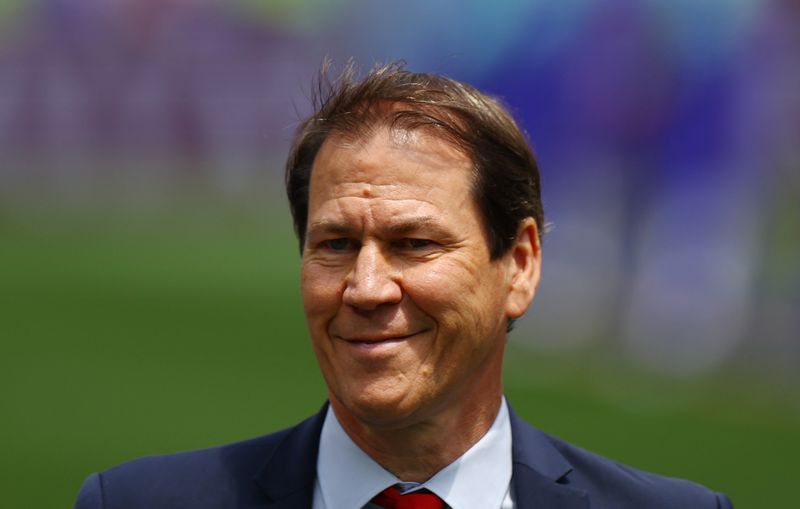
Rudi Garcia's tenure as Belgium national coach has ended in mutual separation from the Belgian Football Association, with both parties agreeing not to renew his contract beyond July 31. The decision follows a tumultuous World Cup campaign that saw the European side reach the quarter-finals before succumbing to eventual champions Spain. The announcement marks the conclusion of an 18-month appointment that began during a period of considerable sporting and financial uncertainty for Belgian football.
Garcia's World Cup performance proved deeply divisive amongst Belgian supporters and media commentators. The tournament began shakily, with the Red Devils drawing both their opening matches against Egypt and Iran before salvaging their group stage position with a commanding 5-1 victory over New Zealand. The unconvincing start generated substantial criticism from the Belgian press, prompting Garcia to convene a meeting with journalists to justify his tactical approach—an unusual step that reflected the intensity of questioning surrounding his methods.
The knockout stages presented an improbable narrative arc. Against Senegal in the round of 32, Belgium appeared destined for elimination after falling two goals behind. However, a critical goalkeeping error by Senegal's shot-stopper offered an unexpected lifeline, allowing the Belgians to stage an unlikely comeback. The dramatic turnaround was completed when Belgium earned a disputed VAR penalty decision in the closing moments of extra time, ultimately prevailing 3-2 in a match that could easily have concluded differently.
The subsequent fixture against tournament hosts the United States demonstrated Garcia's capacity for tactical innovation. Belgium's 4-1 victory represented convincing football that vindicated several of his team selection decisions, earning him redemption in the eyes of observers who had questioned his earlier choices. This performance suggested momentum and potential advancement through the tournament, yet such optimism would prove premature.
The quarter-final meeting with Spain terminated Belgium's World Cup ambitions and crystallised existing tensions around Garcia's leadership. The 62-year-old French coach's decision to substitute goalkeeper Thibaut Courtois attracted particular scrutiny and generated widespread speculation that his dismissal was imminent. Nonetheless, both the Belgian federation and Garcia maintained publicly that their parting represented a consensual arrangement rather than an acrimonious severance.
Vincent Mannaert, the federation's sports director, acknowledged Garcia's contributions whilst announcing the split. In an official statement, Mannaert credited Garcia with restoring cohesion within the squad during a challenging period marked by financial and sporting pressures. He emphasised that Garcia's experience and commitment had been instrumental in facilitating what the federation characterised as a strong World Cup outcome, notwithstanding the quarter-final exit. The tone struck was respectful rather than recriminatory.
Garcia similarly adopted a gracious approach in his departure statement, expressing gratitude towards the players and reaffirming his commitment to the generational transition he had begun implementing within the Belgian setup. His remarks suggested a coach departing on his own terms, conscious of having laid groundwork for future development despite the tournament's disappointing culmination. The language employed avoided defensiveness, instead focusing on continuity and the team's longer-term trajectory.
Belgium's next competitive engagement arrives through the UEFA Nations League competition, where they face Italy in Rome during late September before immediately hosting France. These fixtures will occur under new coaching leadership, with Mannaert tasked with identifying Garcia's successor. The Nations League represents a crucial opportunity for Belgium to arrest momentum and establish direction under fresh tactical guidance. The quality of available opponents suggests that September's fixtures will provide an early barometer of the new regime's effectiveness.
Garcia's departure contributes to a broader exodus of World Cup coaches departing their roles during or immediately following the tournament. At least 14 national teams have undergone coaching changes in connection with World Cup performance, including prominent football nations such as France, Germany, and the Netherlands, alongside teams like Portugal, Croatia, and Senegal. This phenomenon reflects the intensified pressure surrounding the World Cup cycle and the readiness of federations to implement managerial change when tournament outcomes disappoint expectations or fail to justify pre-competition confidence.
For Malaysian observers of international football politics, Belgium's managerial transition illustrates how even well-resourced European federations experience instability following World Cup campaigns. The intricate dynamics surrounding Garcia's departure—the initial criticism, the tentative redemption during the United States match, and the ultimate termination after elite opposition—mirror global patterns in how national coach accountability operates at the highest levels. Belgium's recruitment process for Garcia's successor will warrant attention, particularly regarding whether the federation seeks a proven international coach or opts for a fresh perspective capable of navigating the generational renewal Garcia initiated.

