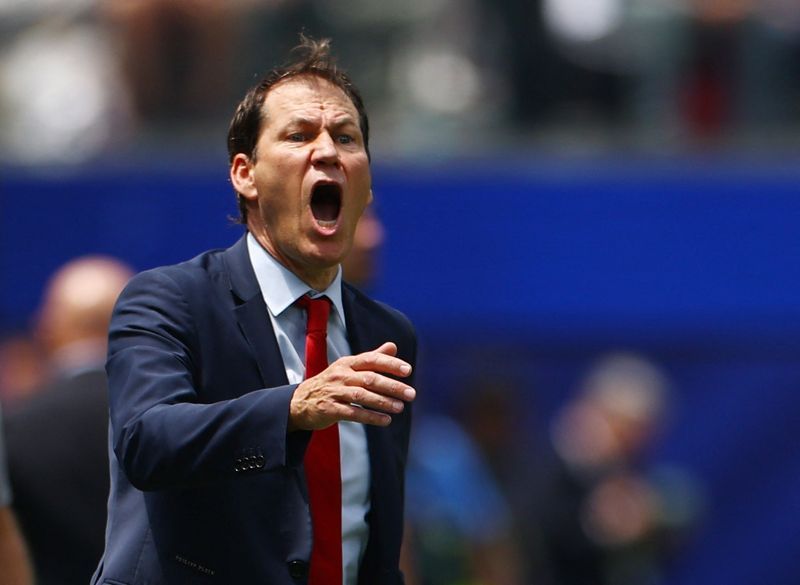
Rudi Garcia's position as Belgium coach has come under serious scrutiny following his tactical decision to replace first-choice goalkeeper Thibaut Courtois during the World Cup quarter-final clash against Spain on Friday, a match that ended in a 2-1 defeat for the Belgian side. The substitution, made in the 71st minute, set off a chain of events that ultimately cost Belgium the contest and now threatens to define the final chapter of Garcia's tenure with the national team.
Courtois had signalled to the technical staff that he could manage to continue playing despite experiencing a minor leg complaint, but Garcia elected to withdraw him from the pitch regardless. The French coach's reasoning stemmed from his stated philosophy that only players operating at complete physical capacity should remain on the field. This principled stance proved consequential when Senne Lammens, Courtois's replacement, struggled with a low strike from Pau Cubarsi in the 86th minute, fumbling the ball directly to Mikel Merino, who converted the decisive goal that sent Spain through to the semi-finals.
The decision triggered sharp criticism from Belgian football analysts and broadcasters. Peter Vandenbempt, a respected commentator on Belgian radio, expressed bewilderment at Garcia's choice, questioning whether substituting one of the world's premier goalkeepers during a World Cup knockout stage simply because he could no longer distribute long passes represented sound management. Vandenbempt's rhetorical challenge to Garcia's logic—that surely Courtois himself would know his own capabilities—resonated with many observers who questioned whether rigid adherence to a fitness doctrine should override contextual judgment in such high-stakes circumstances.
Garcia did not shy away from defending his decision, laying out his management philosophy with clarity and conviction. Throughout the tournament, he maintained that only players meeting his strict 100 per cent fitness threshold would be selected, and he applied this standard uniformly across the squad, including to his goalkeeper. The coach contended that Belgium's tactical approach relied heavily on Courtois's long passing range, particularly his ability to launch the ball towards forward Charles De Ketelaere and striker Romelu Lukaku. Withdrawing Courtois, Garcia reasoned, prevented the injury from deteriorating further while maintaining alignment with established team principles.
Yet Garcia's contract situation means this controversy will not simply fade from discussion. His deal with the Belgian Football Association expires at month's end, at which point officials must decide whether to renew his mandate or pursue alternative leadership. The timing of this substitution gaffe, arriving during a critical contract review window, significantly undermines his negotiating position and provides federation administrators with concrete evidence to cite should they opt to terminate the arrangement.
The 62-year-old Frenchman arrived at the role in early 2025 with a specific mandate: rehabilitate a squad demoralized by the previous regime under Domenico Tedesco, which had become synonymous with toxic working conditions and soulless performances. Garcia was tasked with restoring pride to Belgian football and achieving tangible tournament success. He successfully navigated Belgium's retention in the Nations League's top tier and secured qualification for the World Cup, while also meeting the minimum objective of reaching the quarter-finals.
However, his overall record tells a more complex story. Across 20 international matches, Garcia accumulated 12 victories, six draws, and two defeats—a respectable win rate on paper but insufficient to overcome the mounting doubts about his tactical acumen and decision-making under pressure. Throughout the tournament, questions arose regarding his team selection choices, his substitution timing, and the broader coherence of his tactical framework.
Belgium's path to the quarter-finals exposed underlying vulnerabilities in their campaign. The team struggled for consistency, drawing with Egypt and Iran before defeating New Zealand to finish atop their group. Against Senegal in the last sixteen, Garcia made the bold call to substitute key attacking players when Belgium trailed 2-0, a decision that either reflected inspirational insight or desperate gambling, depending on perspective, as Belgium eventually mounted a comeback. More impressively, Belgium demolished co-hosts the United States 4-1, demonstrating capacity for dominant performances when circumstances aligned.
On the positive side, Garcia can point to his successful integration of emerging talent into the squad. Players such as Nathan Ngoy and Nicolas Raskin made significant contributions throughout the tournament, suggesting the coach possesses genuine ability to develop and incorporate youthful energy into the national team framework. These achievements demonstrate he is not without merit as a coach tasked with building toward future competitions.
Looking ahead, the Belgian federation faces a consequential decision about their direction toward the 2028 European Championship. They must determine whether Garcia represents the appropriate architect for their next competitive cycle or whether his perceived inflexibility, highlighted by the Courtois incident, makes him unsuitable for the role. The narrow margin between Garcia's defenders, who cite his positive achievements, and his detractors, who emphasize tactical rigidity and questionable judgment in critical moments, leaves federation officials with no obvious consensus path forward. What remains certain is that Garcia's future will be decided during contract negotiations that now carry significantly less momentum in his favor.

