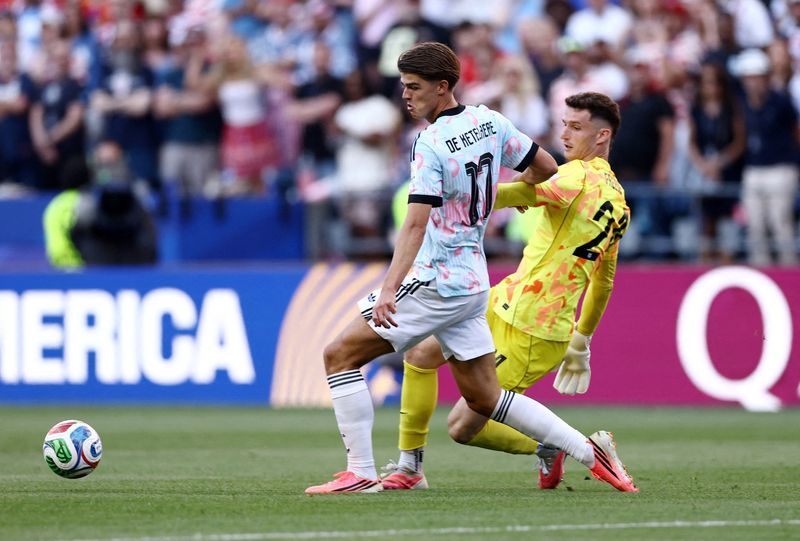
Belgium's dramatic 4-1 victory over the United States in Atlanta on July 7 marked a pivotal moment in their World Cup campaign, suggesting that the talented but inconsistent squad may have finally discovered the attacking formula that eluded them through a troubled opening round. The emphatic nature of the triumph, however, came courtesy of a bold and controversial selection decision by coach Rudi Garcia: benching several of the squad's most celebrated players, including the traditionally indispensable Kevin De Bruyne, in favour of a reconfigured midfield designed to seize control through intensity and positioning rather than individual brilliance.
The path to this revelation had been fraught with difficulty and self-doubt. Belgium arrived at this tournament as a squad in transition, their earlier promise seemingly fading as they stumbled through their group stage, managing only draws against their first two opponents before a commanding 5-1 rout of New Zealand allowed them to advance atop their section. Their next-round encounter against Senegal proved even more harrowing, with the Belgians staring elimination in the face after conceding two goals deep into their opponent's half. A dramatic comeback engineered through sheer desperation, culminating in a penalty awarded during extra time, kept their World Cup ambitions alive by the narrowest of margins. The sequence of near-misses and narrow escapes left Belgian supporters questioning whether Garcia possessed the tactical acumen to navigate the tournament's demands.
Garcia's personnel decisions for the clash against the hosts reflected a fundamental reimagining of how Belgium should operate. The exclusion of De Bruyne, who has long served as the creative heartbeat of the national side, represented a remarkable statement of intent about tactical priorities. Jeremy Doku and Romelu Lukaku, likewise capable of changing matches through individual moments of quality, also found themselves relegated to the bench. In their place, the coach elevated Nicolas Raskin and Amadou Onana to midfield roles, while Dodi Lukebakio entered the attack, and Charles De Ketelaere shifted into a more central striker position. This restructuring created an entirely different rhythm to Belgium's play, one built on aggressive pressing, quick transitions, and the exploitation of space rather than prolonged possession sequences orchestrated by a single playmaker.
The alterations bore immediate fruit. De Ketelaere, operating in his unfamiliar advanced role, struck twice during the opening forty-five minutes, establishing Belgian dominance so thoroughly that any restoration of parity seemed improbable from that point forward. Garcia's gamble appeared vindicated not merely by the scoreline but by the manner in which his team controlled proceedings. The reconfigured midfield, anchored by captain Youri Tielemans and freed to operate with greater autonomy, repeatedly regained possession following American attempts to build play, denying the home team the rhythm necessary to mount any sustained challenge. The width provided by Lukebakio and others allowed Belgium to expose the static defensive positioning of their opponents, stretching them horizontally while creating numerical advantages in key areas.
The Americans, by contrast, appeared perpetually disorganized and overwhelmed by the tempo and tactical clarity of their opponents' approach. The hosts, ostensibly buoyed by home advantage and recent competitive form, looked distinctly uncomfortable against an opponent that seemed to have cracked a code that had eluded them throughout the tournament. This transformation suggested that Garcia's earlier struggles had stemmed not from tactical limitations but from a reluctance to abandon the template built around established stars, even when circumstances demanded experimentation.
Despite losing Amadou Onana to a knee injury during the first half, Belgium maintained their ascendancy without missing a beat. Hans Vanaken, the veteran midfielder of thirty-three years, seamlessly absorbed Onana's responsibilities in front of the defensive trio, and Garcia subsequently praised both the tactical adjustment and Vanaken's unexpected contribution, expressing genuine pleasure that a player often overlooked by the national team setup could mark a World Cup appearance with a goal. This substitution further underscored the theme of the evening: sometimes, a team's strength lies not in the familiar names but in the willingness to construct novel combinations.
Garcia acknowledged that his lineup had remained uncertain until hours before kickoff, yet he possessed clarity about his strategic intentions. In explaining his decision to keep De Bruyne in reserve, the coach noted that the plan had always allowed for the star's introduction if circumstances dictated, but once Belgium established their lead through superior midfield control and positional discipline, such an intervention became superfluous. The coach's conviction that his team needed to dominate proceedings from the opening whistle drove his selections, and the unfolding events validated his instinct that territorial pressure and aggressive ball recovery would unsettle American organization more effectively than the traditional Belgian approach.
The contrast with Belgium's earlier performances could hardly have been starker. The drawing performances against lesser opposition and the hair-raising escape against Senegal had prompted widespread criticism of Garcia's stewardship. Observers questioned whether the coach possessed the flexibility and imagination necessary to adapt tactics when the predetermined game plan faltered. The emphatic victory against the United States, however, suggested that skeptics had underestimated the coach's tactical sophistication and his readiness to embrace unconventional selections when they served the team's broader objectives.
Looking ahead to a quarter-final encounter with Spain in Los Angeles scheduled for Friday, Belgium must now consider themselves genuine contenders for tournament honours, a status seemed improbable mere days earlier. The discovery of an alternative playing style, one that prioritizes collective intensity and shape over individual moments of brilliance, provides Garcia with tactical flexibility that could prove invaluable against higher-quality opponents. Spain's traditional possession dominance may encounter unexpected resistance from a Belgian side no longer dependent on the established hierarchy of star power, but rather energized by tactical innovation and newfound confidence in a system that unlocked their potential when it mattered most.

