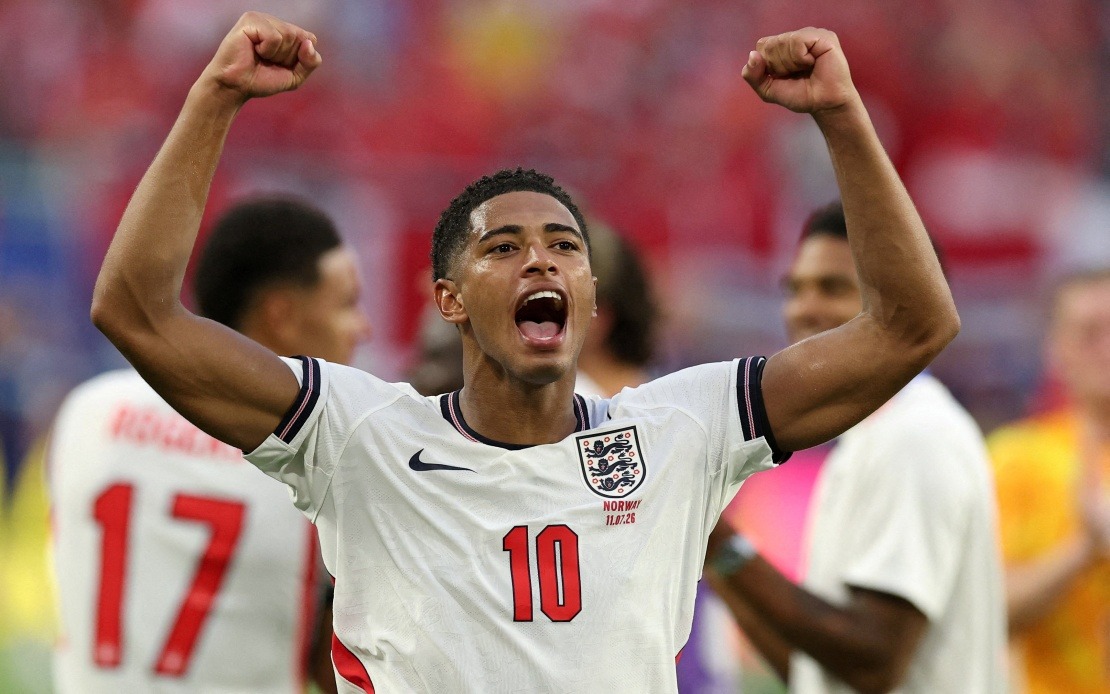
Jude Bellingham delivered a masterclass in big-game performance as England mounted a dramatic comeback to eliminate Norway 2-1 in their 2026 FIFA World Cup quarter-final at Miami Stadium on Saturday. The Real Madrid midfielder's two-goal haul, including the decisive strike in extra time, sent Thomas Tuchel's side into the semi-finals and kept alive their hopes of claiming a second world championship since 1966. Bellingham's clinical finishing in the 45th minute and then again in the 93rd minute proved the difference, demonstrating why the young England star has become such a crucial asset to the team's ambitions this tournament.
Norway's spirited display threatened to upset the odds when they took the lead through Andreas Schjelderup's impressive 36th-minute finish, catching England's defence momentarily off-guard. Schjelderup's composure in front of goal rattled the English supporters as the underdogs seized an unexpected advantage against one of the tournament's stronger nations. However, England's response came swiftly, with Bellingham restoring parity in first-half stoppage time after collecting Anthony Gordon's pass and finding space within the penalty box to deliver a precise low drive that left goalkeeper Orjan Nyland helpless.
The second half saw Norway continue to trouble England with their physical approach and tactical discipline. In the 53rd minute, Norwegian striker Erling Haaland came agonisingly close to adding a second goal when he met Julian Ryerson's cross with a downward header that Jordan Pickford reacted to with impressive reflexes, pushing the attempt around the post. Two minutes later, Torbjorn Heggem capitalized on an English defensive lapse following a corner kick, thumping a high finish into the net that momentarily threatened to break English hearts. The celebrations, however, were cut short when VAR intervention revealed that Haaland had committed a pushing foul on Elliot Anderson during the build-up, resulting in the goal being correctly disallowed and preserving England's lifeline in the contest.
With regulation time slipping away without a breakthrough, the quarter-final tie progressed to extra time. This is where England's superior fitness and tactical flexibility began to show, applying sustained pressure on a tiring Norwegian outfit. The pressure finally yielded results in the 93rd minute when Morgan Rogers unleashed a fierce shot from outside the penalty area that Nyland could only partially parry. Bellingham's positioning and awareness allowed him to pounce on the rebound at the closest range, finishing decisively to send England forward and spark wild celebrations in the stadium.
For Norway, the defeat represented both triumph and heartbreak. Although they bowed out in the quarter-finals, this represents the Scandinavian nation's best-ever World Cup performance, surpassing their previous benchmarks of reaching the round of 16 in both 1938 and 1998 at France. Their showing against a top-tier opponent demonstrated significant progress in Norwegian football's development on the global stage, though the elimination will undoubtedly sting given how close they came to creating a major upset.
England's progression sets up a mouth-watering semi-final confrontation with either defending champions Argentina or Switzerland, whose quarter-final clash will determine the other semi-finalist. The path to claiming a second world crown—their first since the iconic 1966 triumph on home soil—now requires two further victories. With 60 years having elapsed since that historic moment at Wembley, the current generation of English players carries the weight of national expectation as they pursue redemption in the competition.
Bellingham's performance exemplified the maturity and composure that Tuchel has instilled within the England squad. The 20-year-old's ability to deliver decisive moments under intense pressure validates the decision to integrate him as a core component of the midfield architecture. His technical quality, physical presence, and footballing intelligence have made him virtually irreplaceable within the team's system, and performances like these only underscore his trajectory toward becoming one of England's generation-defining players.
From a Southeast Asian perspective, England's progression has wider implications for the 2026 tournament's commercial viability and global narrative. The Three Lions represent one of the competition's traditional powerhouses, and their advancement appeals to substantial television audiences across the region where English football maintains deep cultural resonance. Meanwhile, for Norwegian and Scandinavian supporters throughout Asia, the campaign has provided cause for optimism about their national team's capacity to compete at football's highest level.
The tournament now enters its most concentrated phase, with the semi-finals set to deliver some of the most compelling matchups possible. England's journey from behind against Norway has added another compelling storyline to what is shaping up to be a memorable tournament, while simultaneously putting them within touching distance of a prize that has eluded them for three-fifths of a century.

