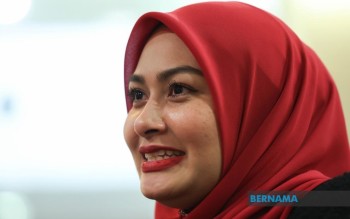
Bentong Member of Parliament Young Syefura Othman has raised concerns about Tabung Haji's heavy dependence on income derived from Urusharta Jamaah Sdn Bhd's sukuk holdings, calling on the government to outline concrete measures to address this vulnerability. Speaking during Parliament's special sitting to debate the Royal Commission of Inquiry Report into TH, Young Syefura highlighted that the institution's reliance on UJSB sukuk—which the RCI identified as contributing approximately 26 per cent of TH's annual income—represents a structural weakness that continues to pose material financial risk.
The remarks underscore growing parliamentary scrutiny of Tabung Haji's recovery trajectory following years of mismanagement that eroded public confidence in Malaysia's premier Hajj savings institution. Young Syefura's intervention reflects broader concerns within the Pakatan Harapan caucus about whether the recent reforms initiated by Minister in the Prime Minister's Department (Religious Affairs) Dr Zulkifli Hasan have adequately addressed systemic governance failures that allowed such concentrated exposure to develop in the first place.
Young Syefura specifically demanded that the government provide detailed clarification on the timeline and mechanism for early redemption of the UJSB sukuk, recognizing that maintaining this concentrated position leaves TH vulnerable to market volatility and counterparty risk. She argued that genuine institutional strength should derive from a diversified and resilient investment portfolio managed according to sound principles, not from reliance on a single income stream that the RCI itself flagged as problematic.
Beyond the sukuk question, Young Syefura pressed the government for transparency regarding the magnitude of losses incurred through 14 investment decisions that the RCI identified as requiring forensic auditing. These questionable investments—spanning TH Plantations Bhd, TH Properties, FGV Holdings, and various other entities—resulted in substantial asset depreciation that crystallized losses for the institution and, ultimately, for the Muslim Malaysians whose savings were entrusted to TH's stewardship.
The Bentong MP's demand for disclosure about the total value of these losses reflects legitimate public interest in understanding the scale of the financial damage that accumulated under previous management. More critically, Young Syefura sought clarity on recovery prospects and the current status of forensic audits, signalling that Parliament remains unsatisfied with the pace at which accountability measures are advancing. If forensic investigations substantiate evidence of negligence, abuse of authority, or breach of fiduciary duty, she insisted that those responsible must face appropriate consequences—a position that resonates with the broader Malaysian public's demand for accountability in institutions managing public assets.
To prevent recurrence of such failures, Young Syefura proposed a substantially enhanced supervisory framework that would draw on the regulatory expertise of Bank Negara Malaysia and the Securities Commission Malaysia. This recommendation reflects international best practice in institutional governance, where external specialist regulators provide independent oversight rather than relying solely on internal mechanisms that proved inadequate at TH. Such enhanced supervision would introduce professional distance and technical rigour into investment decisions, reducing the scope for the political interference and poor judgment that the RCI's investigations revealed.
The Bentong MP further advocated for mandatory independent risk assessments and rigorous due diligence preceding all major investment commitments, establishing procedural safeguards that would have prevented many of the decisions now under forensic examination. She also stressed the importance of recruiting board members and senior executives according to the "fit and proper" test—a principle that ensures appointees possess the requisite competence, integrity, and financial probity necessary for positions of trust. Malaysia's experiences at TH and, previously, at entities like 1Malaysia Development Bhd demonstrate that institutional failure often correlates directly with inadequate standards for leadership selection.
These parliamentary interventions occur as Dr Zulkifli Hasan continues presenting the government's recovery strategy for TH to legislators. Young Syefura's specific, detailed questions reflect a shift in parliamentary engagement with the TH crisis—moving beyond general expressions of concern toward demanding concrete answers about timeline, mechanism, and accountability. For Malaysian Muslim savers who depend on TH for Hajj financing, such parliamentary pressure remains essential to ensure that reform translates into genuine institutional transformation rather than superficial cosmetic changes.
The debate also touches on deeper questions about institutional governance standards across Malaysia's religious and financial bodies. TH's failures prompted soul-searching about how similar concentrations of risk and lapses in oversight could develop within an institution established specifically to serve pilgrims' interests. The questions Young Syefura poses—about independent oversight, proper recruitment standards, and transparency in audit findings—extend beyond TH to implicate governance practices across Malaysia's broader institutional landscape.
Moving forward, the government's response to these parliamentary demands will signal its seriousness about comprehensive institutional reform. Young Syefura's insistence on reducing sukuk dependency, clarifying investment losses, and strengthening external oversight establishes a benchmark against which Parliament and Malaysian Muslims can evaluate whether the RCI Report translates into durable change or remains a historical document cataloguing past failures without preventing future ones.

