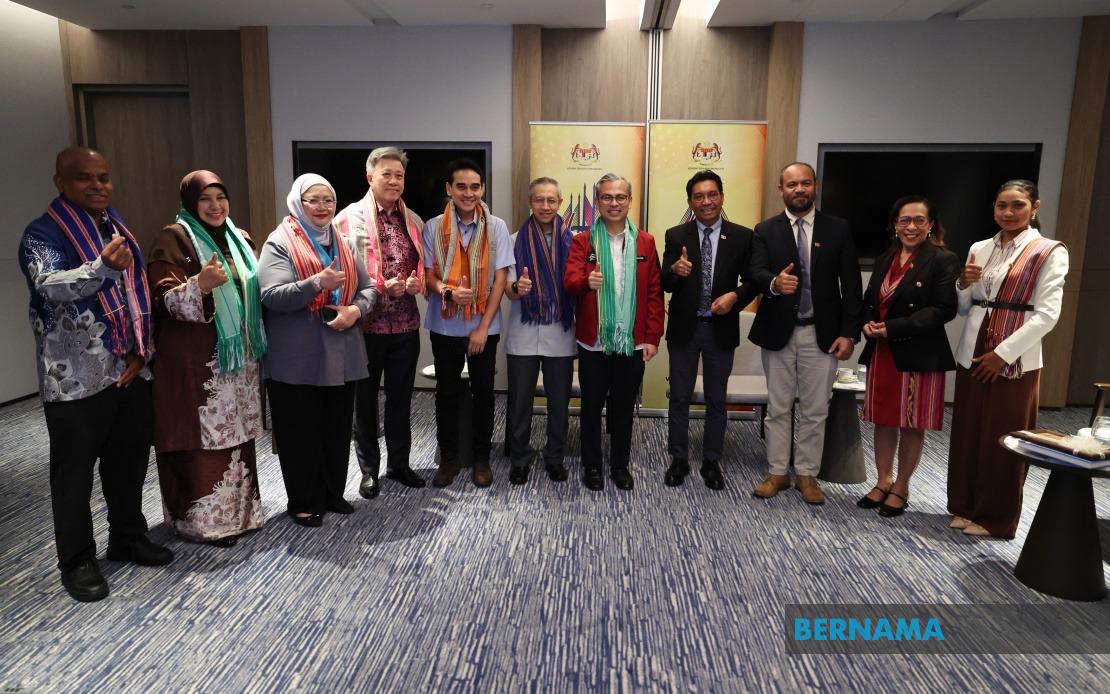
Malaysia's Bernama and Timor-Leste's national news agency TATOLI have formalized a strategic partnership aimed at strengthening media cooperation between the two ASEAN member states. The memorandum of understanding, signed during the National Journalists' Day celebration in Butterworth, represents a significant step in regional media integration and reflects Southeast Asia's commitment to building institutional networks that transcend borders. The agreement was officially exchanged by Communications Minister Datuk Fahmi Fadzil and Timor-Leste's Secretary of State for Social Communication, Expedito Loro Dias Ximenes, with Prime Minister Datuk Seri Anwar Ibrahim witnessing the ceremony.
Bernama Chief Executive Officer Datin Paduka Nur-ul Afida Kamaludin outlined the scope of collaboration, which encompasses the exchange of news, photographs, and multimedia content alongside comprehensive journalism training programmes. The partnership reflects a broader strategic vision within Bernama's leadership to enhance the agency's regional footprint while simultaneously ensuring that Southeast Asian narratives are constructed and disseminated by regional news organizations rather than external media entities. This approach addresses a longstanding concern among ASEAN members about media sovereignty and the control of regional storytelling in an increasingly interconnected digital landscape.
For Timor-Leste, still in the early stages of its membership within ASEAN after officially joining in October 2025, the collaboration offers immediate practical benefits. Citizens of the island nation will gain enhanced access to Malaysian perspectives and development through Bernama content distributed via the TATOLI platform in four languages: Tetum, Portuguese, Bahasa Indonesia, and English. This multilingual approach recognizes Timor-Leste's unique linguistic heritage and positions the news exchange to reach diverse audiences within the country. The arrangement facilitates cross-cultural understanding at a grassroots level, extending beyond diplomatic circles to the general public.
Bernama's expansion plans underscore the agency's confidence in this partnership. Currently reporting in six languages—Bahasa Melayu, English, Tamil, Mandarin, Arabic, and Spanish—Bernama intends to add Portuguese to its repertoire following the MoU signing. This linguistic expansion carries significant implications for Bernama's global reach, potentially allowing the agency to serve Portuguese-speaking communities across multiple continents. The decision reflects a calculated investment in extending Malaysian media influence into new markets while simultaneously supporting Timor-Leste's integration into regional information networks.
The training component represents perhaps the most substantive element of the agreement. Bernama has committed to hosting TATOLI journalists and staff for instruction before the end of the year, drawing upon its extensive experience in media education. The agency operates a specialized Bernama Excellence Centre housing the Bernama School of Journalism, which has developed expertise over more than two decades. Bernama's training infrastructure spans multiple disciplines and platforms including online journalism, television production, digital media strategy, radio broadcasting, and photography. This multidisciplinary approach ensures that TATOLI personnel receive instruction covering contemporary media challenges and technological innovations.
The human resources dimension of this collaboration extends beyond formal training programmes. Bernama's pool of specialized editors and teaching staff across various media platforms provides TATOLI with access to institutional knowledge that would take years to develop independently. For a news agency in a newly developing media landscape, such exposure to professional standards and best practices represents invaluable capacity building. The arrangement addresses immediate institutional needs while simultaneously contributing to long-term professional development within Timor-Leste's media sector.
TATOLI's commitment to the partnership was articulated by agency President Noémio Mateus Soares Falcão, who emphasized the importance of strengthening journalists' professional capacity through collaborative dialogue. Falcão highlighted the partnership's potential to promote innovation within media structures and contribute to developing an information environment characterized by freedom, responsibility, and public benefit. His remarks acknowledged that contemporary journalism operates within a complex digital ecosystem where information disseminates rapidly across multiple platforms, placing heightened demands on professional standards and editorial integrity.
The global context for this partnership reflects broader concerns about information credibility and journalistic ethics in an age of rapid digital communication. Falcão specifically noted that responsible social media engagement and fact verification have become essential components of professional journalism. The partnership between Bernama and TATOLI implicitly commits both organizations to maintaining these standards while simultaneously working to counter misinformation and promote evidence-based reporting. For Malaysian readers, this signals Bernama's role in establishing regional journalism norms that prioritize accuracy and professional conduct.
The timing of this partnership carries strategic significance within ASEAN's institutional development. Timor-Leste's recent accession to the bloc represents an expansion of regional cooperation mechanisms, and formal partnerships between national institutions—particularly media organizations—help solidify the organizational foundations of ASEAN integration. The presence of representatives from Cambodia and Laos at the signing ceremony underscores the broader regional interest in strengthening media connections across Southeast Asia. These multilateral frameworks create networks of cooperation that extend beyond bilateral relationships.
Bernama's institutional history provides context for understanding its regional role. Established through parliamentary act in 1967 and launched during Malaysia's independence anniversary celebrations that same year, Bernama has operated for nearly six decades as the primary vehicle for disseminating Malaysian official information and news. The agency's longevity and institutional stability make it a natural partner for newer organizations seeking to establish professional standards and operational frameworks. The partnership with TATOLI represents an extension of Bernama's established role as a regional leader in media organization and practice.
TATOLI, established in 2016 as Timor-Leste's official news dissemination agency, brings institutional youth and enthusiasm to the partnership while offering Bernama opportunities to expand its influence and expertise into new markets. The relative newness of TATOLI means the organization remains in formative stages, with established practices and organizational cultures still in development. Bernama's guidance and training support can help shape TATOLI's institutional trajectory, potentially creating a regional ally operating according to similar professional standards and ethical frameworks. This institutional mentorship model strengthens regional media cohesion while respecting each nation's sovereignty and editorial independence.
For Malaysian readers and regional stakeholders, this partnership demonstrates how Southeast Asian institutions are progressively building deeper functional integration beyond political forums and trade agreements. The media collaboration illustrates that ASEAN integration extends into the practical realm of professional practice, institutional capacity building, and knowledge exchange. As regional tensions persist around information flows and media independence, initiatives like the Bernama-TATOLI partnership provide mechanisms for strengthening local institutional capacity while promoting professional journalistic standards. The agreement reflects confidence that stronger regional media institutions ultimately serve the interests of ASEAN citizens by ensuring access to credible, locally produced information.