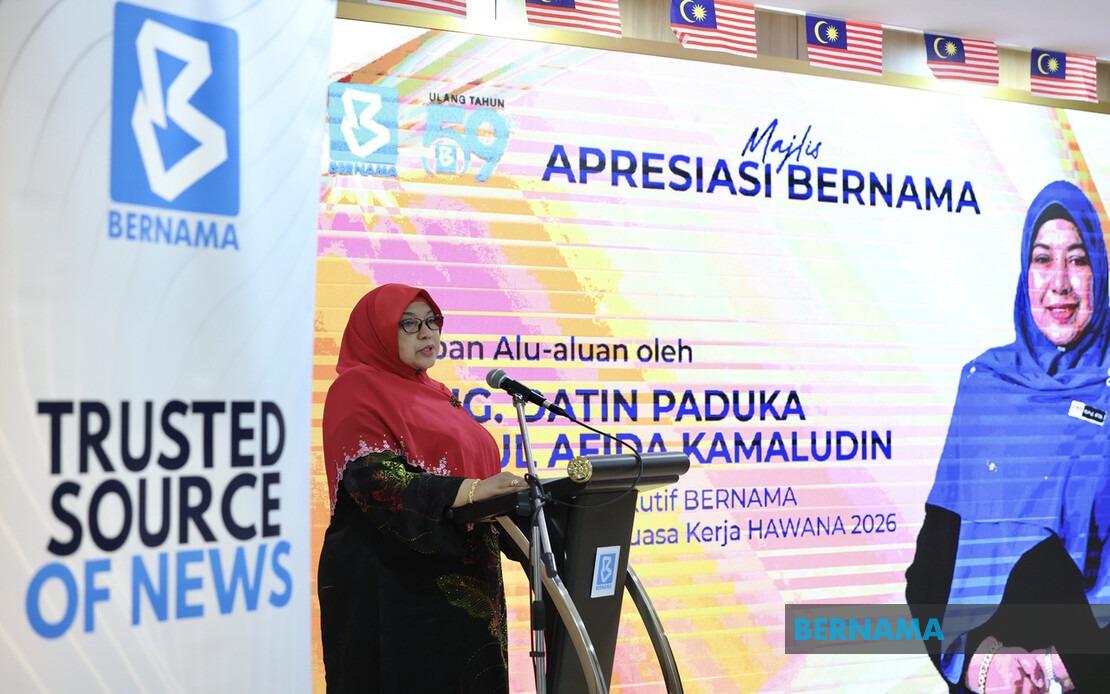
As Malaysia enters its National Month, the Malaysian National News Agency (Bernama) is intensifying its commitment to nurture patriotic sentiment across the country through a coordinated series of initiatives. Speaking at an internal appreciation ceremony at its Kuala Lumpur headquarters, chief executive officer Datin Paduka Nur-ul Afida Kamaludin outlined how the state news agency plans to leverage its communications platform and institutional reach to amplify the spirit of national pride during this significant period on the calendar.
Bernama's expanded role reflects its dual mandate as a government agency operating under the Ministry of Communications. Beyond its traditional function of gathering and distributing news, the organisation has positioned itself as an active participant in promoting ministerial programmes and public engagement initiatives. This expanded remit underscores a broader governmental strategy to harness state institutions—particularly those controlling information flow—in advancing national messaging during key commemorative periods. For Bernama, this means translating top-level National Day themes into tangible workplace activities and public outreach.
The centrepiece of Bernama's current campaign is a grassroots flag initiative aligned with the slogan "Satu Rumah, Satu Jalur Gemilang" (One House, One Jalur Gemilang). Rather than limiting patriotic expression to government buildings or designated public spaces, the agency is actively encouraging its approximately 500-plus staff members to display Malaysia's national flag at their residences. This residential focus represents a deliberate strategy to decentralise patriotic symbolism, moving it from institutional settings into the domestic sphere where it becomes visible across residential neighborhoods and housing developments nationwide.
The Bernama headquarters itself has already been decorated with flags following the Prime Minister's official launch of National Month activities in Ipoh, setting an example for both employees and the broader public. By making these visual displays prominent at its own premises, Bernama signals institutional commitment while creating an aspirational model for citizen participation. The agency recognises that top-down mandates alone rarely generate authentic enthusiasm; instead, creating visible peer examples and fostering collective participation tends to produce more organic engagement with national campaigns.
During the appreciation ceremony, Nur-ul Afida oversaw a symbolic handover of Jalur Gemilang flags to representatives from Bernama's principal departments. This ceremonial element transforms what might otherwise be a routine administrative distribution into a meaningful departmental commitment, ensuring that patriotic messaging cascades through the organisation's internal structure. Each department head becomes a custodian and ambassador of the campaign within their respective teams, amplifying the campaign's reach beyond senior management.
The event also featured the unveiling of the official National Day theme song, composed by renowned Malaysian singer Faizal Tahir. The introduction of a dedicated musical composition provides an emotional and cultural dimension to the campaign beyond visual symbols. Music functions as a powerful medium for expressing national sentiment, and by prominently featuring the new composition at an internal gathering, Bernama ensures its workforce becomes familiar with and invested in the artistic expression of patriotism.
Organising a full-staff appreciation ceremony during National Month serves multiple institutional objectives simultaneously. It addresses the practical challenge of maintaining workplace cohesion and morale during a busy news cycle while simultaneously embedding patriotic themes into the employee experience. Nur-ul Afida acknowledged that assembling Bernama's entire workforce at headquarters is logistically challenging, making the decision to consolidate multiple programmes—including the flag handover and song introduction—into a single event both efficient and symbolically coherent.
For Malaysian readers and the broader Southeast Asian context, Bernama's campaign illustrates how state media organisations navigate the tension between journalistic independence and governmental messaging. While Western media systems typically maintain sharp boundaries between news reporting and promotional activities, state news agencies in the region often serve an integrated role in national communication strategies. Understanding this dynamic is essential for audiences consuming news from such outlets, particularly during periods when patriotic messaging becomes institutionally intensified.
The timing of this initiative, just weeks before National Day, reflects a broader pattern in Malaysian governance where commemorative periods become opportunities for reinforcing national identity narratives. This approach acknowledges that patriotism, while presented as spontaneous and authentic, often benefits from institutional scaffolding and coordinated promotion. Bernama's campaign thus represents not merely a celebration of existing patriotic sentiment but an active effort to shape, amplify, and institutionalise that sentiment across multiple levels of society.
The emphasis on residential flag displays carries particular significance in the Malaysian context. Housing developments and neighbourhood streets become spaces where national identity becomes visually contested and negotiated. When a state agency encourages flag displays in predominantly homogeneous neighbourhoods, it generates one type of patriotic expression; when the same campaign operates in ethnically mixed communities, it can create different dynamics and meanings. Bernama's nationwide approach necessarily operates across this diverse landscape, making the campaign's reach impressive even as its reception likely varies by locality.
Beyond the immediate National Day period, Bernama's expanded patriotic role signals how government agencies are increasingly expected to contribute to nation-building narratives. This reflects broader Southeast Asian trends where state institutions leverage their platforms to promote official versions of national identity, historical memory, and civic virtue. For Bernama specifically, it means balancing its news-gathering functions with participation in patriotic campaigns, a tension that becomes particularly acute during sensitive political periods or when official narratives face public contestation.
The agency's initiative also demonstrates awareness that patriotism among state employees requires active cultivation rather than assumption. By creating structured opportunities for workplace patriotic expression—flag ceremonies, themed events, musical performances—Bernama acknowledges that institutional commitment to national ideals needs visible, repetitive reinforcement. This approach, while potentially cynical in its mechanistic quality, recognises psychological realities about how collective sentiment develops and sustains itself across distributed populations.
Moving forward, Bernama's experience with this National Month campaign may inform how it approaches similar initiatives during other commemorative periods. The success or limitations of the "Satu Rumah, Satu Jalur Gemilang" campaign will likely generate lessons about residential participation rates, public reception, and effectiveness in achieving stated objectives. Whether this particular initiative becomes an annual fixture or evolves in response to feedback will reveal much about how Malaysian state institutions adapt their patriotic messaging strategies to changing social contexts and public engagement patterns.

