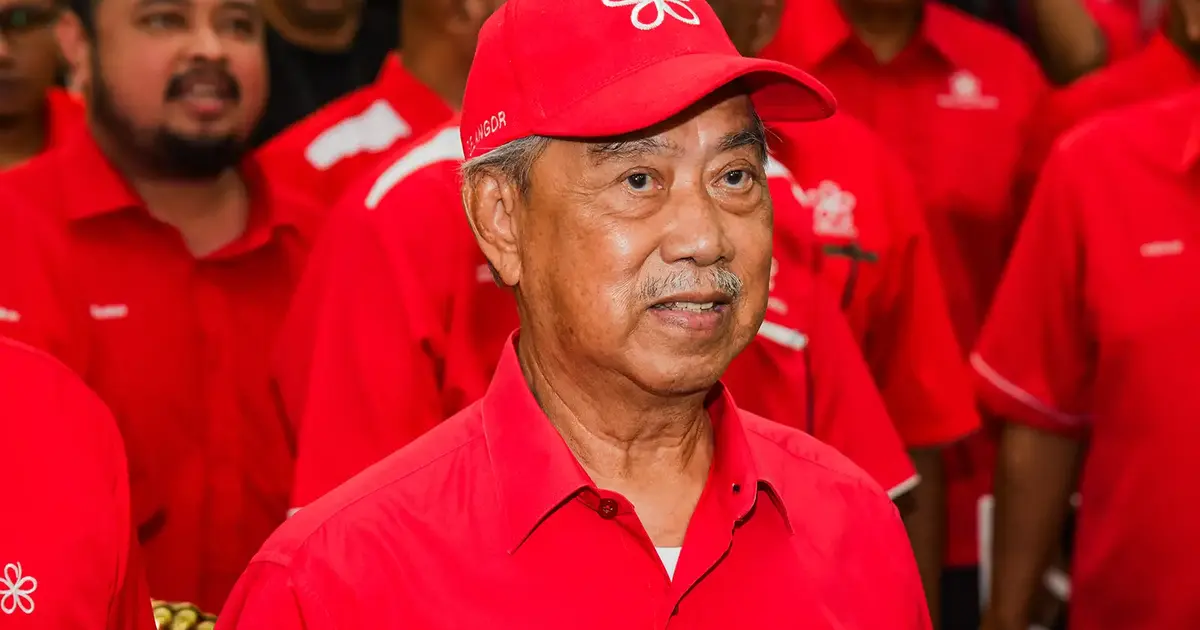
Bersatu president Muhyiddin Yassin has expressed confidence that his party can expand its appeal among non-Malay communities without relying on its alliance with PAS, signalling a strategic repositioning that reflects shifting dynamics within Malaysia's political landscape. The statement addresses a persistent challenge the party has faced in attracting minority voters, a demographic crucial to electoral success in ethnically diverse Malaysia.
Muhyiddin's assessment reveals a fundamental tension that has long constrained Bersatu's reach beyond its Malay-Muslim base. The party's coalition with PAS, while strategically important for cementing support among conservative Malay voters, has created a perception problem among non-Malay communities who view PAS's religious conservatism and political positioning as potentially incompatible with their interests. This perception has effectively capped Bersatu's expansion into the multiethnic voter pool that determines the outcome of most competitive elections in Malaysia.
The Bersatu president's confidence reflects an implicit acknowledgement that voter discomfort with PAS's political approach has been a drag on the wider coalition's electoral performance. Rather than viewing this as a permanent impediment, Muhyiddin appears to be suggesting that Bersatu possesses distinct messaging and policy platforms that can resonate with non-Malay voters on their own merits. This positioning allows the party to retain its alliance with PAS at the national level while crafting a separate identity in targeted campaigns.
For Malaysian political observers, this development underscores the fragmentation and tactical flexibility that increasingly characterise the country's party system. Unlike the rigid coalition structures of earlier decades, contemporary Malaysian politics allows parties to maintain formal partnerships while pursuing divergent electoral strategies. Bersatu's contemplated approach fits this pattern, enabling the party to preserve links with PAS while testing whether independent outreach can overcome the stigma of that association among minority communities.
The timing of Muhyiddin's remarks carries significance given Malaysia's recent electoral volatility and the consolidation of opposition support around the Pakatan Harapan coalition. As the political environment has become more competitive, governing coalition parties have increasingly recognised the necessity of broadening their appeal. Bersatu's emphasis on winning non-Malay support without PAS reflects this competitive pressure and suggests growing recognition that the party must diversify its electoral base to remain competitive in a rapidly evolving political environment.
Historically, Bersatu has struggled to replicate the cross-ethnic coalition-building achievements of earlier incarnations of Malay-led parties. While Umno maintained significant support among non-Malays for decades through patronage networks and pragmatic governance, Bersatu entered politics as a relatively new entity without comparable institutional depth or established relationships with minority communities. The party's association with PAS has, in effect, intensified this challenge by linking Bersatu to political messaging that alienates many non-Malay voters who fear religious nationalism or reduced secular governance.
Muhyiddin's confidence in Bersatu's ability to succeed independently suggests the party believes it can craft policy positions and political narratives that emphasise pragmatic governance, economic development, and inclusive administration rather than ideological or religious concerns. Such an approach would require clear differentiation from PAS and consistent messaging to non-Malay voters about Bersatu's commitment to protecting their interests and maintaining the secular constitutional framework. Whether Bersatu can execute such a strategy while maintaining its PAS alliance remains an open question.
The implications for Malaysia's political trajectory are substantial. If Bersatu successfully courts non-Malay voters independently, the governing coalition would gain electoral flexibility and potentially improved competitiveness against Pakatan Harapan in multiethnic constituencies. Conversely, if the party's outreach fails, Malaysian politics may continue trending toward sharper ethnic polarisation, with Bersatu remaining primarily a Malay-Muslim party whose non-Malay support remains marginal. The success or failure of this strategy will likely influence how other coalition parties calibrate their own minority outreach efforts.
For non-Malay voters themselves, Muhyiddin's statement signals recognition that they constitute a pivotal electorate. Rather than take their support for granted or dismiss their concerns, Bersatu is explicitly attempting to build bridges with these communities. This reflects the democratic reality that Malaysian elections are frequently decided in multiethnic urban and semi-urban constituencies where non-Malay voters exercise decisive influence. No party can claim sustainable political dominance without addressing the concerns and aspirations of these voters.
The broader regional context also matters. Across Southeast Asia, ruling coalitions have increasingly struggled to maintain cross-ethnic support as identity politics has gained salience. Malaysia's experience demonstrates both the possibility and the difficulty of constructing multiethnic political coalitions. Bersatu's latest strategic positioning reflects the ongoing negotiation between political parties and Malaysia's diverse electorate over the terms and conditions of political representation and coalition membership in an increasingly polarised environment.

