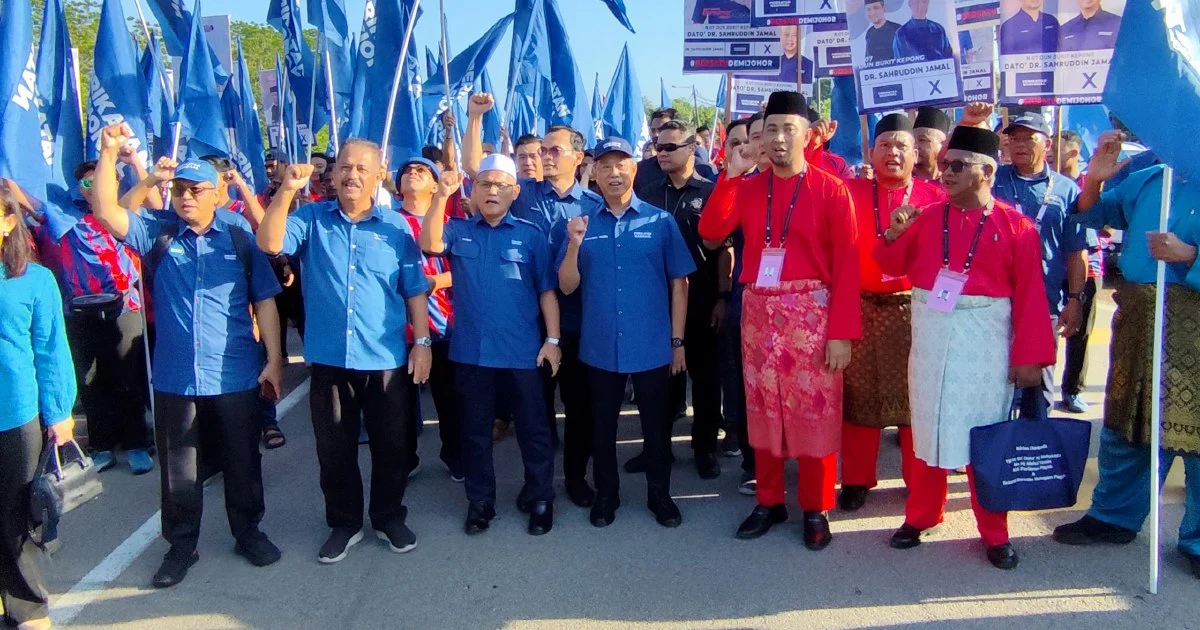
Bersatu president Tan Sri Muhyiddin Yassin arrived at the nomination centre in Bukit Kepong at 8.45 am on Monday, joining Sahruddin for the candidate registration process at the Pagoh Sports Complex Hall. The high-profile visit demonstrated the party's commitment to the electoral contest in the southern state, with party leadership lending visible support to their candidate during the crucial first stage of the election campaign.
The appearance carried symbolic weight within Bersatu's internal dynamics, as the party continues to consolidate its standing in Johor following the 2022 general election. Muhyiddin's direct involvement in accompanying Sahruddin through the nomination procedures signalled unified messaging within the faction at a moment when party cohesion matters significantly for electoral prospects. The gesture reflected the leadership's intention to project confidence and organisational readiness ahead of the broader campaign.
Pageh itself represents familiar political territory for Bersatu, having been a stronghold during previous electoral cycles. The constituency has proven receptive to the party's messaging, and the nomination event provided an opportunity to reinforce grassroots engagement in an area where the party maintains considerable organisational presence. Sahruddin's candidacy in Bukit Kepong positions him as a focal point for the party's strategy in this particular parliamentary division.
The timing of Muhyiddin's attendance underscores the importance Bersatu places on early campaign momentum. Nomination day typically generates significant media attention and provides candidates with an opportunity to galvanise supporters and demonstrate organisational strength. By accompanying his candidate through this process, Muhyiddin ensured that his presence amplified the party's public visibility during one of the election cycle's more ceremonial yet symbolically charged moments.
For Malaysian political observers, such moves reveal the careful orchestration required in multi-party coalitions. Bersatu's positioning within the broader political landscape demands constant attention to internal party morale and external public perception. Leadership visibility during nomination proceedings serves both functions simultaneously: it energises party workers and volunteers while conveying to observers that the party maintains disciplined, hierarchical coordination.
The Johor electoral context has historically been competitive, with multiple coalitions vying for dominance in Malaysia's most populous state outside Selangor. Bersatu's performance here carries implications for the party's broader influence within any future federal government formation, making each campaign conducted with meticulous attention to detail and resource allocation. The party's decision to deploy its president for nomination day support reflects awareness of these broader stakes.
Sahruddin's profile within Bersatu carries its own significance, positioning him as someone deemed worthy of presidential backing during the nomination phase. This endorsement, expressed through physical presence and direct association, enhances the candidate's standing among party functionaries and local supporters. It also signals to rival parties and observers that Bersatu considers this particular seat strategically important enough to warrant leadership attention.
The Pagoh Sports Complex Hall served as the backdrop for this political theatre, a venue that accommodated the necessary administrative procedures while hosting the unofficial but consequential gathering of party figures and supporters. Such locations become temporary focal points for political energy, where handshakes, speeches, and photographic moments construct the visual narrative that shapes public perception of party readiness and internal harmony.
For Southeast Asian readers observing Malaysian politics, such episodes illustrate the mechanics of campaign organisation in a mature electoral democracy. The nomination process, far from being a purely administrative formality, functions as a critical moment for coalition partners to demonstrate unity, for candidates to test their organisational apparatus, and for party leadership to calibrate public messaging. Muhyiddin's presence represented precisely this kind of multifaceted political calculation.
Looking forward, the dynamics established during nomination day often persist throughout the campaign period. Early show of force, leadership support, and organisational competence observed at this stage tend to influence both voter perceptions and internal party morale in ways that compound over subsequent weeks. The Bukit Kepong nomination event thus functioned as one critical data point in a broader competitive struggle playing out across multiple constituencies simultaneously.
Bersatu's strategic positioning in Johor continues to evolve in response to shifting coalition dynamics and voter preferences. The party recognises that electoral success requires not merely policy platforms but also the kind of visible, sustained engagement that Muhyiddin's appearance embodied. Such moments, multiplied across numerous constituencies and campaign events, gradually construct the texture of a competitive political campaign during this significant period for Malaysian electoral politics.

