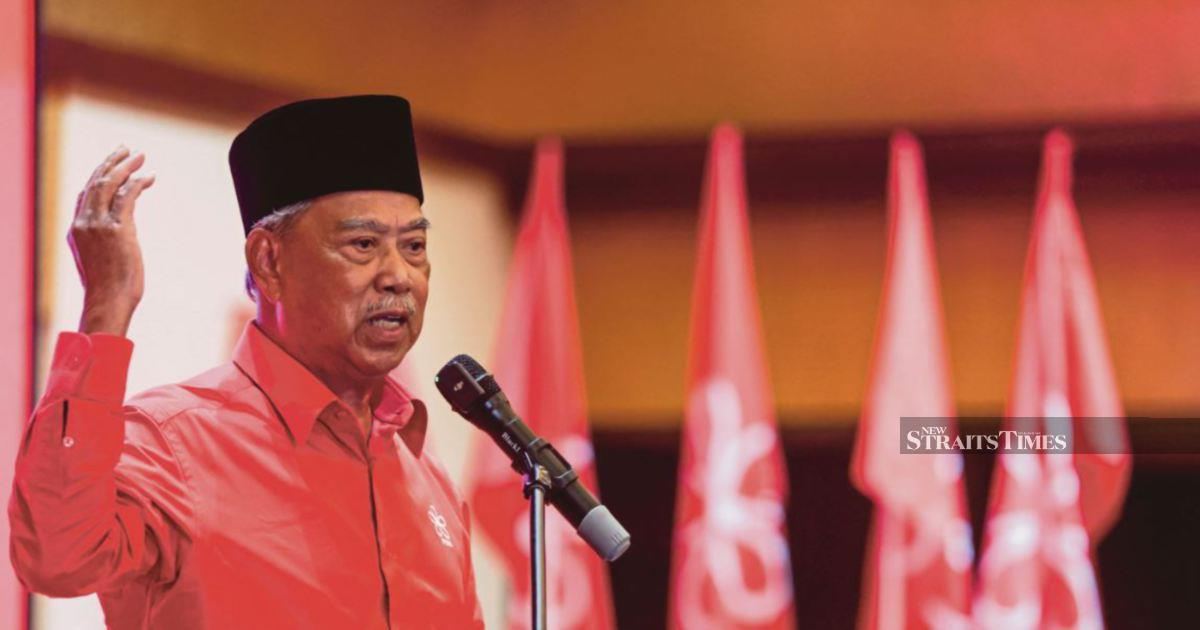
Bersatu's entry into the Negri Sembilan state election with a robust 24-seat ticket signals intensifying factional tensions within the Perikatan Nasional coalition ahead of polling day. The party's announcement exposes fractures in an alliance already strained by competing ambitions and territorial claims, as component parties jostle for electoral advantage in the strategic state sitting between Selangor and Pahang.
The decision to contest such a substantial portion of Negri Sembilan's parliamentary constituencies positions Bersatu for direct confrontation with PAS and Bersatu Wawasan—both ostensibly partners under the Perikatan Nasional umbrella. These overlapping candidacies span eight constituencies where all three parties have fielded representatives, creating unprecedented complexity for voters and unprecedented headaches for coalition strategists attempting to maintain party unity while competing fiercely for voter mandates.
Negri Sembilan, though modest in electoral size compared to Selangor or Johor, carries symbolic weight within Malaysia's political landscape. The state election serves as a barometer for the relative strength of competing coalitions and internal party hierarchies. Bersatu's aggressive candidate deployment suggests the party harbors ambitions to significantly expand its legislative footprint and influence state administration, potentially at the expense of allies who might have expected a more collegial division of electoral labour.
The emergence of Bersatu Wawasan as a competing faction within the Perikatan framework deserves particular attention for Malaysian political observers. The splinter group represents a fundamental challenge to party hierarchy and organizational cohesion, symbolizing broader schisms within Malay-Muslim political movements over ideology, leadership, and electoral strategy. Bersatu's willingness to contest against this faction directly suggests leadership is prioritizing electoral maximization over reconciliation efforts that might have absorbed the splinter group back into the main party structure.
PAS, meanwhile, brings decades of grassroots organizational experience and entrenched support networks particularly in rural Negri Sembilan constituencies. The Islamic party's institutional capacity to mobilize voters through mosque networks and religious community structures provides it substantial advantages in state elections where ground operations often determine outcomes. Bersatu's challenge lies in overcoming PAS's established presence while simultaneously competing against newer splinter formations seeking to redefine party identity.
The ramifications of this multi-directional competition extend beyond Negri Sembilan's borders. Perikatan Nasional's internal stability depends substantially on managing such inter-party rivalries without allowing them to metastasize into coalition-destroying antagonisms. Election night results will reveal whether territorial disputes inflict lasting damage on the alliance's cohesion or whether post-election negotiations can restore working relationships for future federal and state contests. Southeast Asian observers monitoring Malaysian coalition dynamics will watch closely to assess whether Perikatan Nasional can sustain itself as a coherent political force despite these competing territorial claims.
For Negri Sembilan voters, the proliferation of candidates across multiple parties nominally allied nationally creates genuine confusion about electoral choices and policy priorities. The eight constituencies where three-way contests occur will likely generate the election's most unpredictable outcomes, as vote fragmentation across similar ideological constituencies could produce surprising results benefiting opposition parties if Perikatan coalition voters split their support inefficiently among competing nominees.
Bersatu's strategic calculation appears rooted in demonstrating organizational capacity independent from established partners like PAS. The 24-seat candidacy showcases party infrastructure capable of fielding competitive nominees across Negri Sembilan's diverse constituencies. Success would vindicate leadership decisions to challenge Perikatan allies directly; defeat would suggest overextension and misalignment with voter preferences. Either outcome will reverberate through intra-coalition calculations affecting seat distributions in future federal parliament by-elections and state contests across Malaysia.
The timing of Bersatu's candidacy announcement relative to PAS and Bersatu Wawasan declarations carries strategic significance. Early announcements establish momentum and media presence, potentially shaping voter perceptions before opposition parties mount counteroffensives. Subsequent announcements from rival Perikatan parties suggest reactive rather than proactive campaign planning, potentially disadvantaging their electoral prospects if voters gravitate toward frontrunners perceived as commanding initiative.
Regionally, this intra-alliance competition reflects broader trends visible across Southeast Asia's electoral democracies, where coalition partners increasingly compete directly against each other despite nominal alliance commitments. Thailand, Indonesia, and the Philippines have all witnessed similar phenomena where coalition members pursue competing electoral interests despite shared institutional frameworks. Malaysia's experience through this Negri Sembilan election offers additional evidence that maintaining coalition discipline while satisfying individual party electoral ambitions represents an unresolved challenge for contemporary Asian political coalitions seeking electoral advantage without sacrificing organizational unity.
The election ultimately tests whether Perikatan Nasional functions as a coherent electoral vehicle or merely a bureaucratic convenience masking deep organizational fragmentation. Negri Sembilan, despite its modest scale, provides the proving ground where internal contradictions will crystallize into electoral results revealing coalition viability for subsequent elections determining Malaysia's political trajectory through the remainder of this decade.

