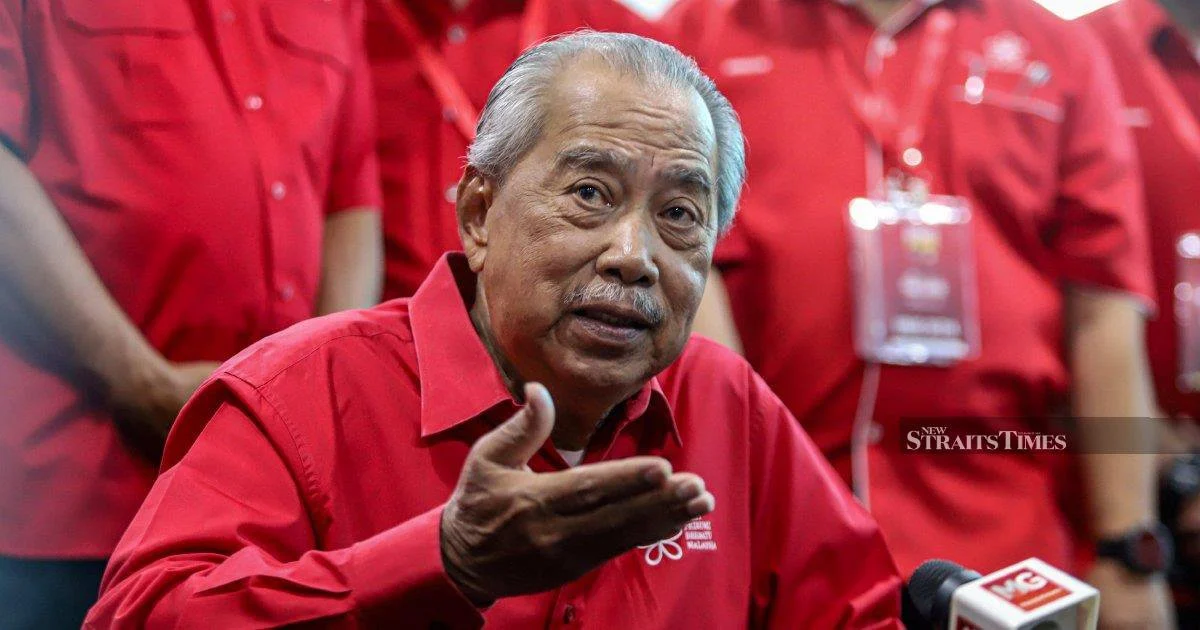
The brewing tensions within Malaysia's opposition coalition have surfaced once again, with Bersatu levelling criticism at Pas for embarking on exclusive political discussions with Barisan Nasional without the knowledge or participation of fellow Perikatan Nasional (PN) members. The move has reignited concerns about fissures within the opposition alliance, particularly as the Negri Sembilan state election looms on the horizon.
The timing of Pas' unilateral engagement with BN carries significant weight in Malaysian politics. Rather than operating as a unified front within Perikatan Nasional, the Islamic party chose to pursue separate diplomatic channels with the ruling coalition, an approach that fundamentally undermines the collective decision-making framework that coalition partners are supposed to uphold. This represents a departure from the consensus-building approach that has nominally defined PN's operations since its formation, though such solidarity has often proved fragile in practice.
Bersatu's public disappointment signals deeper strategic calculations at play. As one of the larger components within PN, Bersatu maintains significant stakes in electoral outcomes across multiple states. The Negri Sembilan contest is not merely a localised engagement but a bellwether for how the opposition coalition will perform in future electoral contests. Any unilateral moves by coalition members risk fragmenting voter confidence and complicating campaign coordination.
The absence of consultation with other PN components raises questions about governance and internal coalition discipline. Political coalitions typically function through structured dialogue, where major decisions affecting the entire partnership are debated and decided collectively. When one partner bypasses these mechanisms, it creates uncertainty about alliance stability and the reliability of commitments made between parties. This pattern has plagued Malaysian coalition politics for years, contributing to frequent realignments and political volatility.
Pas' apparent willingness to negotiate independently with BN also reflects the party's distinct political position within the Malaysian landscape. As an Islamic-focused party, Pas has maintained its own electoral base and political calculations that sometimes diverge from its coalition partners. The party has previously demonstrated flexibility in working arrangements with different political formations, suggesting that no coalition partnership is viewed as permanently binding or exclusive.
For Bersatu, this represents a familiar challenge. The party has struggled throughout its existence to maintain coalition unity, having itself shifted alliance partners multiple times since 2018. The criticism of Pas thus carries an ironic undertone, given Bersatu's own track record of pragmatic political manoeuvring. However, from Bersatu's perspective, consistency in coalition partnerships may be viewed as essential to presenting a credible alternative government.
The Negri Sembilan election becomes a crucial test case for PN's viability as a cohesive political force. The state has traditionally been competitive terrain, with multiple political forces vying for influence. How the opposition performs there will influence perceptions of whether PN can function effectively as a united bloc or whether it remains a collection of parties pursuing parallel interests. Voters increasingly expect coalitions to demonstrate internal harmony and shared purpose.
Bersatu's decision to publicly air grievances rather than contain them privately suggests the disagreement has reached a threshold where internal damage control appears insufficient. This public confrontation may be strategic, intended to signal to other coalition members and to voters that Bersatu remains committed to unified decision-making, even if the commitment proves inconsistently applied. Alternatively, it may reflect genuine frustration with Pas' autonomy within the coalition.
The broader context involves the enduring challenge of maintaining opposition unity in Malaysia. With BN seeking to consolidate its position and opposition parties fragmented across multiple coalitions, the pressure on individual parties to pursue advantageous bilateral arrangements remains considerable. Each party must balance coalition loyalty against potential opportunities that might benefit its own electoral prospects or ideological objectives.
For Malaysian voters observing these manoeuvres, the episode underscores the transactional nature of political coalition-building at the national level. Rather than representing ideological alignment or shared policy vision, coalitions often function as temporary alliances of convenience, held together by electoral mathematics and shared opposition to rivals. This reality has profound implications for governance, as coalition governments struggle to pursue coherent policy agendas when partners prioritise factional interests.
The Negri Sembilan context matters because state elections increasingly serve as proving grounds for national political shifts. A fragmented opposition performance would benefit BN's narrative about opposition dysfunction, while a coordinated PN showing would strengthen the coalition's claim to provide a viable alternative government. Pas' independent negotiations thus carry consequences extending well beyond state-level politics.
Looking ahead, this dispute will likely persist unless PN develops more robust internal mechanisms for dispute resolution and decision-making. The current approach—relying on ad-hoc cooperation and mutual accommodation—appears insufficient to manage the competing interests of parties that sometimes have divergent constituencies, policy priorities, and political ambitions. Without structural reforms to coalition governance, similar conflicts will emerge repeatedly.
The incident also highlights how personality-driven Malaysian politics can be. Coalition stability often depends on personal relationships between party leaders rather than institutional frameworks. When interpersonal dynamics deteriorate or strategic calculations shift, coalitions face instability. This personal dimension adds unpredictability to Malaysian political developments and makes long-term coalition forecasting notoriously difficult.

