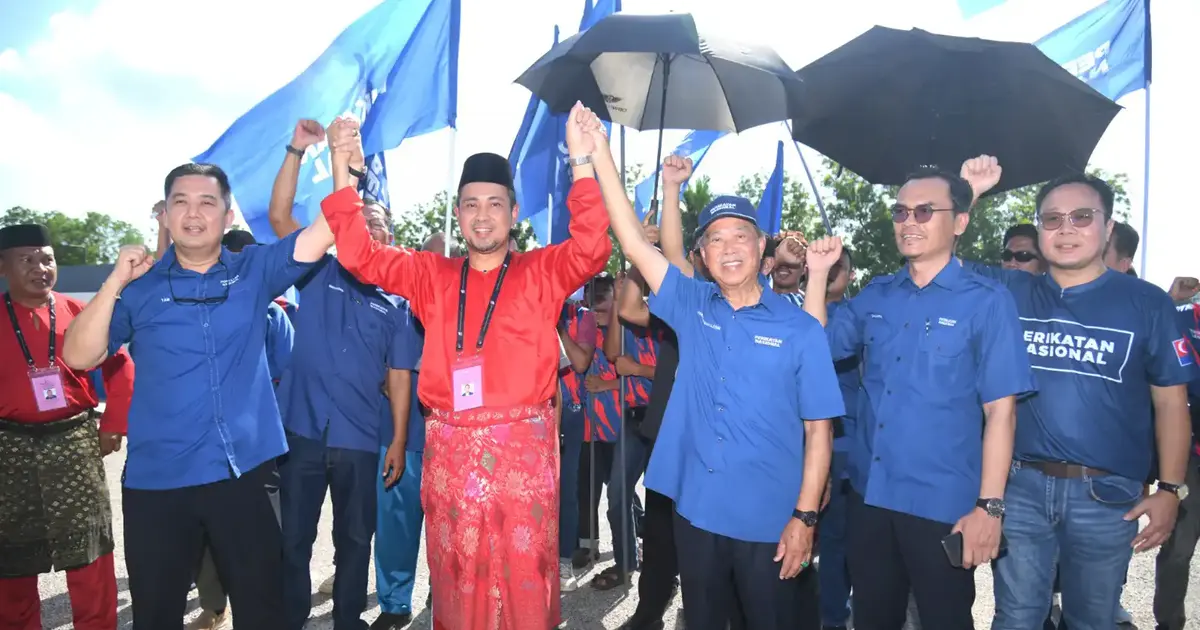
Bersatu's leadership has adopted a measured response to PAS's decision to withhold organisational resources and machinery support, signalling that the Perikatan Nasional coalition will tolerate disagreements among its members without fragmenting. Party President Muhyiddin Yassin indicated that while cooperation and mutual backing constitute the philosophical foundations of PN, his party will not resort to coercion or pressure to extract assistance from coalition partners.
The comment arrives at a sensitive juncture for Perikatan Nasional, the influential Malay-Muslim political bloc that has shaped Malaysia's political landscape since its formation in 2020. The coalition has weathered numerous strains over resource allocation, candidate selection disputes, and uneven contribution of campaign machinery during elections. PAS's apparent reluctance to deploy its organisational apparatus for Bersatu candidates represents a concrete manifestation of these underlying tensions, yet Bersatu's measured handling suggests a deliberate strategy to avoid public acrimony that could weaken PN's collective bargaining power.
Muhyiddin's stance underscores a pragmatic understanding of coalition dynamics in Malaysian politics. Unlike formal merger arrangements where one party can mandate compliance from absorbed smaller entities, PN operates as a looser alliance where individual parties retain considerable autonomy. This structural reality means that disputes cannot be resolved through hierarchical command but rather through negotiation, compromise, and occasionally, strategic accommodation of partners' concerns. By framing PAS's decision as a matter of choice rather than rebellion, Bersatu attempts to normalise disagreement within the coalition while preserving the broader partnership.
The machinery question carries substantial electoral implications for smaller coalition members like Bersatu. In Malaysian politics, where on-the-ground organisational capacity directly correlates with vote mobilisation and electoral performance, access to a partner's machinery significantly enhances a party's competitive standing in marginal constituencies. PAS, with its deep roots in Malay-majority constituencies and extensive Islamic institutional networks, wields considerable ground-level influence that other PN parties covet during election campaigns. The withdrawal or withholding of such resources can meaningfully impact outcomes in tightly contested seats.
Historically, PN has grappled with allocation disputes that threatened cohesion. PAS and Bersatu have previously competed fiercely for seats, particularly in state elections where local political considerations sometimes override national coalition discipline. In certain Malay-majority states, both parties view themselves as the most authentic representation of Malay-Muslim interests, generating competitive tension that occasionally spills into public disagreements over candidate placement and resource sharing. The machinery dispute appears to reflect this enduring competition rather than ideological fracture.
Muhyiddin's emphasis on voluntary cooperation rather than compulsion reflects a broader evolution in how PN manages internal relationships following turbulent experiences with coalition management. The bloc has learned that heavy-handed approaches to enforcing discipline generate resentment and trigger defections or public criticism that undermine collective credibility. By accepting that partners may choose not to provide certain forms of support, Bersatu demonstrates maturity in coalition politics while subtly signalling that it will pursue its interests through alternative channels rather than demanding conformity.
For Malaysian voters and political observers, Bersatu's reaction matters because it indicates the coalition's baseline stability level and its capacity to absorb internal friction. PN's electoral significance lies partly in its capacity to deliver consolidated Malay-Muslim support in crucial constituencies. Any suggestion of deepening divisions could embolden opposition parties to target wavering PN supporters, fragmenting the bloc's electoral advantage. Muhyiddin's downplaying of tensions thus serves a strategic function in maintaining PN's public image of cohesion, even as practical cooperation proves selective and conditional.
The machinery issue also illuminates how Malaysian political coalitions operationalise their partnerships. Unlike Western party alliances that often involve formal agreements specifying resource-sharing mechanisms and dispute-resolution procedures, PN functions through implicit understandings, personal relationships between leaders, and organisational cultures shaped by months of negotiation. When these informal arrangements prove insufficient to resolve disputes, coalition members face limited recourse beyond public negotiation, quiet compromise, or tolerating non-compliance.
Looking ahead, Bersatu's ability to absorb PAS's machinery withdrawal without escalating tensions will test the coalition's durability ahead of potential state elections and future general elections. Should such incidents multiply without corresponding development of formal conflict-resolution mechanisms, PN could face cumulative erosion of trust that transforms disagreements into existential coalition crises. Muhyiddin's current equanimity therefore reflects confidence in PN's underlying stability, but also acknowledgement that the coalition operates within defined tolerance thresholds beyond which cooperation cannot be maintained.
The episode ultimately demonstrates how Malaysian political coalitions navigate the perpetual tension between unified public presentation and private disagreement over resource distribution. PN's strength derives from aggregating diverse constituencies, but that aggregation requires constant management of competing interests. Bersatu's acceptance of PAS's decision suggests sophisticated understanding that PN's longevity depends less on eliminating internal disagreements and more on preventing those disagreements from metastasising into coalition-threatening conflicts.

