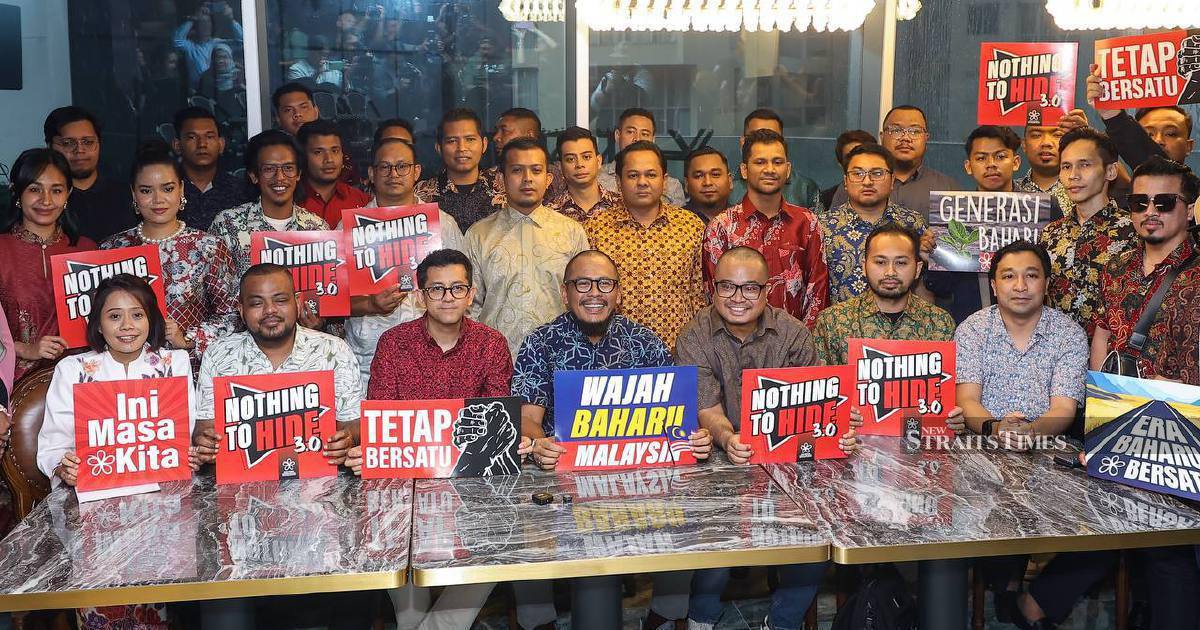
Mohd Ashraf Mustaqim Abdul Munir, the Kota Siputeh state assemblyman, has struck an upbeat note regarding the possibility of repairing frayed relations between his party Bersatu and their coalition partner PAS, suggesting that the underlying partnership within Perikatan Nasional remains salvageable despite recent friction.
Using a domestic analogy, Ashraf characterised the deterioration in ties between the two Islamist-aligned parties as comparable to marital discord—a temporary rift between parties who fundamentally remain committed to a shared living arrangement. This comparison carries particular weight in the Malaysian political context, where coalitional arrangements often resemble long-term relationships requiring ongoing negotiation and compromise to survive.
The tension between Bersatu and PAS reflects deeper fractures within the Perikatan Nasional bloc that have become increasingly visible since the coalition's formation. These disagreements have ranged from policy priorities to ministerial allocation and territorial control within state governments, creating a visible strain on what was once presented as a unified alternative to the Pakatan Harapan government.
Bersatu's positioning within Malaysian politics remains precarious. The party, which emerged from UMNO's ranks and represents former Prime Minister Mahathir Mohamad's political vehicle before passing to Muhyiddin Yassin, has struggled to establish a distinct identity separate from both its parent organisation and its coalition allies. This identity problem becomes acute when internal disputes bubble to the surface, as party leaders attempt to demonstrate relevance without appearing subordinate to larger partners like PAS.
PAS, by contrast, has leveraged its stronger grassroots organisation and religious credentials to become the dominant partner in Perikatan Nasional. The party's control over key portfolios and its influence over coalition direction has occasionally marginalised smaller partners, creating resentment that Ashraf's comments appear designed to address without directly criticising the party's leadership.
The comparison to a married couple also implies acceptance of certain structural realities in the relationship—that separation, while theoretically possible, carries significant costs for both parties. In the Malaysian political ecosystem, a formal rupture between Bersatu and PAS would reverberate across multiple state governments and federal arrangements, potentially destabilising the Perikatan Nasional government itself. Both parties have therefore maintained rhetorical commitment to unity even as operational disagreements persist.
Ashraf's optimism may also reflect calculation about the alternatives available to Bersatu. Without PAS as an anchor partner, the party faces diminished political relevance and reduced bargaining power in any future coalition negotiations. The 2023 general election results demonstrated that Perikatan Nasional's performance depended heavily on coordinated action between its components, suggesting that fragmentation would only weaken all parties involved.
The broader context of Malaysian coalition politics suggests that such disputes are endemic rather than exceptional. The Pakatan Harapan government itself experienced comparable tensions between constituent parties, and the rotation of leadership between DAP, PKR, and UMNO created friction that observers frequently described in similar relationship terms. The prevalence of such tensions suggests they are features rather than bugs in Malaysia's multi-party system.
From a Southeast Asian perspective, the stability of Perikatan Nasional carries implications beyond Malaysia's borders. As a coalition bringing together Islamist and Malay-nationalist elements, its cohesion or fragmentation signals important messages to regional actors observing how Malaysia manages religious and ethnic political dynamics. Sustained tension within the coalition risks projecting an image of instability that could affect Malaysia's standing in regional forums.
Ashraf's reassuring rhetoric appears designed to manage market expectations about the coalition's durability while acknowledging that disputes exist. Rather than portraying disagreements as temporary misunderstandings, the married couple metaphor implicitly concedes that ongoing tension is a permanent feature requiring active management. This represents a modest recalibration of expectations—from the ambitious unity narratives promoted at the coalition's formation to a more mature acknowledgement of how coalitions actually function.
The sustainability of Perikatan Nasional will ultimately depend on whether Bersatu and PAS can develop institutional mechanisms for managing disputes without allowing them to escalate into existential challenges. Ashraf's comments suggest the party is investing in such confidence-building measures, even if the underlying tensions remain unresolved. Whether this proves sufficient to maintain coalition cohesion through the next electoral cycle remains uncertain, but his optimism at least signals continued commitment to making the arrangement work despite evident strains.

