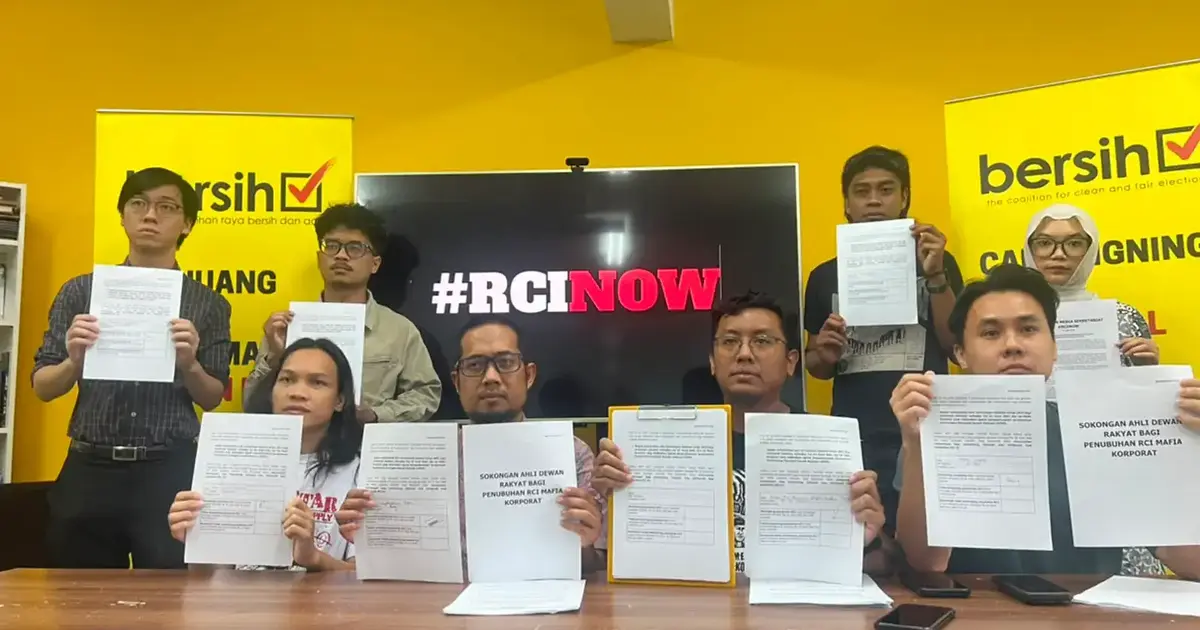
The Malaysian electoral watchdog Bersih has announced that 34 members of Parliament have pledged their backing for the establishment of a Royal Commission of Inquiry dedicated to investigating what the group characterises as "corporate mafia" activities within the country. The cross-party coalition of lawmakers represents a significant show of support for the proposal, drawing from multiple political formations including PKR, PAS, DAP and Umno, underscoring that concern over corporate misconduct transcends traditional factional divides in Malaysian politics.
This development represents a notable moment in contemporary Malaysian discourse, where questions surrounding the nexus between business interests and political influence have become increasingly prominent in public conversation. The involvement of legislators across the political spectrum suggests that apprehension about improper corporate conduct has permeated sufficiently into mainstream parliamentary consciousness to generate multi-party consensus on the necessity for formal investigation. Such broad alignment on investigative mechanisms is comparatively rare in Malaysia's fractious political environment, where partisan interests typically dominate legislative positioning.
Bersih's framing of the issue as involving a "corporate mafia" reflects growing anxiety among civil society organisations and grassroots movements about the concentration of economic power and allegations of collusive behaviour among connected business entities. The term deliberately invokes associations with organised criminal structures, suggesting that the electoral watchdog views certain corporate practices as systemically corrupting and inherently damaging to democratic and economic governance. This characterisation has resonated sufficiently with parliamentarians to secure their formal endorsement of investigative procedures.
The composition of supporting MPs illustrates the breadth of legislative concern. PKR, as the primary government coalition partner, brings its stakeholders' perspectives to the initiative. PAS, currently part of the federal governing arrangement, signals that Islamic-oriented political movements are also invested in corporate accountability mechanisms. DAP's participation reflects opposition-aligned priorities around transparency and curbing perceived corporate influence. Umno's presence indicates that even the country's largest established political party recognises sufficient pressure from its constituency base regarding corporate governance issues to warrant backing for investigation.
For Malaysian readers and the broader Southeast Asian context, this development carries implications extending beyond simple parliamentary accounting. The region has witnessed recurring scandals involving allegedly corrupt business networks, insider trading, and collusive tendering processes that have undermined public confidence in institutional integrity. A successful RCI into Malaysian corporate practices could potentially establish precedents for other ASEAN nations grappling with comparable governance challenges, whilst also signalling domestic commitment to greater corporate transparency.
The practical outcome of such an inquiry would depend substantially on its terms of reference, investigative mandate and resource allocation. Historical Malaysian RCIs have demonstrated variable effectiveness in translating findings into actionable reform, with implementation often constrained by political considerations and competing institutional interests. The specific mechanisms through which the inquiry would identify, evaluate and prosecute alleged corporate malfeasance remain unspecified, leaving open significant questions about how recommendations would translate into actual accountability mechanisms.
Bersih's role in assembling this coalition of parliamentary support reflects the organisation's ongoing efforts to operate as a bridging institution between civil society and formal political structures. By documenting cross-party backing for investigative mechanisms, Bersih creates political pressure that makes subsequent parliamentary obstruction or bureaucratic resistance more difficult to execute without reputational cost. This strategy leverages the electoral watchdog's credibility as a non-partisan entity to amplify voices for reform within the legislature itself.
The timing of this announcement coincides with broader international scrutiny of Asian corporate governance standards. International rating agencies, foreign institutional investors and development partners have increasingly emphasised the importance of transparent corporate practices and credible enforcement mechanisms as preconditions for sustained economic growth and capital flows. Malaysia's positioning as a major regional financial centre makes corporate malfeasance particularly concerning from both reputational and economic competitiveness perspectives.
Critical observers note that the mere announcement of 34 MPs supporting an RCI does not constitute formal parliamentary approval or budgetary allocation. The pathway from civil society advocacy and individual parliamentary endorsements to actual establishment of a Royal Commission involves negotiation with executive structures, Cabinet consideration and formal issuance of Letters Patent defining the inquiry's scope. Each stage presents potential bottlenecks where the initiative could face dilution, delay or redirection.
Looking forward, the sustainability of multi-party support for corporate accountability investigations may depend on how investigations are conducted and whether findings implicate politicians from all participating parties equally. Historical experience suggests that once inquiries move from abstract principle to specific allegations against named individuals and businesses, partisan unity often fractures. Nevertheless, the current expression of cross-legislative backing for investigation into corporate misconduct represents genuine, if preliminary, momentum for institutional reform in this policy domain.

