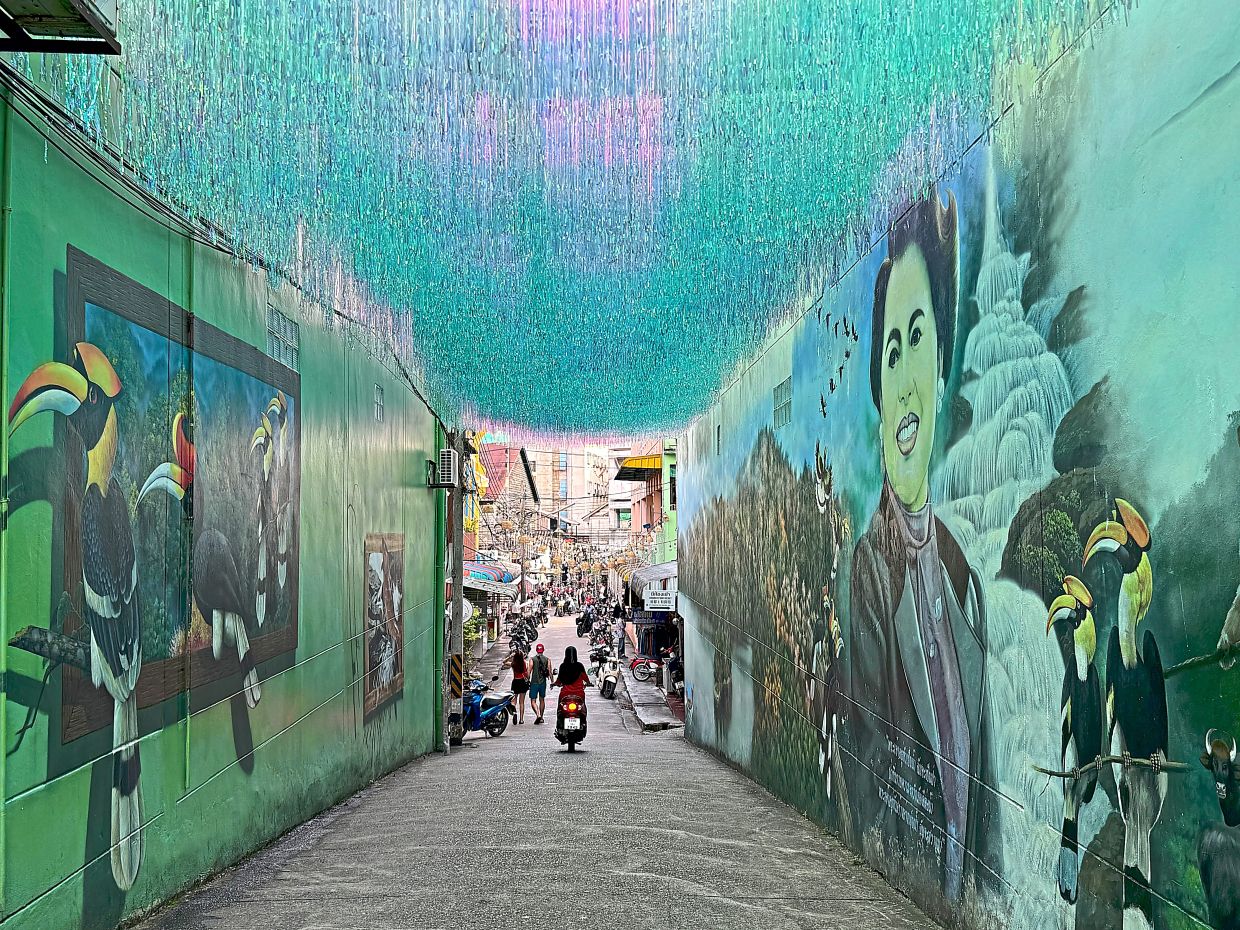
Betong, a modest Thai town nestled near the Malaysian frontier some 380 kilometres north of Kuala Lumpur, presents itself as an unpretentious destination that gradually reveals layers of charm and unexpected character to those willing to wander its streets. The five-hour drive from the capital makes it an increasingly popular escape for Malaysian weekend getaways, yet many travellers pass through without recognising the distinctive attractions that make this mountain town memorable. What begins as casual observation—noticing poultry sculptures adorning lamp posts throughout the town—eventually leads to deeper appreciation of Betong's identity and the stories embedded in its landscape.
The chicken motif pervading Betong stems from genuine local pride in the Betong chicken breed, a recognised local variety that has become synonymous with the town's culinary reputation and cultural identity. The massive bronze statues initially dismissed by our travellers as quirky roadside curiosities actually commemorate this agricultural heritage, reflecting how many Southeast Asian towns have transformed traditional livelihoods into tourism assets. Consequently, chicken features prominently on menus throughout Betong, from simple rice bowls topped with roasted fowl to steaming bowls of chicken porridge, making poultry consumption here less a dietary choice than a cultural experience. This thematic consistency suggests deliberate municipal branding, turning what might appear arbitrary into a coherent visitor narrative.
The Mongkollit Tunnel, constructed in 2001 as Thailand's inaugural mountain tunnel, exemplifies how infrastructure projects can transcend their practical purpose to become attractions in their own right. The structure itself serves legitimate engineering function, facilitating safer passage through challenging terrain along the Pattani-Betong Highway—a 160-kilometre scenic route celebrated among motorcyclists for its demanding switchbacks and elevation changes. Yet in evening hours, when brilliant azure illumination transforms the tunnel's interior into an otherworldly spectacle, the engineering accomplishment becomes theatrical experience. Pedestrian walkways flanking the roadway accommodate visitors who gather to photograph and contemplate the installation, suggesting that infrastructure design increasingly considers experiential value alongside utility.
The Piyamit Tunnel presents a starkly different historical character, functioning as physical archive of Thailand's Cold War confrontation with communist insurgency. Excavated during the late 1970s approximately fifteen kilometres from Betong's centre, this one-kilometre subterranean complex originally served the Communist Party of Malaya as operational headquarters, providing shelter, storage, and strategic escape routes during military campaigns against the insurgents. The tunnel's multiple original entrances and exits reflected guerrilla tactical doctrine, enabling fighters to disperse in various directions when under attack. Contemporary safety protocols have sealed certain passages, yet the basic configuration remains intelligible to visitors traversing the preserved chambers where combatants slept, strategised, and maintained radio communications with distant commands.
The infrastructure ingenuity evident within Piyamit reveals how resourcefulness enabled survival in remote jungle conditions. A specially engineered cooking stove channelled charcoal smoke underground rather than venting it visibly, substantially complicating enemy detection efforts. This engineering detail exemplifies the practical problem-solving required to sustain underground military operations, transforming abstract historical narratives into tangible evidence of human adaptation. The adjoining museum documents this history through photographs and artefacts, while the Chulabhorn Phatthana Village located 120 kilometres distant preserves the post-insurgency experience of former communist combatants who eventually transitioned to civilian life, offering Malaysian visitors rare opportunity to examine regional Cold War history from Thai perspective.
Betong's walkability represents significant practical advantage often overlooked by visitors accustomed to Bangkok's vehicular chaos or Phuket's sprawling resort geography. Accommodation concentrated in the old town places most noteworthy attractions within comfortable pedestrian range, while the chronic shortage of parking spaces subtly encourages exploration on foot. Local residents offer practical guidance regarding kerb colour coding—white and black designating permitted parking zones, red and white indicating restrictions—a system reflecting Thai municipal administration's confidence in visual standardisation. This accessibility democratises tourism, enabling budget-conscious visitors to experience the town without transportation costs, while the compact geography rewards serendipitous discovery.
Route 410, formally designated the Pattani-Betong Highway, has emerged as significant draw for motorcycle enthusiasts throughout Southeast Asia, who congregate at dedicated commercial establishments like Betong Route 410 to exchange experiences and acquire regionally-specific merchandise. The highway's mountainous terrain, steep gradients, and serpentine sections satisfy the technical demands of serious riders while delivering landscape appreciation that automotive touring cannot replicate. This recreational motorcycle culture intersects with tourism infrastructure development, as vendors cater to this expanding visitor demographic through specialised retail offerings. The phenomenon illustrates how regional transportation corridors acquire recreational value beyond their original logistical function, particularly when geography presents challenging, visually compelling terrain.
Wat Phutiwhat, anchoring the religious landscape, features a commanding bronze Buddha statue positioned to survey the town from its elevated entrance position, while the temple itself maintains sacred Buddhist relics. The architecture and siting demonstrate how religious institutions organise sacred space to maximise visual and spiritual impact within landscape geography. Early morning visitation proves advisable for those seeking contemplative experience, as increasing tourist traffic generates congestion during midday hours. The temple represents one of numerous Thai Buddhist institutions utilising monumental sculpture to express spiritual conviction while simultaneously producing recognisable landmarks facilitating visitor navigation and photography.
Betong's postal infrastructure has evolved into genuine tourist curiosity, reflecting how marginal historical artefacts can acquire cultural significance through deliberate preservation and contextualisation. The original mailbox, standing 3.2 metres tall and dating to 1924, originally incorporated a public address system for governmental announcements, demonstrating how communications technology was integrated into municipal infrastructure during Thailand's early modernisation period. The mailbox continues functioning as an actual postal receptacle, maintaining practical utility alongside heritage status. A subsequent nine-metre replica constructed as explicit tourist attraction outside the City Convention Hall along Sukyang Road represents municipal investment in visitor infrastructure, suggesting recognition that even unconventional attractions generate foot traffic and economic activity.
The most valuable lesson Betong imparts to travellers involves embracing unstructured exploration rather than adhering to predetermined itineraries. The decision to forgo comprehensive planning, instead allowing the town's informal geography and local recommendations to guide movement, produced serendipitous encounters that a schedule-driven approach would likely have precluded. This methodology proves particularly appropriate for compact towns where distances remain manageable and where locals possess invested interest in visitor experiences. Malaysian travellers, accustomed to Kuala Lumpur's commercial tourism infrastructure and established destination marketing, encounter refreshing authenticity in Betong's more organic approach to visitor engagement. The town rewards curiosity, patience, and willingness to follow peripheral interests, delivering experiences that justify the five-hour commitment required from Malaysia's population centres.

