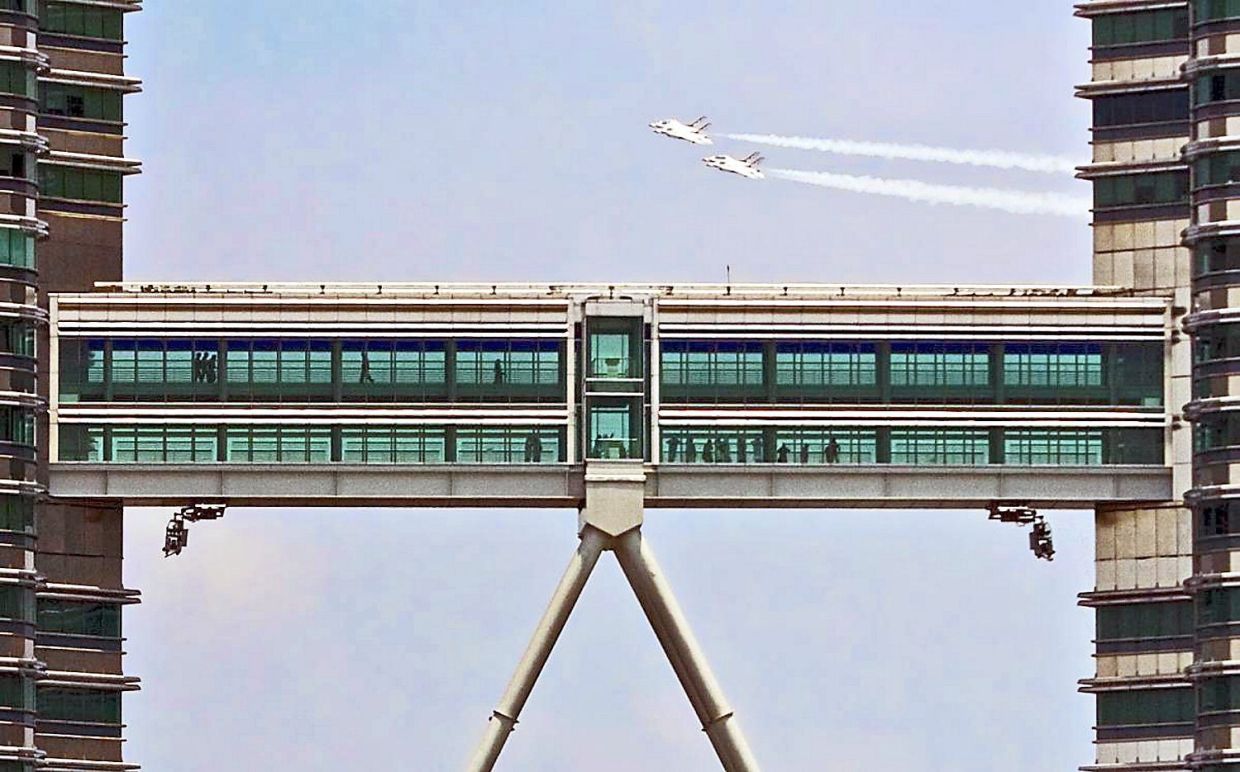
Each morning, hundreds of visitors queue beneath the PETRONAS Twin Towers for their turn to traverse the iconic Skybridge. The facility manages its flow carefully, admitting 42 visitors every 15 minutes in rotating batches. Over the course of a single day, the Twin Towers can welcome more than 2,000 guests—a steady stream of tourism revenue that extends far beyond the building's original purpose as a corporate office complex. What began as strictly commercial real estate has metamorphosed into one of Malaysia's most valuable experiential assets, generating income from ticket sales, merchandise, photography services, and spending throughout the broader KLCC ecosystem.
This transformation reflects a broader global phenomenon reshaping how developers approach completed construction projects. Across the world's major cities, landmark buildings increasingly function as attractions rather than solely as leased commercial or residential spaces. Observation decks, elevated skywalks, rooftop parks, and even vertical climbing experiences have become integral components of mixed-use developments, particularly in competitive urban markets. Developers have begun to recognise that a building's value extends well beyond rental income per square foot. The question driving modern asset strategy has fundamentally shifted from "how much floor space can we lease" to "how many visitors can we attract and how much will they spend during their visit."
Traditional property development centred on straightforward revenue models: office leases sustained landlords, retail units generated shop rental income, hotel rooms filled nightly, and residential units sold at completion. Once a project opened, the developer's focus narrowed to maintaining occupancy rates and preserving long-term asset value through maintenance and asset management. This approach dominated the sector for decades and remains standard practice for many conventional developments. However, a distinct class of landmark buildings has begun pursuing a fundamentally different strategy—extracting revenue from the intangible but highly valuable commodity of experience itself. The Twin Towers exemplify this shift, having evolved into a monetisable property asset that generates continuous income through visitor experiences alongside traditional office tenancy.
Kuala Lumpur Tower offers a precedent for this model, having successfully combined its operational role as a telecommunications hub with tourism revenue for many years. The tower's observation deck, Sky Box attraction, and Tower Walk experience demonstrated early that Malaysian landmark buildings could command substantial visitor numbers willing to pay for access. What distinguishes the current generation of projects is not the novelty of the concept but rather the systematic integration of visitor experiences into overall asset strategy from inception. Merdeka 118, Malaysia's tallest building, illustrates this evolved approach. The development's planned observation facilities and Spire Climb experience have been positioned as central to the building's commercial appeal rather than peripheral additions. This represents a conscious shift in how Malaysian developers conceptualise their most prominent projects—not merely as office towers leasing space, but as tourism products commanding international visitor attention.
The psychology underlying experience-driven attractions reveals why developers pursue this model with increasing conviction. A visitor purchasing access to a high-altitude viewing platform is not simply paying for a view; they are acquiring exclusivity, physiological sensation, and crucially, social currency derived from experiencing something remarkable. The ability to tell friends they have visited a famous tower or completed a challenging climb carries cultural weight that differentiates it from passive consumption. Experience-based attractions frequently command significantly higher profit margins than traditional property uses because the perceived value extends beyond the physical space itself. International developments demonstrate this principle at scale: New York's Edge features glass floors and exterior sky decks commanding premium pricing, while Dubai's Burj Khalifa and Singapore's Marina Bay Sands SkyPark have evolved into tourism enterprises generating revenues through tiered ticket pricing, exclusive access packages, merchandise, photography services, and hospitality offerings. The building transforms into a platform supporting multiple revenue streams rather than functioning as a single-use asset.
Revenue diversification within experience-led developments extends beyond simple admission fees. A visitor paying for observation deck access likely purchases commemorative merchandise, buys food and beverages, and may spend additional money within the broader development. Rooftop parks, while sometimes offered free to the public, generate indirect value through visitor dwell time that translates into retail spending, dining purchases, and heightened tenant appeal. The Exchange TRX demonstrates this principle: its free public rooftop park attracts visitors who remain longer on the premises, increasing probability of unplanned retail purchases and dining expenditures. Within retail real estate specifically, extended visitor duration functions as commercial currency equivalent to ticket revenue. A family lingering an additional hour at a rooftop garden substantially increases likelihood of coffee purchases, meal spending, and impulse buying—all outcomes strengthening the development's rental income performance and tenant satisfaction.
This represents a paradigm shift in how developers measure and optimise building performance. Traditional metrics—rental per square foot, occupancy rates, and asset appreciation—remain relevant but no longer comprise the complete picture. Contemporary asset strategy must simultaneously consider foot traffic volume, average visitor duration, per-capita spending potential, and broader marketing effects. A rooftop park functions not merely as urban design amenity but as a tool for amplifying retail sales. An observation deck operates as both attraction and revenue generator. A signature experience strengthens a development's brand positioning, making associated office and retail space more desirable to potential tenants and users. Property consultants increasingly employ the term "experience-led real estate" to describe this integrated approach where placemaking becomes explicitly commercial strategy rather than incidental urban design consideration.
Malaysia's increasingly competitive urban landscape provides compelling context for understanding why developers prioritise distinctive attractions. Office tenants evaluate multiple options across metropolitan areas, retail spending fragments across various competing destinations, and new mixed-use developments regularly enter the market seeking tenant occupancy. Within this environment, a memorable attraction provides differentiation that competitors cannot easily replicate. The observation deck at one tower cannot be directly duplicated by an adjacent building; the climbing experience becomes proprietary, transforming the structure into a category unto itself. Beyond direct revenue generation, distinctive attractions generate substantial marketing value through organic social media exposure. Visitors capturing skyline photographs, rooftop selfies, or videos of climbing experiences effectively function as unpaid brand ambassadors, distributing imagery across digital platforms. In contemporary consumer behaviour patterns shaped by social media influence, this visibility holds demonstrable commercial value, potentially influencing travel decisions and informing perception of the broader development.
Implementing this model entails substantial operational complexity and investment. Dedicated vertical transportation systems, security screening infrastructure, staff training, comprehensive insurance coverage, and continuous maintenance requirements add layers of cost beyond standard building operations. Crowd management emerges as a persistent operational challenge, particularly for high-profile landmarks attracting substantial international and domestic visitation. Weather considerations, seasonal demand fluctuations, and emergency protocols require specialised planning. Safety regulations and liability considerations demand rigorous compliance frameworks. Despite these operational demands and capital requirements, the revenue potential justifies investment for prominent developments where visitor demand proves sufficient. The successful precedents of PETRONAS Twin Towers and Menara Kuala Lumpur demonstrate that Malaysian landmarks can sustain viable tourism operations generating meaningful ancillary revenue.
Looking forward, experience-led real estate represents a permanent evolution in how developers approach landmark buildings within Malaysia and across Southeast Asia. As cities become denser and more competitive, the ability to create distinctive, memorable environments that draw visitors and generate multiple revenue streams will increasingly differentiate successful developments from mediocre ones. Merdeka 118's positioning combines office space, premium hospitality, and tourism experiences in explicit recognition of this trend. This integration of experiences into commercial strategy suggests future Malaysian developments will increasingly feature observation decks, speciality attractions, and visitor amenities as standard components rather than afterthoughts. The implications extend beyond individual buildings to broader urban development patterns. Cities offering memorable experiences attract tourists, support retail spending, strengthen tenant appeal, and create environments where communities choose to spend time. For property developers, investors, and cities themselves, the recognition that buildings can function as both commercial assets and tourist attractions represents a powerful tool for creating economically sustainable, liveable urban spaces. Malaysia's iconic structures increasingly demonstrate this principle in practice.

