Scientists have fundamentally altered our understanding of how honeybee colonies create their queens, revealing that the process involves far more than simply feeding a larva a nutrient-rich diet. Researchers from the Institute of Apicultural Research at the Chinese Academy of Agricultural Sciences have published findings in the journal Nature demonstrating that the architectural environment in which a future queen develops plays an equally critical role in her transformation. This discovery challenges decades of scientific orthodoxy that attributed queen development almost entirely to royal jelly, a secretion produced by worker bees. The implications extend beyond pure biology, potentially revolutionising how commercial beekeepers breed healthier queens and maintain more resilient colonies.
For generations, beekeepers and scientists have observed that honeybee colonies construct distinctive chambers resembling peanut shells hanging downward from the honeycomb. These structures, long recognised as indicators of swarming or queen replacement, were generally regarded as merely passive containers. However, the new research led by Kai Wang fundamentally reframes this understanding. The study reveals that these chambers function as highly engineered biological incubators, meticulously constructed by worker bees to create optimal conditions for royal development. The discovery represents a paradigm shift from viewing the queen-rearing process as simply nutritional to recognising it as a complex interplay between diet, architecture, and chemistry.
All honeybee larvae begin their lives genetically identical—emerging from ordinary fertilised eggs that would otherwise develop into worker bees. The critical difference lies in how the colony treats the selected larvae destined for queenship. While researchers previously understood that royal jelly differentiated these larvae from their sisters, the new findings demonstrate that the wax chamber itself possesses distinct properties that actively shape developmental outcomes. The special queen cells are constructed from wax that exhibits significantly different characteristics compared to standard brood cells used for raising workers. This royal wax is noticeably softer, melts at substantially higher temperatures, and releases a distinct chemical signature or scent profile that ordinary worker cells lack.
The physical properties of the queen cell appear particularly significant for larval development. The softer walls of the royal chamber allow the growing larva more space to expand during its critical developmental phases, whereas the standard hexagonal worker cells impose tighter spatial constraints. Beyond simple mechanics, the chemical composition and scent profile of the wax may function as hormonal triggers, communicating developmental instructions to the larva at a molecular level. Research showed that larvae provided with abundant royal jelly but developing in worker-cell wax displayed substantially poorer development outcomes and significantly elevated mortality rates compared to larvae in proper royal chambers. This striking finding demonstrates that diet alone proves insufficient without the appropriate sensory environment—what Wang described as the need for the correct "smell and feel" of royal wax.
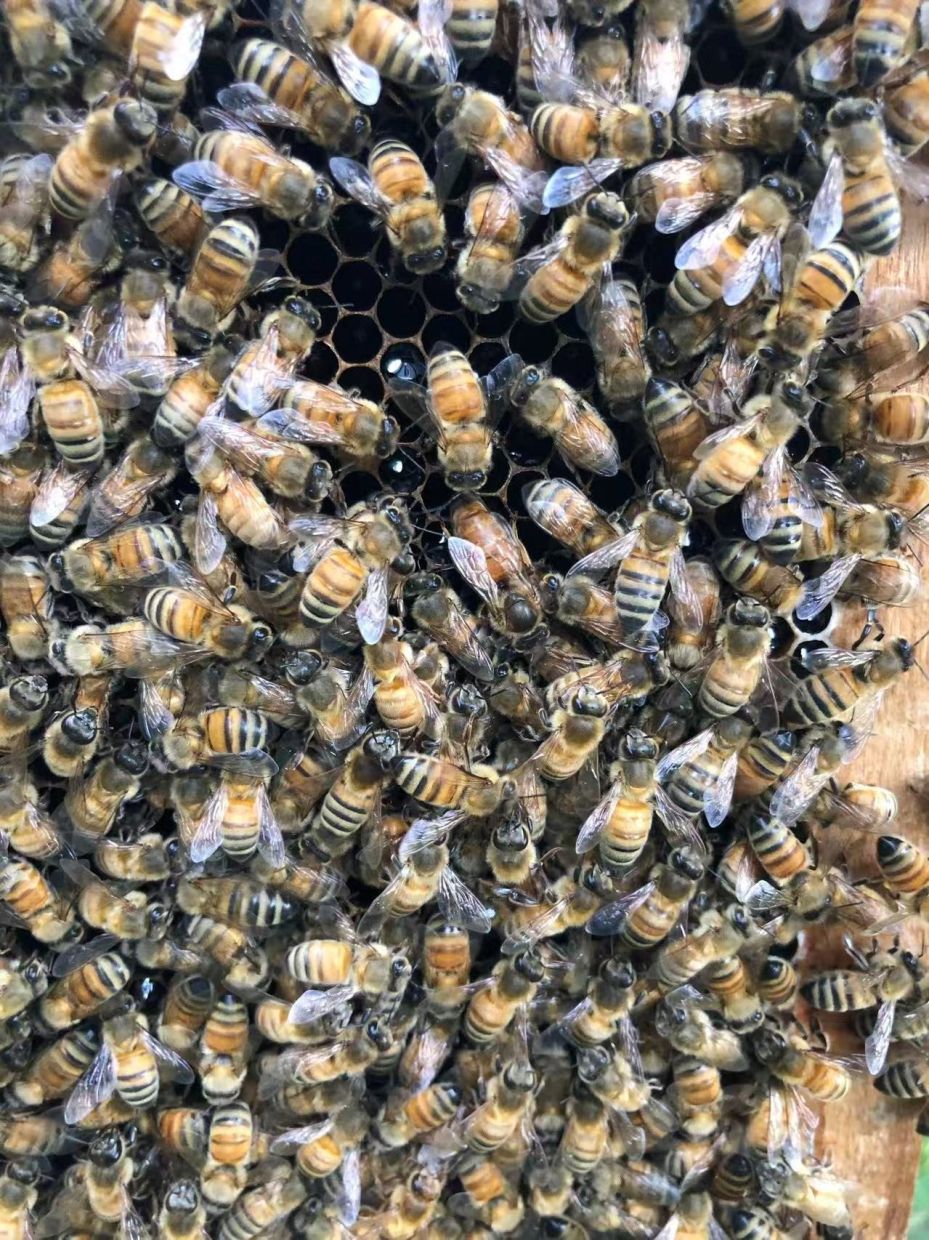
The worker bees tasked with constructing these specialised chambers undergo remarkable physiological transformations themselves. The researchers discovered that the bees involved in queen-cell construction maintain unusually elevated thoracic temperatures and exhibit distinct patterns of gene activity. These workers must heat their bodies to temperatures exceeding 39 degrees Celsius—essentially running a persistent fever—to process and mould the special high-melting-point wax required for queen chambers. This extraordinary metabolic effort represents a significant biological investment, yet Wang emphasises that these workers are not a permanently specialised caste. Rather, they are ordinary young workers temporarily adopting this specialised role through short-term shifts in gene expression that enable them to handle the demanding wax-working task. Remarkably, while undertaking this intensive construction work, these bees simultaneously continue their normal hive duties, sharing food with nestmates and inspecting other cells.
Wang characterised these workers as "the ultimate multitaskers" for their capacity to simultaneously engage in highly specialised construction and routine hive maintenance. This flexibility underscores the sophisticated coordination and labour allocation systems within honeybee colonies. The workforce does not operate through rigid job specialisation but rather through dynamic task allocation, where individual bees can shift between roles based on colony needs. The discovery that ordinary workers can temporarily become precision wax engineers through brief surges in specific gene expression patterns suggests honeybee colonies possess remarkable developmental plasticity. This plasticity may provide evolutionary advantages, allowing colonies to rapidly adjust their queen-rearing intensity in response to changing circumstances such as the loss of an existing queen or preparation for swarming.
The research has shattered what Wang calls the "deeply rooted dogma" of nutritional determinism—the assumption that royal jelly represented the sole determinant of queen development. For decades, this simplified understanding dominated scientific discourse and practical beekeeping. While the study definitively establishes that the wax chamber's properties matter fundamentally, researchers have not yet isolated the precise mechanisms at work. Wang identified the next critical research frontier: identifying the specific molecular switch responsible for triggering royal development. This molecular breakthrough would pinpoint which particular chemical scent or physical tactile sensation actually communicates to the queen larva's DNA the developmental instructions that transform it into a queen. Understanding this mechanism at the molecular level could enable targeted interventions to improve queen production in managed beekeeping operations.
Beyond honeybees, the implications of this research may extend across other social insects. Wang suggests that termite mounds and wasp paper nests may similarly confer developmental advantages beyond simple shelter. The intricately constructed wax nests of stingless bees could conceal analogous biological secrets regarding colony control of development. This prospect suggests that the principle of engineered environmental conditions shaping caste development might represent a fundamental strategy employed across eusocial insect societies. The research thus opens broader avenues for understanding how social insects collectively make architectural decisions that profoundly influence their reproductive success and colony organisation.
For commercial beekeeping operations, these findings offer significant practical promise. Queen production stands as central to modern beekeeping economics and colony health. Boris Baer, a professor of pollinator health at the University of California, Riverside and study co-leader, emphasises that healthy queens are essential for maintaining vigorous colonies. The ability to breed higher-quality queens through better understanding of natural queen-rearing processes could substantially improve colony resilience at a critical moment. In the United States and numerous other regions, beekeepers report alarming colony losses threatening pollination services and agricultural productivity. Managed honeybees pollinate more than eighty major agricultural crops globally, making their health a crucial concern for food security and agricultural sustainability.
The broader significance of these findings extends to Southeast Asia and Malaysia specifically, where both commercial and semi-commercial beekeeping operations support rural livelihoods and agricultural productivity. Enhanced understanding of queen development could enable local beekeepers to improve their breeding programmes, strengthening colony performance in tropical and subtropical climates where these bees face their own environmental pressures. As beekeeping communities globally confront challenges from pesticide exposure, habitat loss, and emerging diseases, any advancement in breeding healthier, more resilient queens contributes meaningfully to colony survival prospects. The research exemplifies how fundamental biological discoveries can translate into practical benefits for agricultural communities dependent on pollinator health.
Wang's reflection on the broader significance captures the essence of the discovery: in honeybee colonies, "eating well is important, but living in the perfect home is what truly changes your destiny." This observation transcends apicultural science, resonating as a commentary on how environmental context shapes biological outcomes. The findings demonstrate that development results not from isolated factors but from integrated systems where nutrition, architecture, chemistry, and sensory environment interact to determine fundamental life trajectories. In the case of honeybees, ordinary larvae become extraordinary queens not through diet alone but through the collective engineering efforts of thousands of sisters who build, maintain, and chemically condition the precise environment necessary for royal transformation. The research ultimately reinforces the conceptualisation of honeybee colonies as superorganisms, where individual actions aggregate into collective intelligence producing outcomes that serve the greater colony.