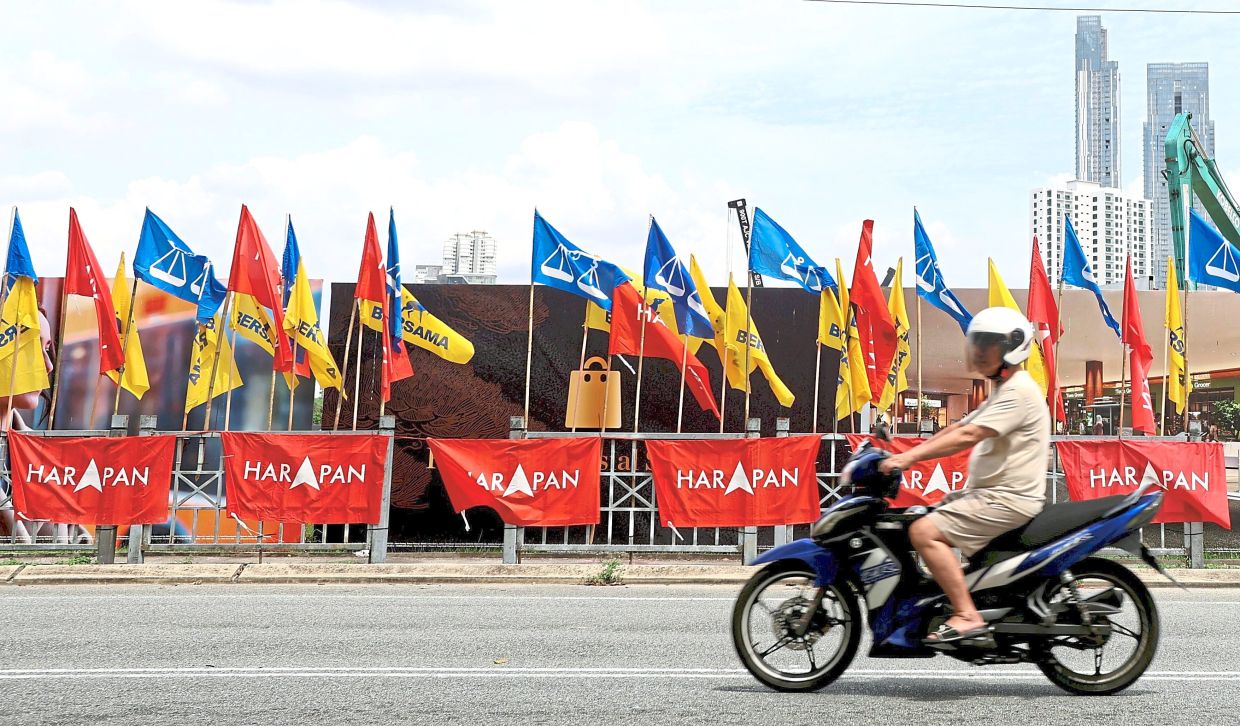
As Negri Sembilan approaches another state election, political analysts fixate on the familiar arithmetic of legislative control. The number 36 dominates discourse—the total seats needed for outright dominance in the State Legislative Assembly, or the minimum 29 required for a commanding two-thirds supermajority. Yet nestled within this electoral fixation lies a figure with far graver implications for ordinary citizens: 65, the proposed retirement age that could reshape the economic lives of millions over the coming decades.
The significance of 36 appears straightforward. A sweeping victory—or humiliating defeat—would signal whether the strategic alliance between Barisan Nasional and Perikatan Nasional, particularly the partnership with PAS, has successfully consolidated support across the state's constituencies. Electoral outcomes certainly matter. They determine governance, policy priorities, and resource allocation for the subsequent term. But elections recur every few years, their effects temporary and revisable through democratic process. Retirement policy operates on an entirely different timescale, embedding itself into the financial realities and daily routines of working Malaysians for three decades or more.
The case for reconsidering retirement age at 65 has crystallised amid extraordinary economic disruption. The Covid-19 pandemic between 2020 and 2024 fundamentally rewired Malaysian household finances. Families exhausted savings accumulated across generations; businesses collapsed under lockdown pressures; civil servants and private-sector workers shelved carefully constructed retirement plans almost overnight. The immediate health emergency eventually subsided, but the economy proved far slower to recover, limping forward without returning to its pre-pandemic trajectory. Just as households began painfully reconstituting their financial cushions, new shocks arrived. Geopolitical instability in the Strait of Hormuz during 2025 has driven energy prices skyward, cascading into transportation surcharges, food inflation, and broad-based cost pressures across Southeast Asia. Malaysian consumers faced another round of spending adjustments precisely when financial recovery remained incomplete.
Negri Sembilan offers particular purchase on this debate. The state embodies a distinctive hybrid character—maintaining traditional social structures and community bonds while pursuing modern economic development. Its geography makes it inseparable from the Klang Valley's transformation. Many residents commute into Kuala Lumpur, Putrajaya, or the surrounding business corridors; they occupy professional roles requiring decades of accumulated expertise; they maintain financial entanglement with the nation's primary growth engines. Yet Negri Sembilan also preserves strong intergenerational family networks where elderly relatives and middle-aged workers actively support one another through shared housing and pooled resources. These social realities elevate retirement policy far beyond administrative technicality into something touching the lived experience of communities.
Consider the generation now approaching conventional retirement age. Workers in their late fifties today navigated the Asian Financial Crisis in the late 1990s, endured the 2008 Global Financial Crisis, weathered the pandemic's shocks, and absorbed subsequent geopolitical turbulence. Their careers experienced repeated, involuntary interruption from circumstances entirely beyond individual control. The question whether these individuals should retain the opportunity—critically, not obligation—to continue working until 65 represents a legitimate policy conversation deserving serious, non-partisan examination rather than reflexive dismissal.
Artificial intelligence introduces unexpected complexity to assumptions about older workers and employment. Conventional thinking imagines automation rendering experienced personnel redundant. Reality appears more nuanced. As AI systems eliminate routine tasks, organisations increasingly prize qualities that emerge from extended careers rather than sudden acquisition: institutional memory, seasoned judgment, mentoring capacity, and ethical reasoning. Paradoxically, technological transformation may strengthen arguments for retaining experienced workers in productive roles, not weaken them. Younger Malaysians entering the workforce confront dizzying uncertainty—rapidly evolving skill requirements, compressed employment cycles, intensifying competition from digital substitution. Rather than viewing continued older-worker participation as a threat, many families might discover that sustained parental and grandparental employment provides crucial financial stability while younger members navigate unprecedented economic turbulence.
Intergenerational cooperation could become Malaysia's competitive advantage. Experienced professionals mentor junior colleagues while upgrading their own digital capabilities; younger workers bring native technological fluency to solve contemporary problems; families pool intergenerational earning power to build resilience. This integrated labour market would prove more robust than artificial generational separation. Fiscal mathematics also favour longer careers. Individuals remaining economically productive continue tax contributions, accelerate retirement savings, and sustain consumer expenditure—all outcomes that broaden government revenues, reduce pension-system pressure, and diminish demand for social assistance programmes. From macroeconomic perspective, flexible retirement extending to 65 strengthens rather than weakens public finances.
Critically, this case never implied mandatory retirement at 65. The emphasis belongs on flexibility. Malaysians in physically demanding occupations—construction workers, agricultural labourers, manufacturing operatives—may rationally choose earlier retirement given bodily wear and legitimate fatigue. Conversely, professionals, academics, healthcare practitioners, engineers, educators, and administrators might wish continued contribution if health permits and satisfaction endures. Public policy should genuinely accommodate both aspirations rather than imposing one-size frameworks on diverse working populations.
Bipartisan cooperation becomes essential precisely here. Retirement policy transcends partisan division; it touches household welfare irrespective of electoral allegiance. Whether Barisan Nasional, Pakatan Rakyat, or some hybrid configuration governs Negri Sembilan, facing retirement-age questions honestly would demonstrate genuine commitment to citizens' longterm security. The magic number 65 deserves attention equal to—if not exceeding—the magic number 36. Elections determine who holds office. Retirement policy determines whether ordinary Malaysians can afford dignity, autonomy, and financial security in their final working decades.

